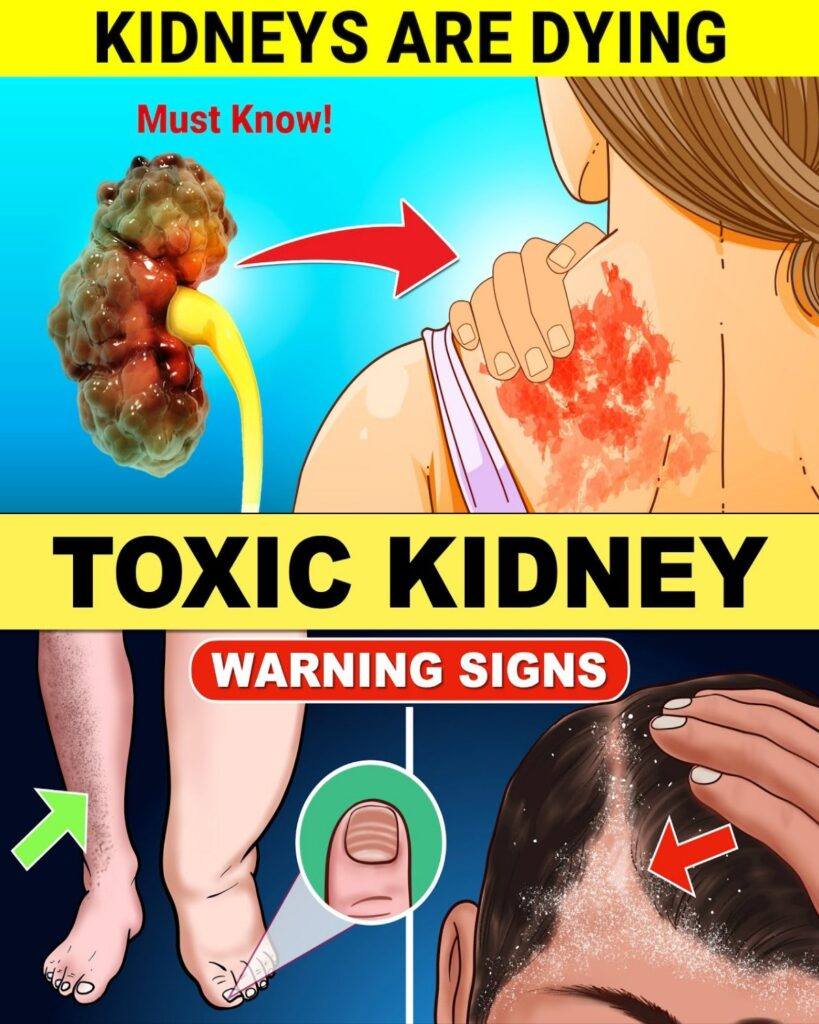
The headline sounds dramatic, but kidney failure usually develops gradually, and the best way to avoid dialysis is early detection and proper medical care, not home remedies.
Here’s a clear, medically accurate guide.
⚠️ 9 Warning Signs of Kidney Problems
Early kidney disease often has no symptoms, which is why testing is so important. When symptoms appear, they may include:
1️⃣ Swelling (Edema)
- Ankles, feet, hands, or around the eyes
- Caused by fluid retention
2️⃣ Changes in Urination
- Foamy urine (possible protein leakage)
- Blood in urine
- Urinating more or less than usual
- Waking up often at night to urinate
3️⃣ Persistent Fatigue
- Kidneys help produce red blood cells
- Kidney disease can cause anemia → tiredness, weakness
4️⃣ Shortness of Breath
- Fluid buildup in lungs
- Or anemia-related
5️⃣ Nausea or Vomiting
- Waste buildup in the bloodstream (uremia)
6️⃣ Itchy Skin
- Toxin and mineral imbalance can cause persistent itching
7️⃣ Muscle Cramps
- Electrolyte imbalances (especially potassium, calcium)
8️⃣ Loss of Appetite or Metallic Taste
- Common in more advanced kidney dysfunction
9️⃣ High Blood Pressure
- Major cause and consequence of kidney disease
🧪 Key Tests That Help Prevent Dialysis
These simple tests detect kidney problems early:
✅ 1. Serum Creatinine
Measures waste levels in blood.
✅ 2. eGFR (Estimated Glomerular Filtration Rate)
- 90+ = normal
- Below 60 for 3+ months suggests chronic kidney disease
✅ 3. Urine Albumin-to-Creatinine Ratio (ACR)
Detects early protein leakage.
✅ 4. Blood Urea Nitrogen (BUN)
✅ 5. Electrolytes (Potassium, Sodium)
High-risk groups (diabetes, high blood pressure, family history) should test at least yearly.
🛑 How to Reduce Risk of Dialysis
✔ Control blood sugar
✔ Keep blood pressure under control (often <130/80)
✔ Limit salt intake
✔ Avoid excessive NSAIDs (ibuprofen, naproxen)
✔ Stay hydrated
✔ Maintain healthy weight
✔ Stop smoking
🚨 Seek urgent care if:
- Very little urine output
- Severe shortness of breath
- Chest pain
- Confusion
Bottom Line
Kidney failure rarely happens suddenly. The key to avoiding dialysis is:
- Regular testing
- Early treatment
- Managing blood pressure and diabetes
If you’d like, I can also provide a simple kidney health checklist based on your age or risk factors.
