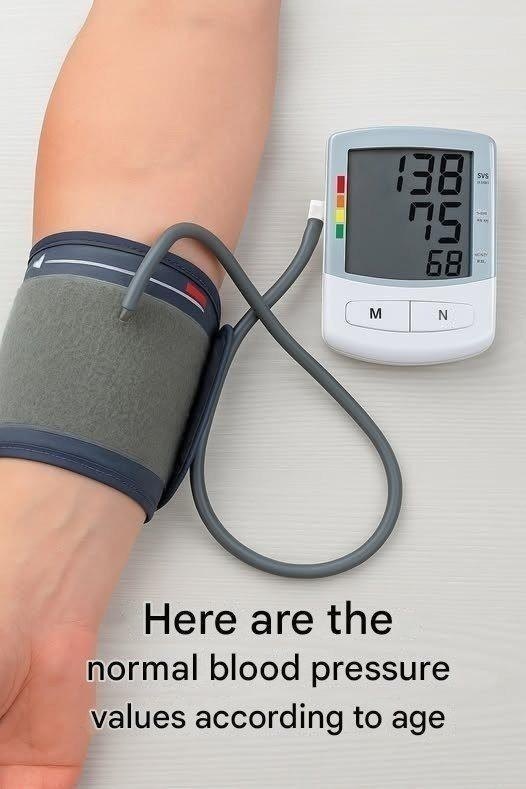
Here’s a clear guide to normal blood pressure values by age.
🫀 Understanding Blood Pressure
Written as: Systolic / Diastolic (mmHg)
- Systolic (top number): Pressure when the heart beats
- Diastolic (bottom number): Pressure when the heart relaxes
Example: 120/80 mmHg
👶 Children (Under 13 Years)
In children, normal BP depends on age, sex, and height percentile, but typical resting ranges are:
| Age | Approximate Normal Range (mmHg) |
|---|---|
| Newborn | 60–90 / 20–60 |
| 1–12 months | 80–100 / 50–65 |
| 1–5 years | 90–110 / 55–75 |
| 6–12 years | 100–120 / 60–75 |
⚠️ Pediatricians interpret readings using percentile charts.
👦 Teens (13–17 Years)
- Normal: <120 / <80
- Elevated: 120–129 / <80
- High BP – Stage 1: 130–139 / 80–89
- High BP – Stage 2: ≥140 / ≥90
👨 Adults (18–59 Years)
| Category | Systolic | Diastolic |
|---|---|---|
| Normal | <120 | <80 |
| Elevated | 120–129 | <80 |
| High BP – Stage 1 | 130–139 | 80–89 |
| High BP – Stage 2 | ≥140 | ≥90 |
| Hypertensive Crisis | ≥180 | ≥120 |
👴 Adults 60+
- Many guidelines aim for <130/80 if tolerated.
- Some providers accept <140 systolic depending on overall health.
⚠️ Important Notes
- Blood pressure naturally fluctuates during the day.
- Diagnosis requires multiple readings on different days.
- Home monitoring can help track trends.
If you want, I can make a quick visual chart by age that’s easy to read at a glance. Do you want me to do that?
