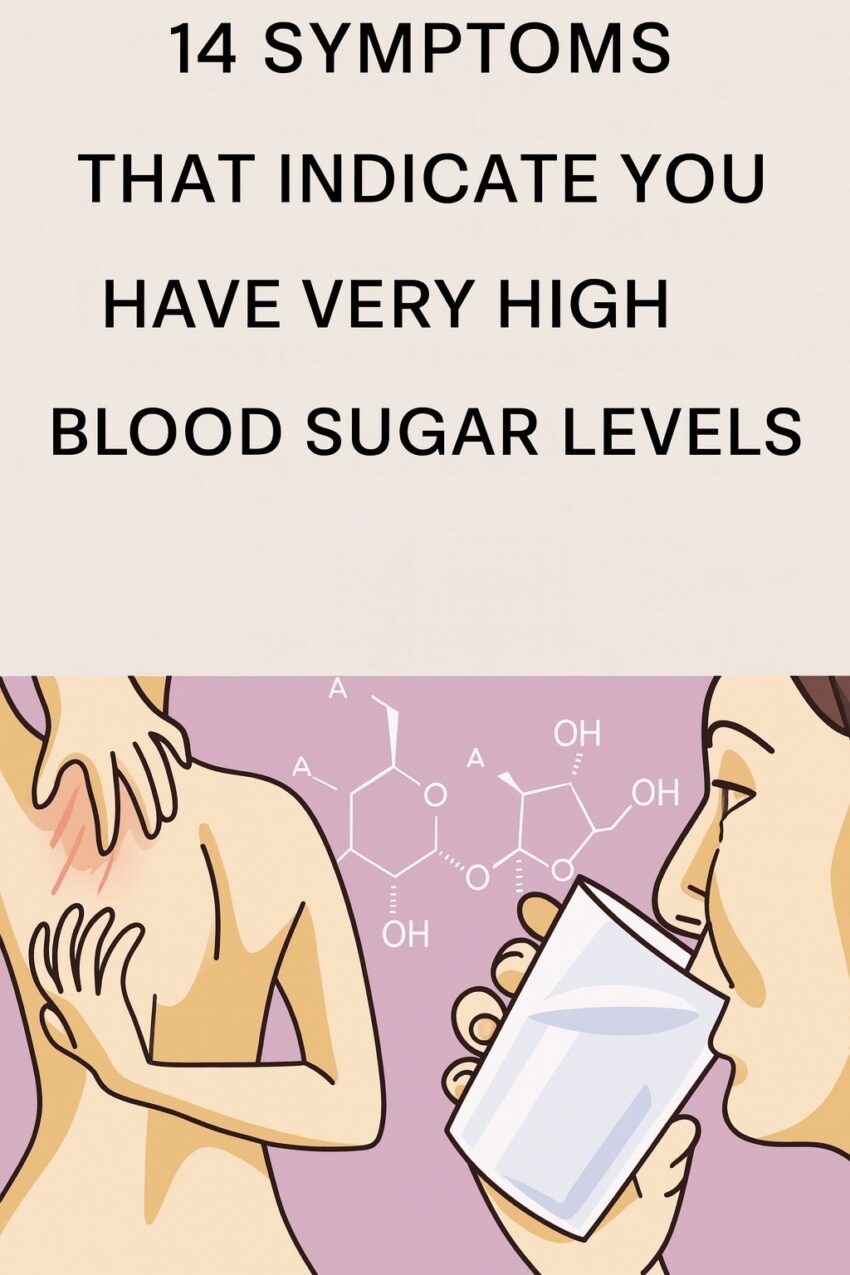
Here’s a detailed guide on 14 symptoms that may indicate very high blood sugar levels (hyperglycemia), which is important for both diabetics and those at risk. 🍬🩺
1️⃣ Frequent Urination (Polyuria)
- Excess sugar in the blood pulls water from tissues, causing increased urination.
2️⃣ Excessive Thirst (Polydipsia)
- The body tries to replace lost fluids from frequent urination.
3️⃣ Increased Hunger (Polyphagia)
- Cells aren’t getting enough glucose, signaling the brain to eat more.
4️⃣ Fatigue
- High sugar levels prevent glucose from entering cells efficiently, leaving you feeling tired.
5️⃣ Blurred Vision
- Excess sugar can cause fluid changes in the eyes, affecting focus.
6️⃣ Headaches
- Fluctuating blood sugar and dehydration can trigger headaches.
7️⃣ Slow-Healing Sores or Cuts
- High blood sugar impairs circulation and immune function, slowing healing.
8️⃣ Unexplained Weight Loss
- Body breaks down fat and muscle for energy when glucose isn’t used properly.
9️⃣ Dry Mouth and Skin
- Dehydration from frequent urination can cause dry mouth and itchy skin.
10️⃣ Recurrent Infections
- High blood sugar weakens the immune system, increasing infections like urinary tract infections, yeast infections, or gum infections.
11️⃣ Nausea or Vomiting
- Severe hyperglycemia can lead to nausea, sometimes signaling diabetic ketoacidosis in type 1 diabetes.
12️⃣ Fruity-Smelling Breath
- A sign of ketone buildup, more common in type 1 diabetes, indicating the body is burning fat for energy.
13️⃣ Tingling or Numbness in Hands or Feet (Neuropathy)
- Chronic high sugar can damage nerves, leading to numbness or burning sensations.
14️⃣ Mental Fog or Confusion
- Extremely high blood sugar can affect brain function, causing confusion or difficulty concentrating.
⚠️ When to Seek Medical Attention
- Blood sugar consistently above 180–200 mg/dL (10–11 mmol/L) after meals
- Symptoms like vomiting, fruity breath, rapid breathing, or confusion—possible diabetic ketoacidosis (DKA), which is a medical emergency
💡 Prevention Tips
- Monitor blood sugar regularly
- Follow prescribed diabetes medications or insulin
- Maintain a balanced diet and regular exercise
- Stay hydrated
- Keep regular checkups to adjust medications if needed
If you want, I can make a “Visual Chart of 14 High Blood Sugar Symptoms” that helps you quickly identify warning signs for yourself or loved ones.
Do you want me to create that chart?
