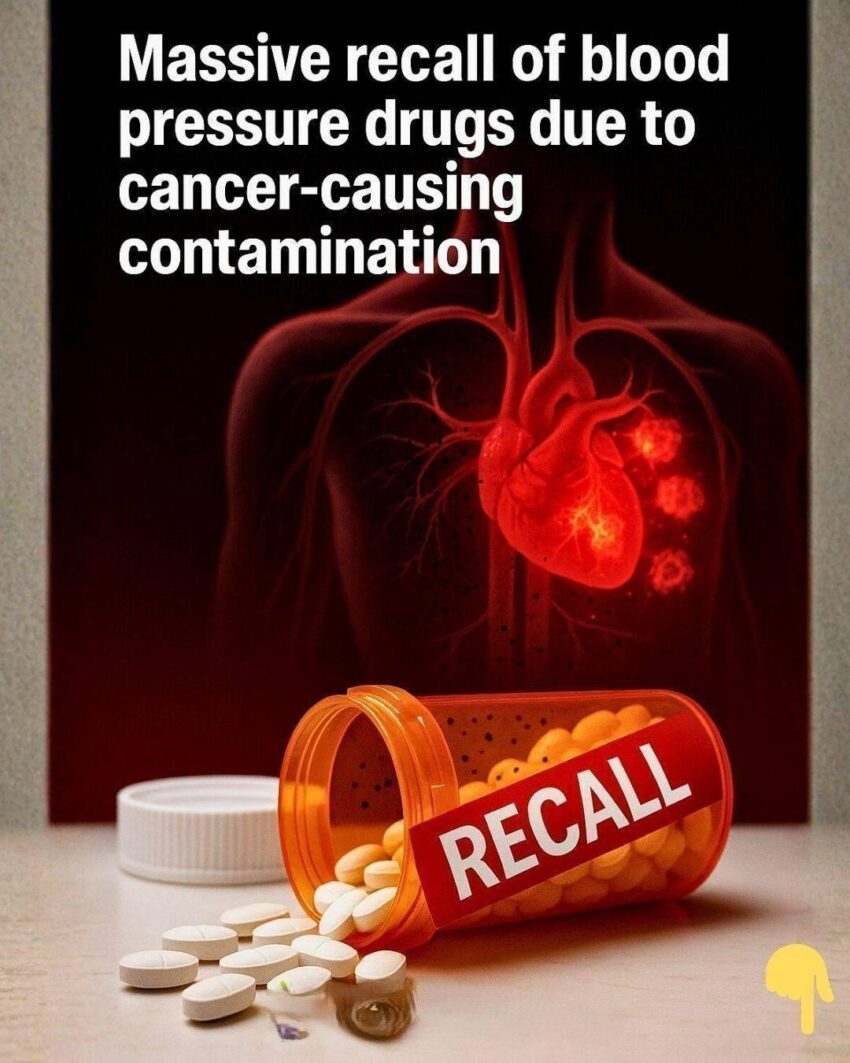
Here’s a full, clear summary of recent and historical blood pressure drug recalls — why they happened, which medicines were involved, what the risks are, and what you should do. This includes official actions by the U.S. Food and Drug Administration (FDA) and other regulators. (Health)
🧪 1. Prazosin Hydrochloride Capsule Recall — Cancer‑Causing Chemical Risk (2025)
What was recalled:
- Over 580,000 bottles of prazosin hydrochloride capsules, a prescription blood pressure drug. (Health)
Who recalled it:
- Teva Pharmaceuticals USA and distributor Amerisource Health Services issued voluntary recalls. (Health)
Why:
- FDA testing found high levels of a nitrosamine impurity (N‑nitroso prazosin impurity C), a class of chemicals considered potential carcinogens when present above acceptable limits. Nitrosamines can form during manufacturing or storage and have raised recalls of other drugs in recent years. (U.S. Food and Drug Administration)
- FDA classified the recall as Class II, meaning the drug may cause temporary or reversible adverse health effects or a remote risk of more serious effects. (Health)
What this means for patients:
- Do not stop taking your medication without talking to your healthcare provider.
- Check your lot number and bottle details with your pharmacist to see if your prescription is part of the recall.
- If affected, your clinician can help you switch to a safe, unaffected medication. (Health)
🩺 2. Other Historical Blood Pressure Medications Affected by Nitrosamines
➤ Valsartan and Other ARBs (2018–2019)
- Several angiotensin receptor blockers (ARBs) such as valsartan were recalled in the U.S. and globally because of nitrosamine contamination (e.g., N‑nitrosodimethylamine, NDMA). This occurred during manufacturing of active ingredients and affected multiple batches. (U.S. Food and Drug Administration)
- ARBs are widely prescribed for blood pressure and heart failure, including generics made by many manufacturers. Regulators expanded recalls over time as more lots were tested. (U.S. Food and Drug Administration)
➤ Losartan in Singapore (2019)
- Three brands of losartan, another ARB, were recalled after testing found nitrosamine impurities above safe levels. Regulators advised patients to consult healthcare providers but not to stop treatment immediately. (HSA)
➤ Quinapril Tablets (various recalls)
- Quinapril, an ACE inhibitor used for high blood pressure, was voluntarily recalled in some countries (e.g., U.S. and Europe) due to nitrosamine impurities (like N‑nitroso‑quinapril) above acceptable daily intake levels. (Farmacovigilanza)
👉 Why nitrosamines keep causing recalls: Nitrosamine impurities can occur in many drugs when certain chemical reagents or reactions are used in manufacturing. Because some are linked to cancer risk at high exposure, regulators set strict limits and recall products that exceed them. (U.S. Food and Drug Administration)
🧠 What the FDA Recall Classifications Mean
- Class I: A situation where there is a reasonable probability of serious health consequences or death (most serious).
- Class II: A situation where use may cause temporary or medically reversible adverse health effects or where the probability of serious effects is remote (as with the prazosin recall). (Health)
- Class III: A situation where use is unlikely to cause adverse health consequences but the product has a defect or labeling issue.
📌 Key Takeaways for Patients
✅ Always check lot numbers: Your specific prescription may or may not be part of a recall. Pharmacists can look this up.
✅ Do not stop taking medication abruptly: Stopping blood pressure drugs without medical guidance can be dangerous. Talk with your healthcare provider first.
✅ Ask about alternatives: If your drug is recalled, there are usually other effective medications your doctor can prescribe.
If you want, you can share the name, strength, and lot number of your blood pressure medication, and I can help check whether it’s part of any current recall.
