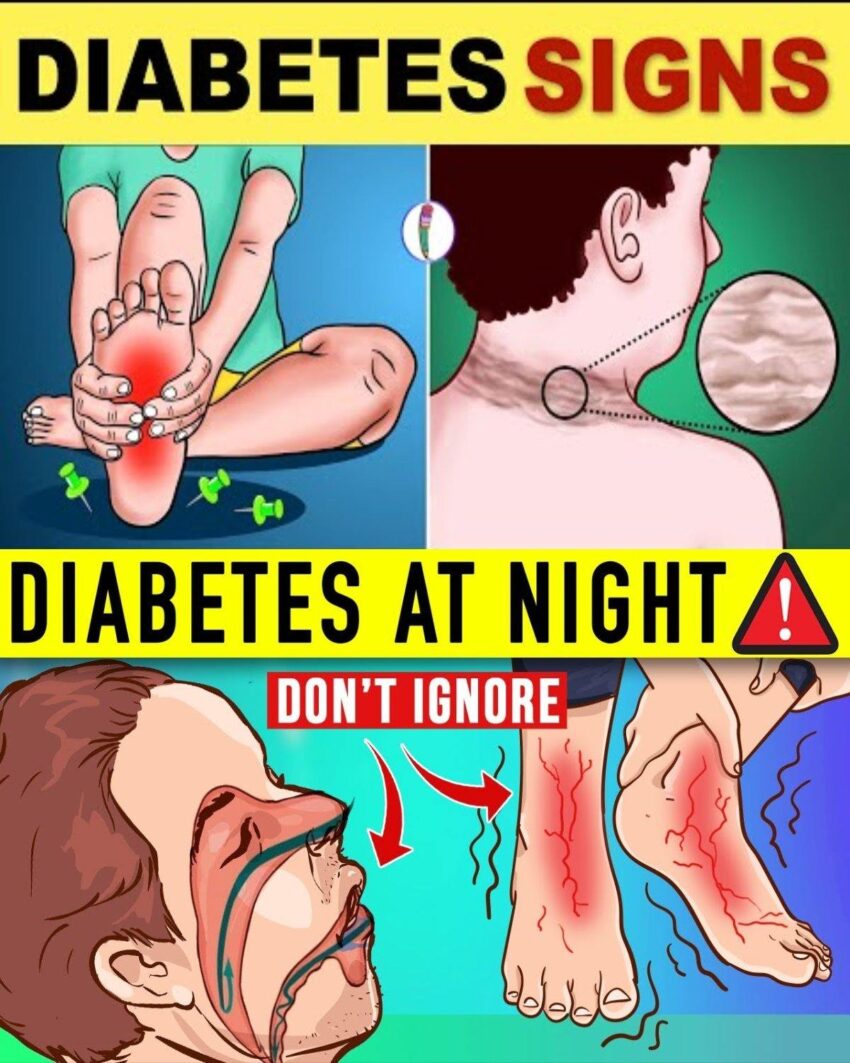
Here’s a detailed guide on the 7 dangerous nighttime signs of diabetes that people, especially those with type 2 or poorly controlled diabetes, should watch for:
1. Frequent Nighttime Urination (Nocturia)
- What happens: Waking up multiple times to urinate.
- Why it’s dangerous: High blood sugar pulls water into urine, causing dehydration and electrolyte imbalance.
- Tip: Monitor blood sugar levels; discuss with your doctor if nocturia is new or worsening.
2. Excessive Thirst at Night
- What happens: Feeling very thirsty and drinking more water than usual before bed.
- Why it’s dangerous: Can indicate hyperglycemia (high blood sugar) that may damage kidneys if persistent.
- Tip: Track evening glucose readings; adjust diet or medication under guidance.
3. Night Sweats
- What happens: Waking up drenched in sweat.
- Why it’s dangerous: Can be caused by hypoglycemia (low blood sugar), especially if taking insulin or oral diabetes medication.
- Tip: Keep a small carb snack nearby if prone to nighttime lows; talk to your doctor about medication timing.
4. Tingling or Numbness in Feet
- What happens: Pins-and-needles, burning, or numb sensations.
- Why it’s dangerous: A sign of diabetic neuropathy, which can worsen during sleep due to poor circulation.
- Tip: Examine feet daily; control blood sugar and discuss nerve-protective treatments.
5. Shortness of Breath or Rapid Heartbeat
- What happens: Waking up feeling breathless, anxious, or with a racing heart.
- Why it’s dangerous: May indicate hypoglycemia, heart stress, or sleep apnea common in diabetics.
- Tip: Monitor glucose before bed; consult your doctor if it occurs frequently.
6. Unexplained Nighttime Hunger
- What happens: Feeling extremely hungry in the middle of the night.
- Why it’s dangerous: Often a sign of low blood sugar, especially in people on insulin or sulfonylureas.
- Tip: Keep balanced evening meals; consider a protein + complex carb snack before bed.
7. Confusion, Irritability, or Nightmares
- What happens: Waking up confused, moody, or with vivid dreams.
- Why it’s dangerous: Can result from blood sugar swings, particularly hypoglycemia, which affects brain function.
- Tip: Monitor nighttime glucose; talk to your doctor about adjusting medications or bedtime snacks.
Extra Nighttime Safety Tips for Diabetics
- Check blood sugar before bed to prevent lows or highs overnight.
- Keep a glucose source nearby (juice, glucose tabs) in case of hypoglycemia.
- Maintain a consistent bedtime routine and avoid late heavy meals.
- Wear comfortable socks and shoes if neuropathy is present.
- Regular check-ups for eyes, kidneys, and nerves are crucial.
💡 Bottom line: Nighttime symptoms can be subtle but dangerous if ignored. Persistent signs like nocturia, night sweats, tingling, or confusion warrant a doctor’s evaluation to prevent complications like hypoglycemia, neuropathy, or kidney stress.
If you want, I can make a “Nighttime Diabetes Safety Checklist” showing how to monitor glucose, what to eat or avoid, and warning signs that need urgent attention.
Do you want me to create that checklist?
