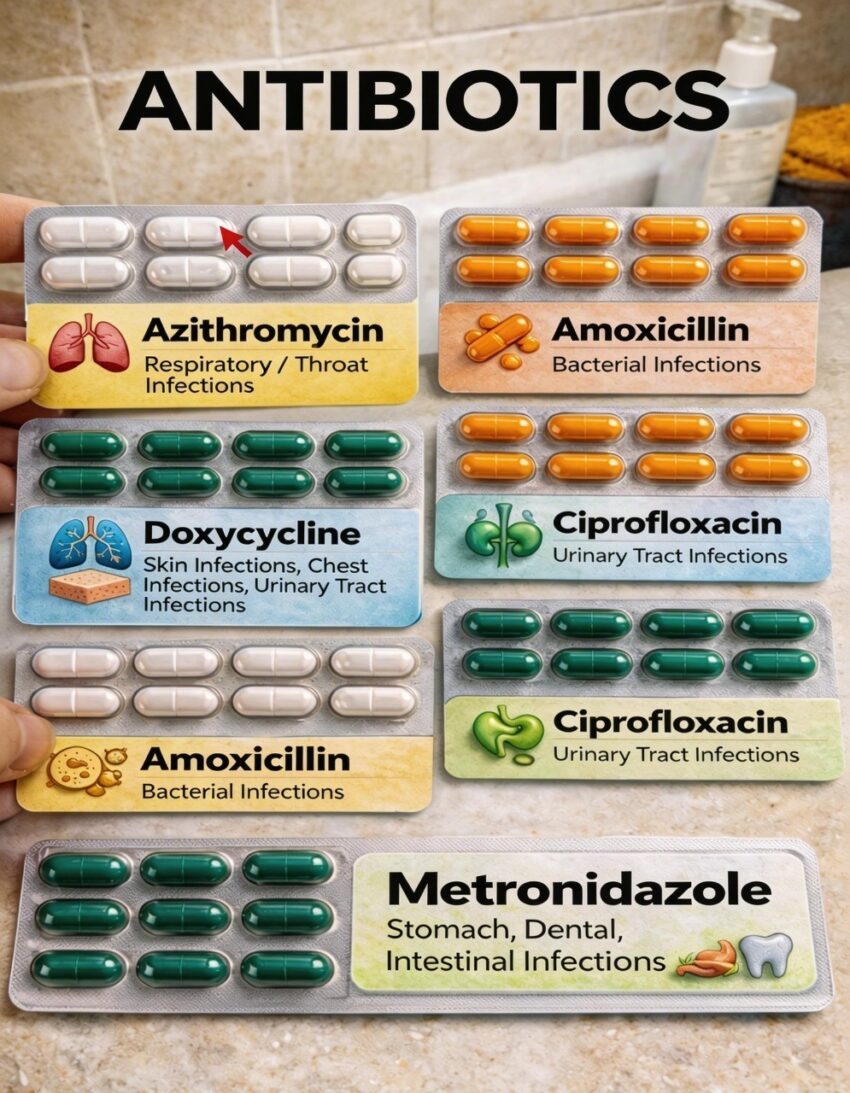
Here’s a clear and organized guide to common antibiotics and what they’re typically used for. I’ve grouped them by class to make it easier to understand.
1. Penicillins
- Examples: Amoxicillin, Penicillin V, Ampicillin
- Uses:
- Ear infections, strep throat, sinus infections
- Skin infections
- Some respiratory infections
- Notes:
- Safe for most people; watch for allergic reactions
2. Cephalosporins
- Examples: Cephalexin (Keflex), Ceftriaxone
- Uses:
- Pneumonia, urinary tract infections, skin infections
- Surgical infection prevention
- Notes:
- Structurally related to penicillin; mild cross-allergy possible
3. Macrolides
- Examples: Azithromycin, Clarithromycin, Erythromycin
- Uses:
- Respiratory infections (bronchitis, pneumonia)
- Ear infections, some STIs
- Notes:
- Often used if patient is penicillin-allergic
4. Tetracyclines
- Examples: Doxycycline, Tetracycline
- Uses:
- Acne, respiratory infections, Lyme disease
- Certain STIs (chlamydia)
- Notes:
- Avoid in children under 8 and during pregnancy (can affect teeth and bones)
5. Fluoroquinolones
- Examples: Ciprofloxacin, Levofloxacin
- Uses:
- Urinary tract infections, gastrointestinal infections
- Respiratory infections
- Notes:
- Can cause tendon problems and nerve issues; usually reserved for more serious infections
6. Sulfonamides
- Examples: Trimethoprim-sulfamethoxazole (Bactrim)
- Uses:
- UTIs, certain respiratory infections, skin infections
- Notes:
- Can cause allergic reactions or sensitivity to sunlight
7. Aminoglycosides
- Examples: Gentamicin, Amikacin
- Uses:
- Severe infections in hospitals (bloodstream, urinary, or abdominal)
- Notes:
- Can affect kidneys and hearing; usually monitored carefully
8. Others / Special Cases
- Metronidazole: Treats anaerobic bacterial infections and protozoal infections (like Giardia)
- Clindamycin: Treats skin, dental, and bone infections
- Vancomycin: Reserved for serious infections (MRSA or hospital-acquired infections)
Key Points
- Antibiotics only work against bacterial infections, not viruses (e.g., colds, flu).
- Complete the full course even if symptoms improve.
- Overuse can lead to antibiotic resistance.
- Always follow a doctor’s prescription—different antibiotics target different bacteria.
If you want, I can make a quick-reference table of antibiotics with “first-choice” uses for common infections, so it’s easy to see which one is used for what. This is very handy for studying or general knowledge.
Do you want me to make that table?
