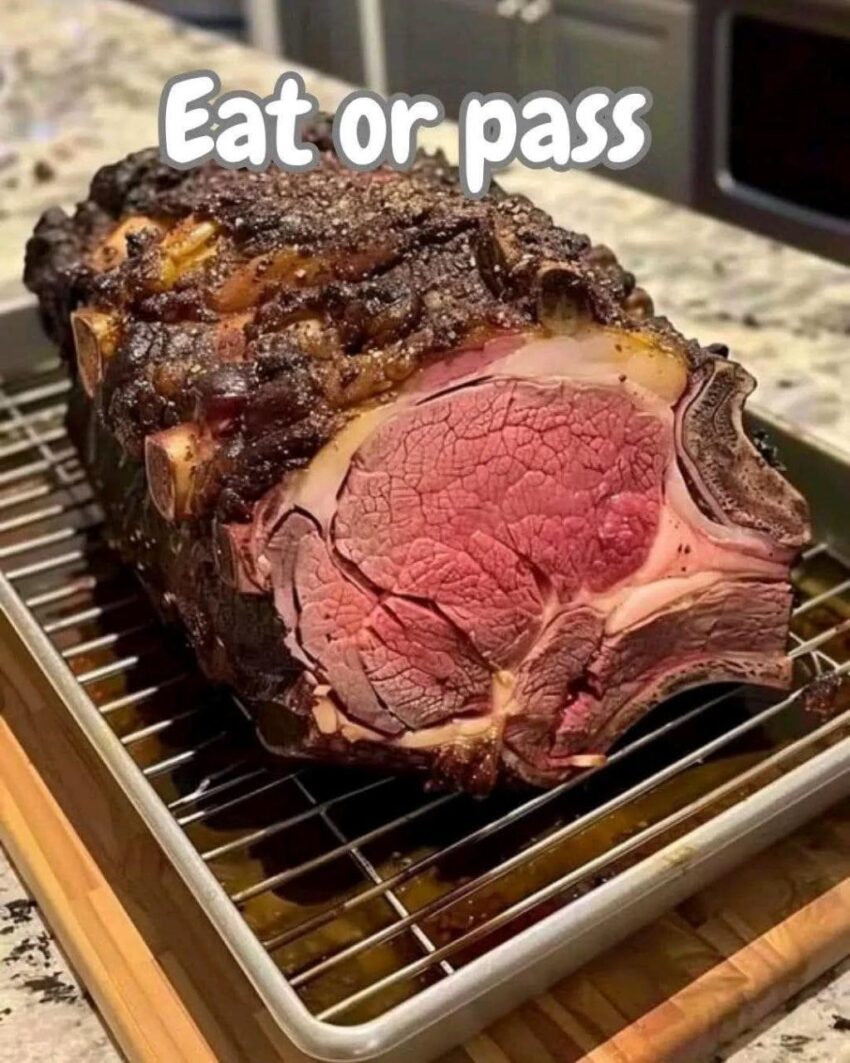
A standing rib roast is a classic, premium cut of beef prized for its rich flavor, tenderness, and impressive presentation. Here’s a detailed overview:
1. What It Is
- A standing rib roast comes from the rib section of the cow, specifically ribs 6 through 12.
- It’s called “standing” because it’s roasted with the rib bones left intact, allowing the meat to “stand” on the bones while cooking.
- If the bones are removed, it’s typically called a ribeye roast.
2. Features
- Marbling: Excellent intramuscular fat gives it a juicy, tender texture and rich flavor.
- Size: Usually sold in roasts ranging from 2 to 10 pounds—enough for family meals or special occasions.
- Crust and Presentation: The bones create a natural rack that enhances roasting and presentation, making it ideal for holiday dinners.
3. Cooking Methods
- Roasting (Most Common)
- Preheat oven to 450°F (230°C) for the first 15–20 minutes to develop a crust.
- Reduce to 325°F (165°C) and continue roasting until desired doneness.
- Let it rest 15–20 minutes before carving to preserve juices.
- Seasoning
- Simple seasoning with salt, pepper, and herbs like rosemary or thyme works best.
- Optional: garlic, mustard, or butter rubs for extra flavor.
4. Doneness Guide
- Rare: 120–125°F
- Medium Rare: 130–135°F (most recommended for standing rib roast)
- Medium: 140–145°F
- Medium Well: 150–155°F
Use a meat thermometer for accuracy.
5. Serving Tips
- Slice between the bones for perfect portions.
- Serve with horseradish sauce, au jus, or roasted vegetables.
- Leftovers make amazing sandwiches or can be added to stews and soups.
Summary:
The standing rib roast is the king of roast beef—juicy, flavorful, and visually impressive. It’s ideal for celebrations or any occasion where a centerpiece meal is desired.
If you want, I can give a step-by-step guide to roasting a perfect standing rib roast, including tricks for a crusty exterior and tender, juicy interior. Do you want me to do that?
