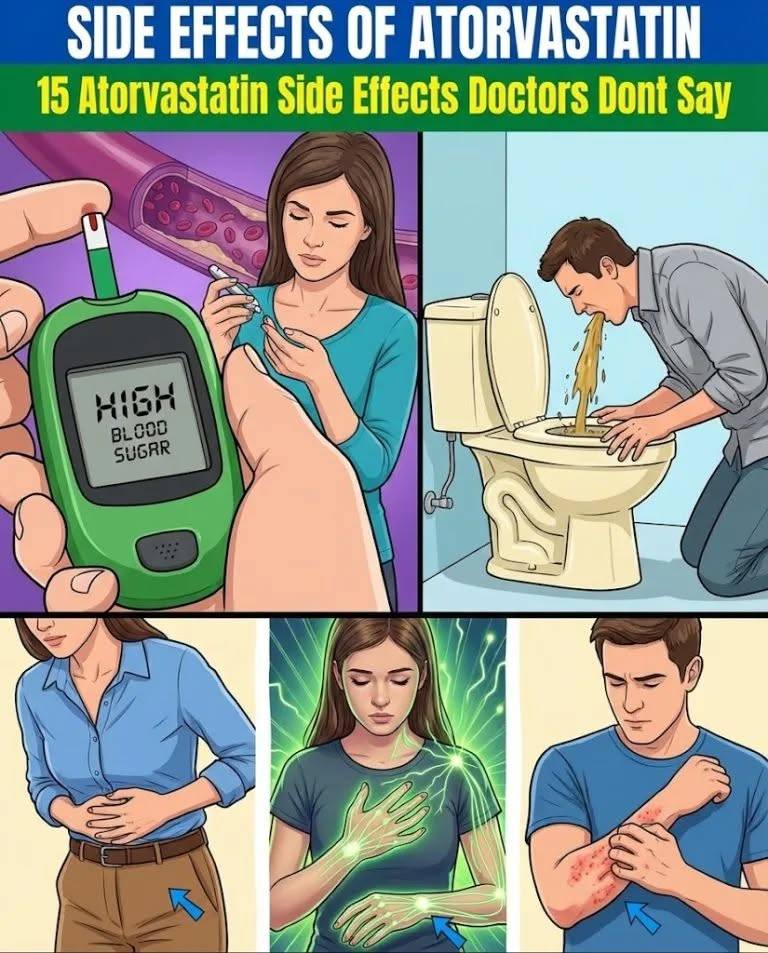
Atorvastatin is a commonly prescribed statin used to lower LDL (bad cholesterol) and reduce the risk of heart attack and stroke. Most people tolerate it well, but like all medicines, it can cause side effects.
⚠️ Common side effects (usually mild)
These often improve as your body adjusts:
- Muscle aches or mild muscle pain
- Headache
- Nausea or stomach discomfort
- Diarrhea or constipation
- Mild fatigue
🚨 Less common but important side effects
These need attention if they persist or worsen:
💪 Muscle problems (important)
- Muscle pain, weakness, or cramps
- Rarely: myopathy or rhabdomyolysis (serious muscle breakdown)
⚠️ Warning signs:
- Severe muscle pain
- Dark-colored urine
- Extreme weakness
🧪 Liver-related effects
- Elevated liver enzymes (usually found on blood tests)
- Rare symptoms:
- Yellowing of skin/eyes (jaundice)
- Dark urine
- Persistent fatigue
🍬 Blood sugar changes
- May slightly increase blood sugar levels
- Can unmask or worsen type 2 diabetes risk in some people
🧠 Rare side effects
- Memory issues or confusion (uncommon and usually reversible)
- Sleep disturbances
- Allergic reactions (rash, itching, swelling)
⚠️ Who should be extra careful
Tell your doctor if you:
- Have liver disease
- Drink heavy alcohol
- Take multiple medications (risk of interactions)
- Are pregnant or breastfeeding
💡 When to seek medical help immediately
- Severe muscle pain or weakness
- Signs of liver problems (yellow skin/eyes)
- Allergic reaction (swelling, breathing difficulty)
🧠 Bottom line
Atorvastatin is very effective and widely used, and most side effects are mild and manageable, but muscle and liver symptoms should always be taken seriously.
If you want, I can also explain foods and drugs that interact with atorvastatin (like grapefruit, antibiotics, etc.) so you can avoid problems safely.
