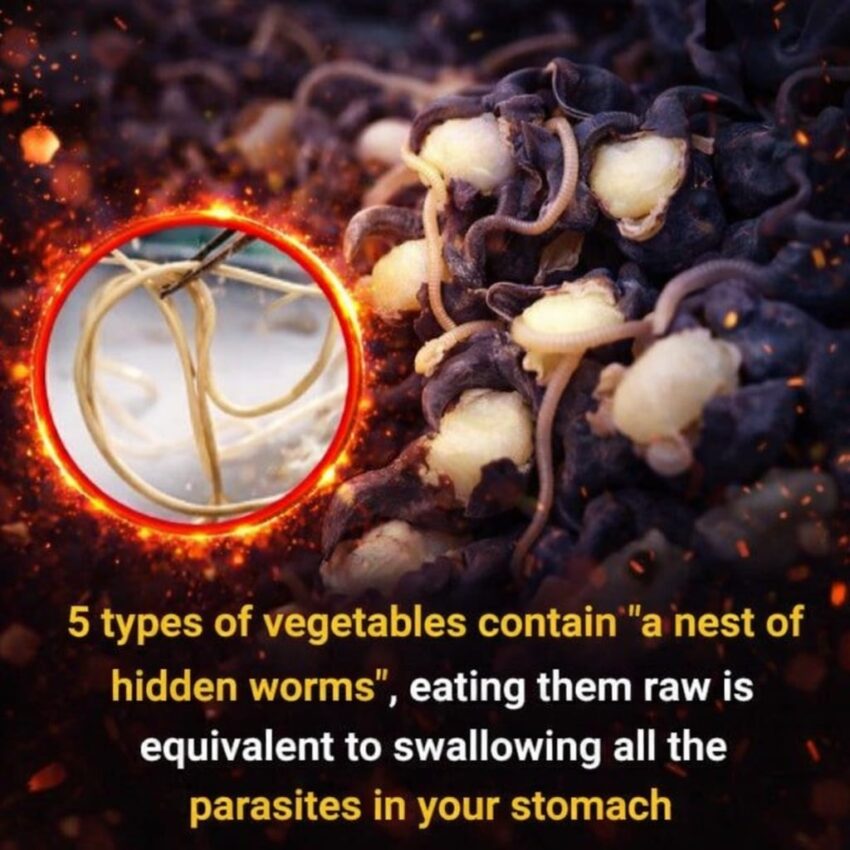
That claim is clickbait and misleading.
“5 types of vegetables contain a nest of hidden worms”
There are no vegetables that naturally contain “nests of worms” as a normal feature. What sometimes happens is pests or larvae may accidentally be present on or inside poorly washed or infested produce, but this is not unique to specific vegetables.
🧠 What’s actually true
Any fresh vegetable can occasionally have:
- Insects 🐛
- Larvae (from flies or moths)
- Soil contamination
This is more about farm hygiene, storage, and washing, not the vegetable type itself.
🥬 Vegetables often mentioned in myths (but not specifically “worm nests”)
These are sometimes falsely targeted in viral posts:
- Leafy greens (like spinach, lettuce) 🥬
- Cabbage and cauliflower 🥦
- Okra
- Eggplant
- Coriander / herbs 🌿
👉 Reality: These are just more likely to hide insects because of folds and layers—but proper washing removes them.
🧼 How to safely clean vegetables
- Rinse under running water
- Soak in salt water for 10–15 minutes
- Use vinegar solution if needed (mild)
- Peel outer leaves of cabbage/lettuce
- Cook properly when required
🚫 Important truth
- There is no fixed list of “worm vegetables”
- “Nest of hidden worms” is fear-based wording
- Food safety depends on handling, not vegetable type
🧾 Bottom line
Vegetables do not inherently contain worm nests. Occasional contamination can happen in any fresh produce, and proper washing/cooking makes it safe.
If you want, I can give you a simple food-washing method used in restaurants to remove insects and pesticides effectively 👍
