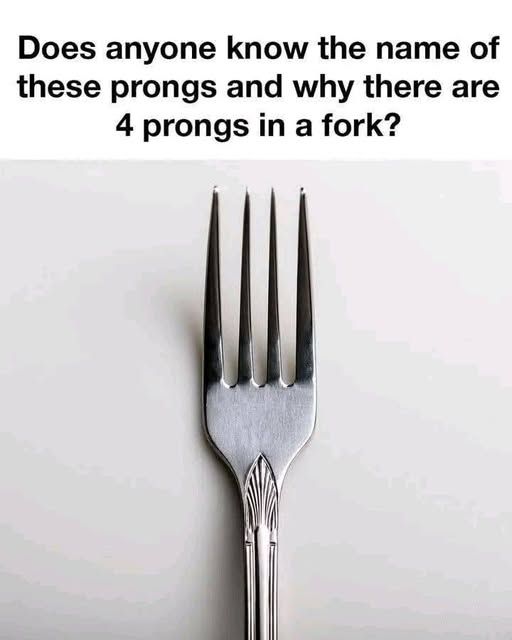
The “prongs” on a fork are called tines (or sometimes teeth).
🍴 Fork parts
- Handle
- Neck (stem)
- Tines (prongs)
❓ Why do most forks have 4 tines?
The 4-tine design became the standard because it is the best balance of:
🍽️ 1. Food holding ability
- 4 tines grip food securely (meat, vegetables, pasta)
⚖️ 2. Strength and durability
- Spreads pressure evenly
- Less likely to bend compared to fewer, thicker tines
🍜 3. Easy scooping + piercing
- Works well for both stabbing and lifting food
- Middle gap helps hold small pieces (like pasta or rice)
🏭 4. Manufacturing standard
- Over time, 4 tines became the most practical and widely produced design
🧠 Fun fact
Forks haven’t always had 4 tines:
- Early forks had 2 or 3 tines
- Some serving forks still have different shapes today
🧾 Bottom line
- The prongs are called tines
- 4 tines are standard because they offer the best mix of grip, strength, and usability
If you want, I can show you why steak forks, salad forks, and dessert forks all have different tine shapes 👍
