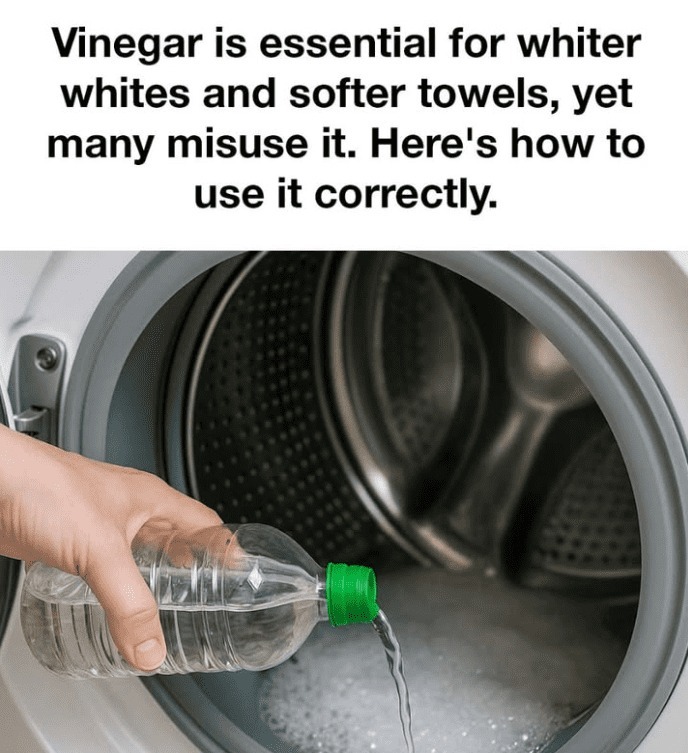
Vinegar can be surprisingly effective in laundry—but only if you use it the right way. Misusing it can reduce its benefits or even damage fabrics and your machine.
🧺 Why vinegar works
Most people use White vinegar in laundry because it:
- Breaks down detergent residue
- Neutralizes odors
- Softens fabrics naturally
- Helps prevent dullness in whites
✅ How to use vinegar correctly
1. For whiter whites
- Add ½ to 1 cup of white vinegar to the rinse cycle
- It helps remove residue that makes whites look gray or dull
- Safe for most cottons and everyday fabrics
👉 Tip: Don’t pour it directly on clothes—use the fabric softener compartment.
2. For softer towels
- Add ½ cup vinegar during the rinse cycle
- It removes buildup from detergent and fabric softeners
- Towels become fluffier and more absorbent
👉 Important: Skip fabric softener—it actually makes towels less absorbent over time.
3. To remove odors
- Use 1 cup vinegar in the wash cycle for smelly clothes (gym wear, mildew)
- It neutralizes odor-causing bacteria
4. Cleaning your washing machine
- Run an empty cycle with 2 cups vinegar + hot water
- Helps remove buildup and odors inside the drum
⚠️ Common mistakes to avoid
❌ Mixing vinegar with bleach
- Never combine vinegar with Bleach
- This creates toxic chlorine gas—very dangerous
❌ Using too much
- Excess vinegar can wear down rubber seals in your washing machine over time
❌ Using on delicate fabrics
- Avoid frequent use on silk, rayon, or elastic materials—it can weaken fibers
🧠 Bottom line
Vinegar is a simple, affordable laundry booster—but the key is moderation and proper timing (mainly the rinse cycle). Used correctly, it can make whites brighter and towels softer without harsh chemicals.
If you want, I can give you a simple “perfect laundry routine” using vinegar step-by-step 👍
