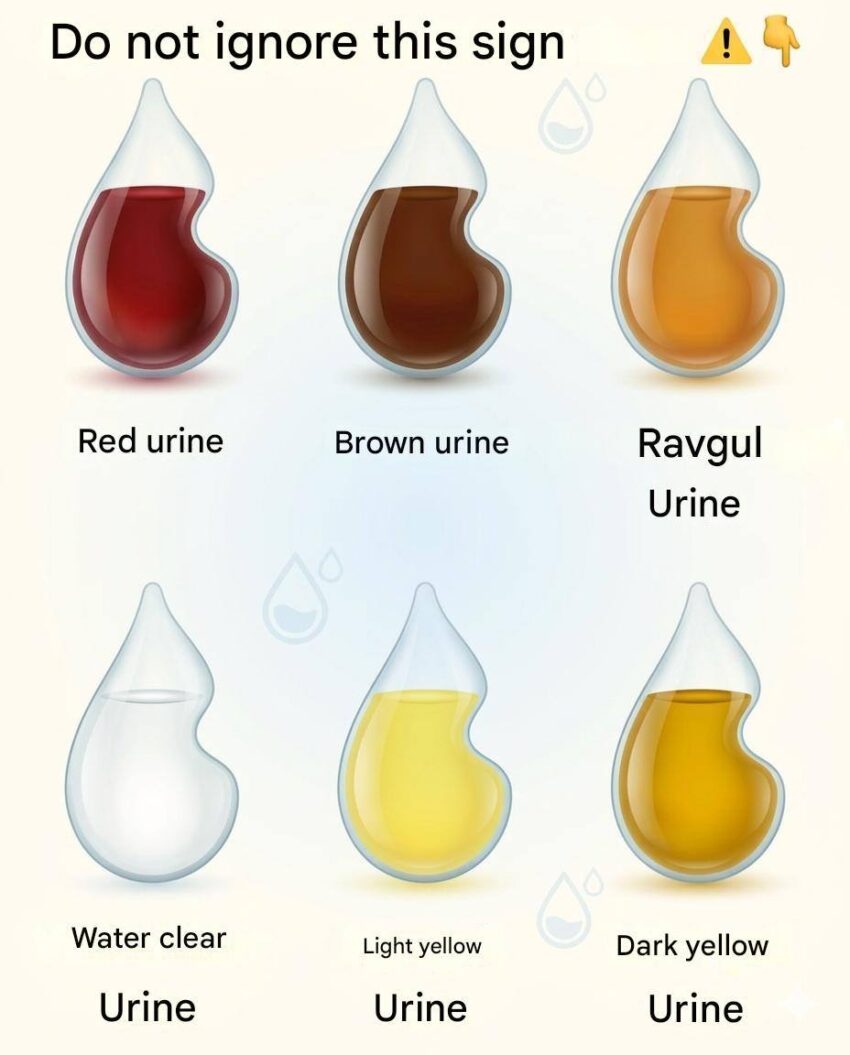
Urine color can give quick clues about hydration and sometimes health, but it’s not a diagnosis on its own. Normal urine comes from waste filtered by the Kidneys, and its color mainly reflects how concentrated it is.
🚰 💛 Normal range
💛 Pale yellow (ideal)
- Best sign of good hydration
- Means your body has enough water
- Normal and healthy
💧 Dehydration signs
🟡 Dark yellow / amber
- You need more water
- Common after sweating, heat, or not drinking enough
🟠 Orange
- Can be dehydration
- Sometimes from vitamins (especially B-complex) or certain medications
⚠️ Possible health warning colors
🔴 Pink or red
- Could be blood in urine
- Or from foods like beetroot
👉 Needs medical check if not food-related
May be linked to conditions affecting the urinary system, such as Urinary tract infection
🟤 Brown / cola-colored
- Possible severe dehydration
- Liver or muscle issues in some cases
👉 Should be checked if persistent
🟢 Blue or green (rare)
- Usually from medications or food dyes
- Rare infections or genetic conditions
⚪ Very clear (always transparent)
- Could mean overhydration
- Sometimes not harmful, but constantly very clear urine may dilute electrolytes
🧠 Important reality check
Urine color can change due to:
- Food (beets, carrots, dyes)
- Vitamins and supplements
- Medications
- Hydration level
So color alone is not a diagnosis tool.
🚨 When to see a doctor
- Blood in urine (not food-related)
- Persistent dark or unusual color
- Pain, burning, fever, or frequent urination
🧠 Bottom line
Urine color mainly reflects hydration status, but unusual or persistent changes can sometimes signal underlying health issues that need medical attention.
If you want, I can give you a simple hydration guide based on urine color and daily water needs.
