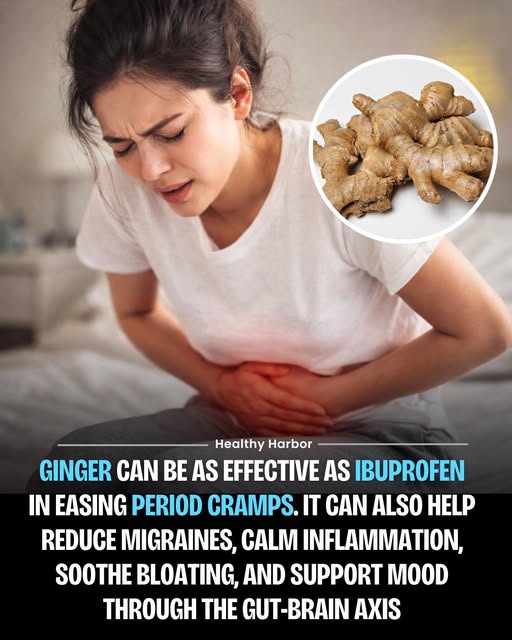
That claim is partly based on real research, but heavily exaggerated in viral posts.
The ingredient involved is Ginger.
🧠 What science actually supports
🩸 1. Period cramps (some evidence)
- A few studies show ginger may reduce menstrual pain
- Effects can be mild to moderate
- It may work through anti-inflammatory pathways similar to mild pain relievers
👉 It is not proven to be as strong or consistent as ibuprofen, but it can help some people.
🤕 2. Migraines
- Limited evidence suggests it may reduce nausea and mild headache symptoms
- Not a replacement for migraine medication
🔥 3. Inflammation
- Ginger has anti-inflammatory compounds (gingerols)
- May help general inflammation support, but not treat serious inflammatory diseases alone
🤢 4. Bloating & digestion
- More solid evidence here
- Can help:
- Gas
- Mild bloating
- Digestion speed
🧠 5. Mood & gut–brain axis
- Early research suggests gut health can influence mood
- Ginger may indirectly support digestion and comfort
- But claims about strong antidepressant effects are not proven
⚠️ What is exaggerated
- “As effective as ibuprofen” → ❌ not reliably proven
- “Cures migraines” → ❌ false
- “Strong mood treatment” → ❌ overstated
💊 Safety notes
- Generally safe in food amounts
- High doses may cause:
- Heartburn
- Stomach upset
- Can interact with blood thinners in high amounts
🧠 Bottom line
Ginger can gently help with cramps, digestion, and mild inflammation, but it is not as powerful or consistent as medical painkillers like ibuprofen.
If you want, I can show you a simple, evidence-based natural plan for period pain relief (food + heat + exercise + timing) that actually works better than viral claims.
