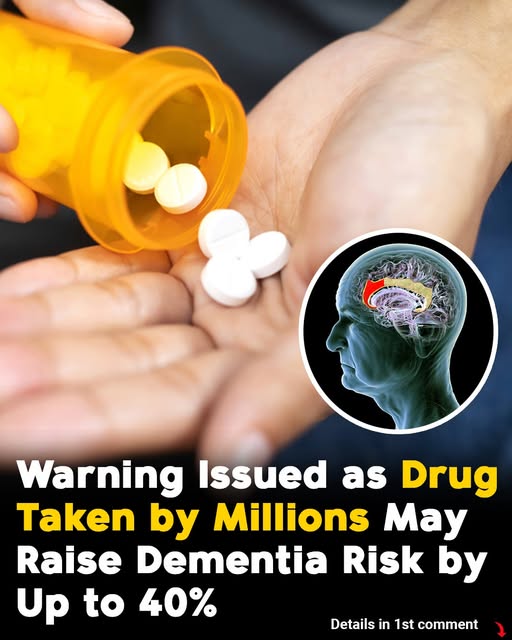
That’s another clickbait-style health warning, and it needs context before anyone panics.
Headlines like “drug taken by millions may raise dementia risk by 40%” are usually based on observational studies, which show association, not proof of cause.
🧠 What these headlines usually refer to
They often involve common medications such as:
- Sleeping pills
- Antihistamines
- Bladder medications
- Some antidepressants (in older studies)
These can affect brain chemicals involved in memory, but the risk depends on the drug, dose, and duration.
⚠️ Important reality check
📊 1. “40% risk increase” is relative risk
- If baseline risk is low, the actual increase may still be small
- Example: 1% → 1.4% (not 40 out of 100 people)
🔬 2. Correlation ≠ causation
People taking these drugs often already have:
- Poor sleep
- Anxiety or depression
- Other health conditions
These factors themselves may increase dementia risk.
🧓 3. Age and health matter more
Dementia risk is more strongly linked to:
- Age
- Genetics
- Cardiovascular health
- Diabetes and blood pressure
🧠 Example of commonly discussed drug class
Some studies have looked at long-term use of:
- Anticholinergic drugs
These may affect memory if used heavily over long periods, especially in older adults.
⚠️ What you should NOT do
- Don’t stop prescribed medication suddenly
- Don’t assume short-term use is dangerous
- Don’t trust social media headlines without details
🧠 Bottom line
The claim is overstated and lacks context. Some medications may have a small association with cognitive risk in long-term heavy use, but they are not proven to directly “cause dementia” in most people.
If you want, I can check which common medicines actually have confirmed brain-related side effects and which are safe long-term.
