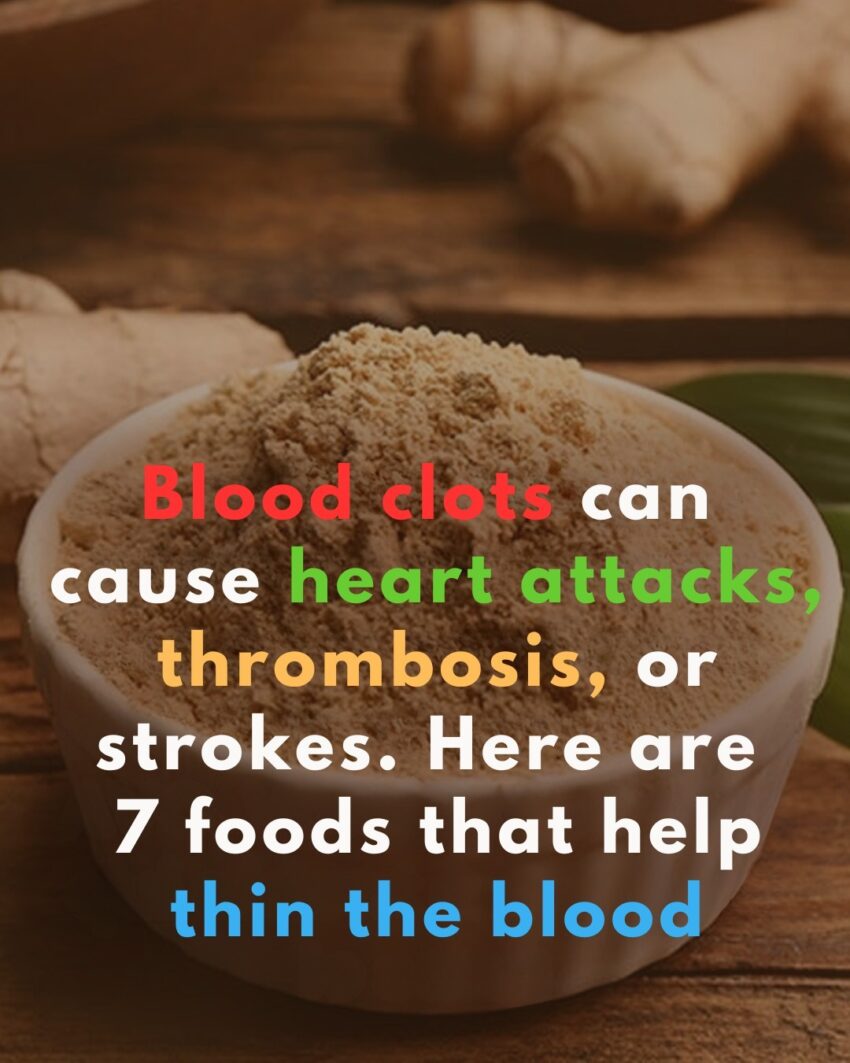
This is another headline that mixes a real medical concept with oversimplified “food cure” framing.
🧠 First: what’s true
- Blood clots can cause heart attacks, strokes, and deep vein thrombosis (DVT) — correct.
- Doctors sometimes use blood thinners (anticoagulants or antiplatelet drugs) to reduce risk in specific patients.
But…
⚠️ Important correction
There is no food that reliably “thins the blood” in a medically controlled way like prescription anticoagulants do.
Food can only have very mild effects on platelet activity or inflammation, and results vary widely between people.
🥗 Foods often misleadingly called “blood thinners”
Here are foods sometimes mentioned in these lists—and what the evidence actually says:
1. Garlic 🧄
- Mild antiplatelet effect in lab studies
- Effect in real life is small and inconsistent
2. Ginger
- May slightly reduce platelet aggregation
- Not strong enough to prevent clots on its own
3. Turmeric (curcumin)
- Anti-inflammatory properties
- Weak blood-thinning effect at dietary doses
4. Fatty fish (omega-3s)
- Can slightly reduce clotting tendency at high intake
- More important for heart health overall
5. Olive oil
- Supports cardiovascular health
- Not a direct anticoagulant
6. Berries
- Antioxidants support blood vessel health
- No true “blood thinning” action
7. Green tea
- Mild effects on platelets in some studies
- Can interact with certain medications in high amounts
⚠️ Very important safety point
If someone is on real blood thinners like:
- warfarin
- apixaban
- rivaroxaban
- aspirin (in some cases)
Then some foods and supplements can interfere with medication balance, especially:
- vitamin K–rich foods (affect warfarin)
- concentrated herbal supplements
🧾 Bottom line
- Foods can support heart and vascular health
- But they do not replace medical blood thinners
- “7 foods that thin blood” is marketing simplification, not clinical guidance
If you want, I can explain the real warning signs of dangerous clots (DVT, stroke symptoms) in a clear, practical way.
