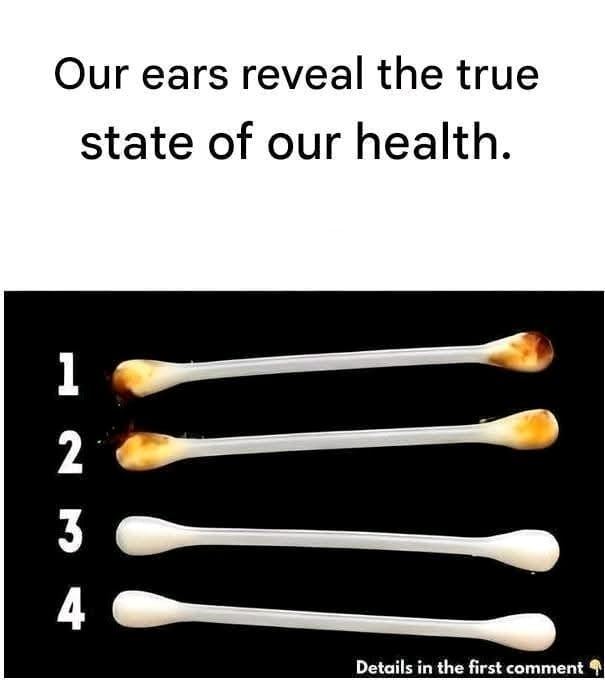
That statement is partly true—but overstated.
Your ears can show clues about certain health issues, but they don’t “reveal the true state of your health” in a reliable or complete way. Doctors use them as one piece of the puzzle, not a standalone diagnosis.
👂 What your ears can actually indicate
1. Earwax changes
- Too much buildup can affect hearing
- Unusual color or smell may suggest infection
2. Hearing loss
- Could be from aging, noise exposure, or nerve-related issues
- Sometimes linked to conditions like diabetes or circulation problems
3. Ringing in ears (tinnitus)
- Known as tinnitus
- Can be caused by stress, loud noise, or ear damage
4. Ear pain or discharge
- Often a sign of infection (like otitis media)
5. Crease in the earlobe (possible link)
- Some studies suggest a diagonal earlobe crease may be associated with coronary artery disease
- But this is not a reliable diagnostic sign
❌ What’s misleading
- Ears don’t give a full picture of your body’s health
- Many “ear signs” online are exaggerated or not scientifically proven
- Proper diagnosis always requires medical tests and evaluation
👍 The real takeaway
Your ears can signal local problems (like infections or hearing loss) and occasionally hint at broader issues—but they’re not a health scanner.
If you want, I can show you a quick self-check to spot early ear problems before they become serious.
