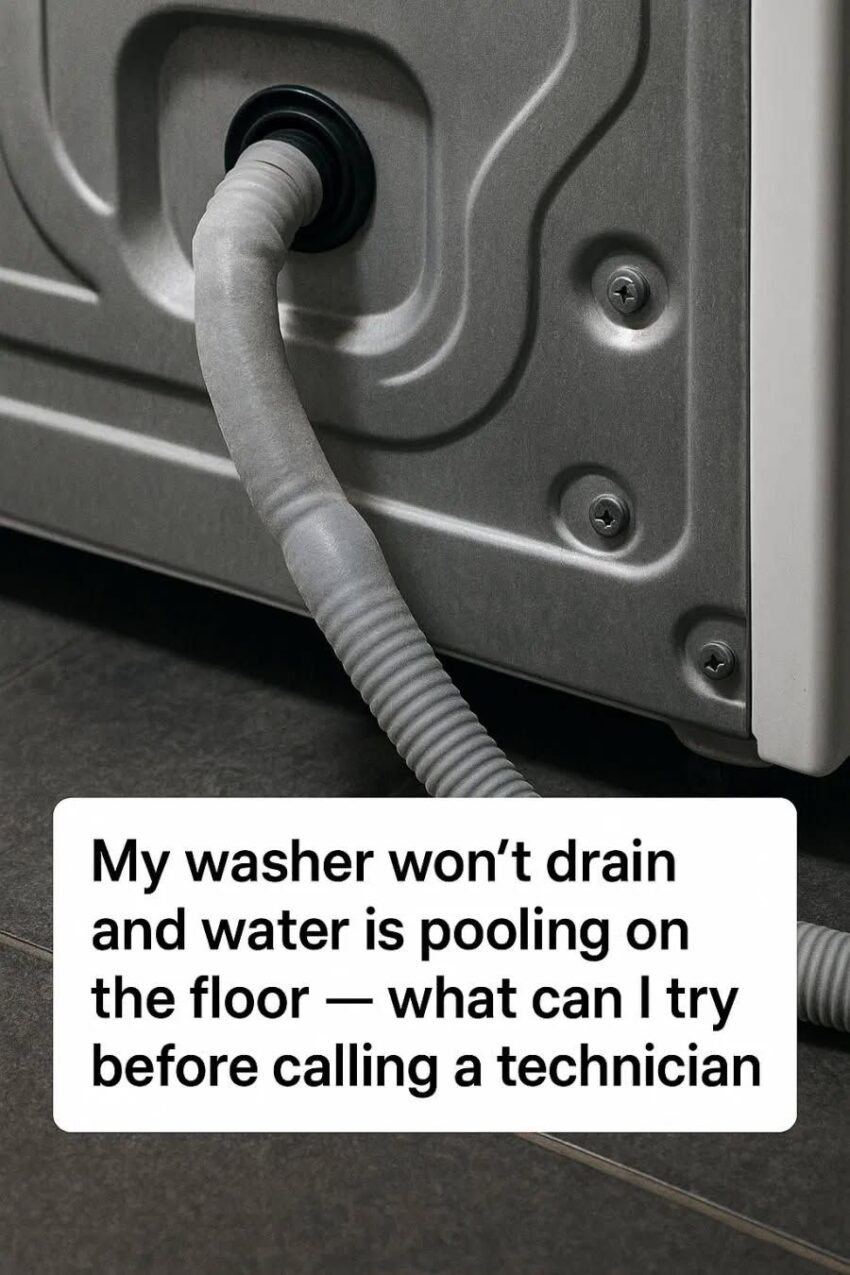
If your washer won’t drain and water is pooling on the floor, you can often fix the most common causes yourself before calling a technician. Here’s a safe, practical checklist.
⚠️ First: safety
- Unplug the washer from power
- Avoid standing water near electrical outlets
- Keep towels/bucket ready for water
🧰 1. Check the drain hose (most common issue)
- Look behind the washer for the drain hose
- Make sure it isn’t:
- kinked or bent
- pushed too deep into the standpipe
- clogged or blocked
👉 Try disconnecting it and running water through it into a bucket.
🧼 2. Clean the pump filter (very common in front-load washers)
Many washers have a small access panel at the bottom front.
- Open it carefully (water may come out)
- Remove the filter
- Clean out:
- lint
- coins
- hair
- debris
- Rinse and reinstall tightly
🌀 3. Check for pump blockage
If you can access it safely:
- Look for foreign objects stuck in the pump area
- Small socks or debris can block drainage completely
🚿 4. Inspect the standpipe or floor drain
Sometimes the washer is fine, but the home drain is blocked:
- Pour water into the standpipe
- If it backs up → blockage in household plumbing
- Try a plunger or drain cleaner if needed
🔄 5. Try a “drain/spin” reset
- Run a drain/spin cycle again
- Sometimes the machine pauses due to imbalance or error
- Unplug for 5 minutes and restart
🧺 6. Check for overload or imbalance
- Too many heavy clothes can stop draining/spinning
- Redistribute or remove some items and retry
🚨 When to call a technician
Call for help if:
- Pump makes loud humming but doesn’t drain
- Water keeps leaking after checking hose/filter
- Electrical smell or repeated error codes
- You’ve cleaned everything but issue remains
🧠 Bottom line
Most drainage problems come from blocked filters, kinked hoses, or clogged drains, and you can often fix them in under 30 minutes.
If you want, tell me your washer brand/model and I can give you exact steps for your machine.
