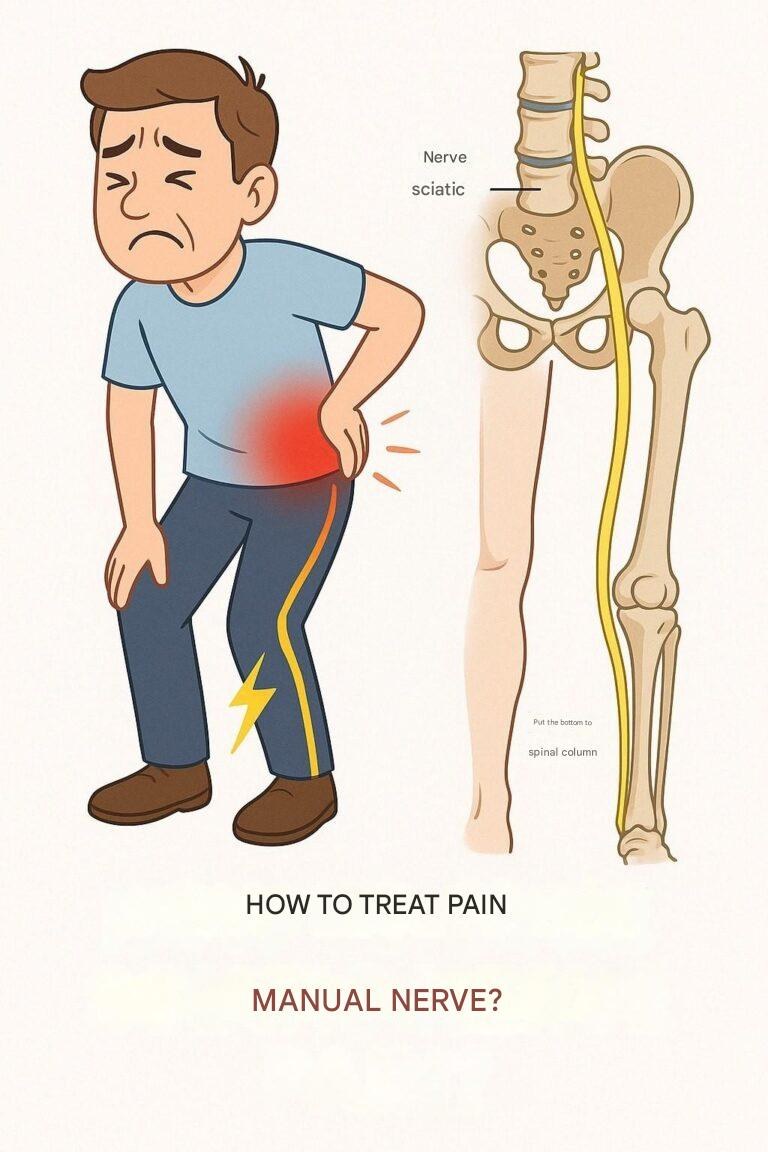
Sciatica is not a disease itself but a symptom of irritation or compression of the sciatic nerve, which is the longest nerve in the body. It runs from the lower back, through the hips and buttocks, down each leg.
Main causes of sciatica pain
1. Herniated (slipped) disc
This is the most common cause. The soft inner part of a spinal disc pushes out and presses on the sciatic nerve roots. This often happens in the lower spine (lumbar region).
2. Degenerative disc disease
As people age, spinal discs lose water and height. This can lead to:
- Narrowing of nerve spaces
- Increased pressure on nerve roots
3. Spinal stenosis
This means narrowing of the spinal canal, which can squeeze the sciatic nerve. It is usually age-related and may cause pain, numbness, or weakness in the legs.
4. Piriformis syndrome
The piriformis muscle (deep in the buttock) can tighten or spasm and compress the sciatic nerve. This is more common in athletes or people who sit for long periods.
5. Spondylolisthesis
A vertebra slips forward over the one below it, which can pinch nerve roots and trigger sciatic pain.
6. Injury or trauma
Accidents, falls, or spinal injuries can directly irritate or compress the nerve.
7. Pregnancy
Weight gain, posture changes, and hormonal effects can sometimes increase pressure on the lower spine and sciatic nerve.
What sciatica pain feels like
People often describe:
- Sharp or burning pain from lower back to leg
- Tingling or “pins and needles”
- Numbness or weakness in one leg
- Pain worse when sitting or coughing
If you want, I can also explain how to tell sciatica apart from normal back pain, or simple treatments and exercises that actually help reduce it.
