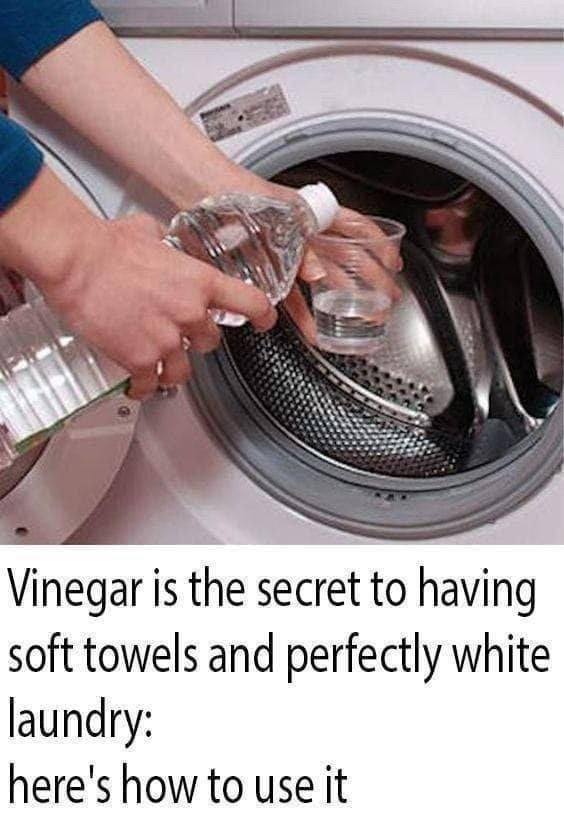
Vinegar (usually white distilled vinegar) is a popular laundry hack—and in some ways it actually works—but it’s not a magic “whitening secret.” Here’s the real, safe way to use it and what it actually does.
🧺 How to use vinegar in laundry
✔️ For soft towels
- Add ½ to 1 cup white vinegar in the fabric softener compartment
- Run a normal wash cycle (no fabric softener)
👉 It helps:
- Remove detergent residue
- Reduce stiffness in towels
- Improve absorbency
✔️ For fresher, cleaner smell
- Add ½ cup vinegar during the rinse cycle
👉 It can help:
- Neutralize odors (sweat, mildew, smoke)
- Refresh clothes without heavy fragrance
✔️ For mild whitening (not bleaching)
- Add ½ cup vinegar to the wash water
👉 It may help:
- Remove buildup that makes clothes look dull
- Brighten slightly over time
⚠️ But it does NOT bleach like real whitening agents
⚠️ Important safety rules
- ❌ Never mix vinegar with bleach (toxic gas risk)
- ❌ Don’t overuse—it can damage rubber seals in machines over time
- ❌ Not ideal for silk, wool, or delicate fabrics
🧠 What vinegar actually does
Vinegar is:
- A mild acid (acetic acid)
- Good at breaking down detergent buildup and mineral deposits
- Not a disinfectant or strong whitening agent
💡 Bottom line
Vinegar is great for:
✔ Softening towels naturally
✔ Removing smells
✔ Reducing detergent residue
But it is not a powerful whitening solution or full replacement for detergent or bleach.
If you want, I can give you a step-by-step “perfect white laundry” routine using normal household products that actually works better than viral hacks.
