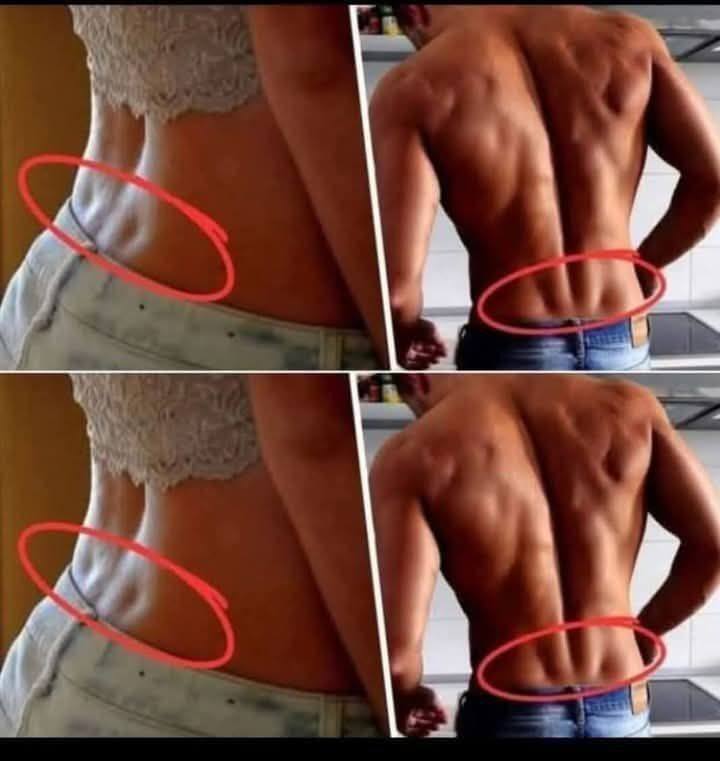
This is another clickbait-style claim that usually refers to the small indentations on the lower back called:
Dimples of Venus
🧠 What those “two holes” actually are
They are:
- Natural indentations in the skin near the lower back (just above the buttocks)
- Formed where the skin is tightly attached to the pelvic bone
- Mostly genetic—you either have them or you don’t
They are completely normal and harmless.
❌ What they do NOT mean
Despite viral posts, they do NOT indicate:
- Luck or “special destiny”
- Higher attractiveness (subjective, not biological fact)
- Better health or fitness level
- Personality traits
- Anything medical or spiritual
These interpretations are internet myths, not science.
🧬 Who gets them?
- Both men and women can have them
- More visible in people with lower body fat, but not caused by fitness
- Purely anatomical variation
⚠️ Why you keep seeing “see more” posts
These posts are designed to:
- Create curiosity
- Increase clicks and shares
- Suggest “hidden meaning” in normal body features
They rarely provide real scientific explanation.
🧾 Bottom line
Those “two holes in your back” are:
- ✔️ Normal anatomical dimples (Venus dimples)
- ❌ Not a sign of hidden traits or predictions
- ❌ Not medically significant
If you want, I can break down other viral body myths like:
- “Finger length shows personality”
- “Eye shape reveals character”
- “Body marks that supposedly mean something special”
