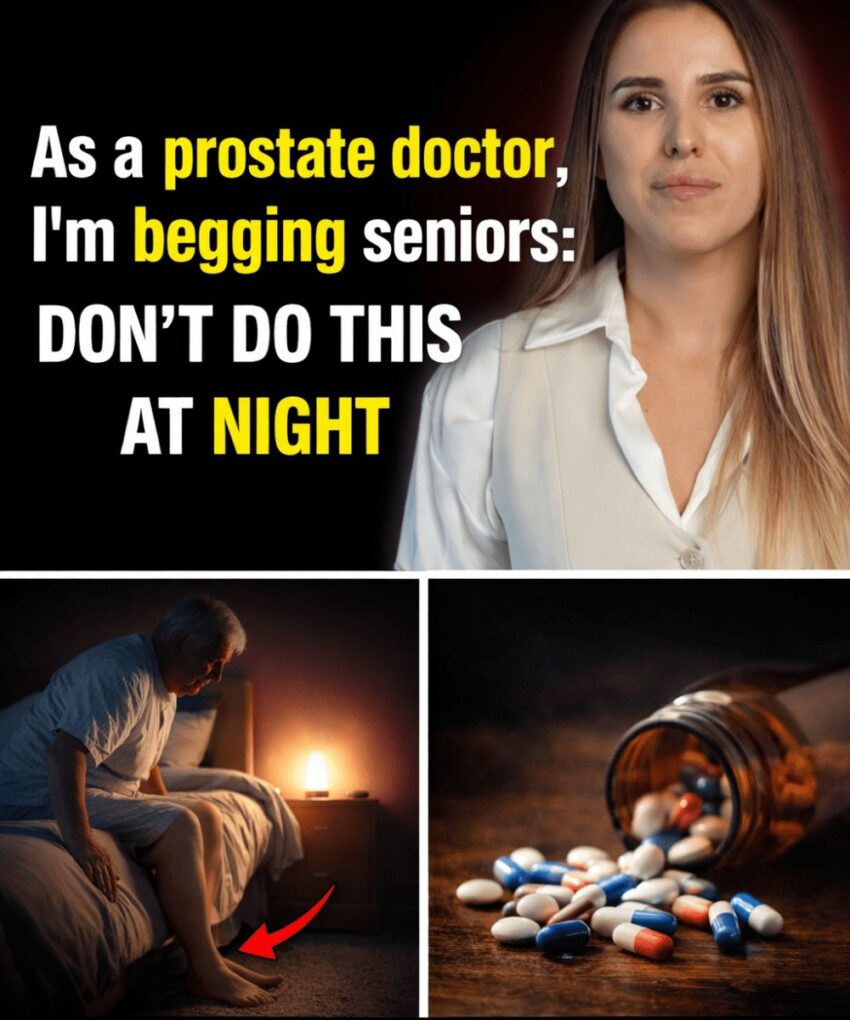
That headline — “As a prostate doctor, I’m begging seniors: DON’T DO THIS AT NIGHT” — is another example of fear-based clickbait. It’s written to sound urgent and personal, but it doesn’t specify any real medical advice until you click.
🚩 Why this is suspicious
- “As a doctor, I’m begging…” is a common emotional hook
- “DON’T DO THIS AT NIGHT” is intentionally vague
- Real medical advice is usually specific, evidence-based, and not alarmist
🧠 What it’s probably referring to
In most cases, these articles are loosely related to urinary or prostate issues in older men, such as:
Benign prostatic hyperplasia (BPH)
This is a very common condition in older men where the prostate enlarges and can cause:
- Frequent urination at night (nocturia)
- Weak urine stream
- Difficulty starting urination
- Feeling like the bladder isn’t empty
🌙 Real nighttime advice doctors actually give
For men with prostate or urinary issues, doctors may recommend:
- Reducing fluids 2–3 hours before bed
- Avoiding caffeine and alcohol at night
- Emptying the bladder before sleeping
- Managing medications if prescribed
But there is no universal “dangerous thing every senior must avoid at night” as these headlines imply.
⚠️ Key takeaway
If a health headline:
- Sounds urgent or emotional
- Hides the main point (“don’t do this…”)
- Uses authority without details (“doctor begs…”)
…it’s usually designed for clicks, not medical education.
If you want, I can explain:
- Real prostate warning signs to watch for
- Or what actually helps nighttime urination scientifically
Just tell me 👍
