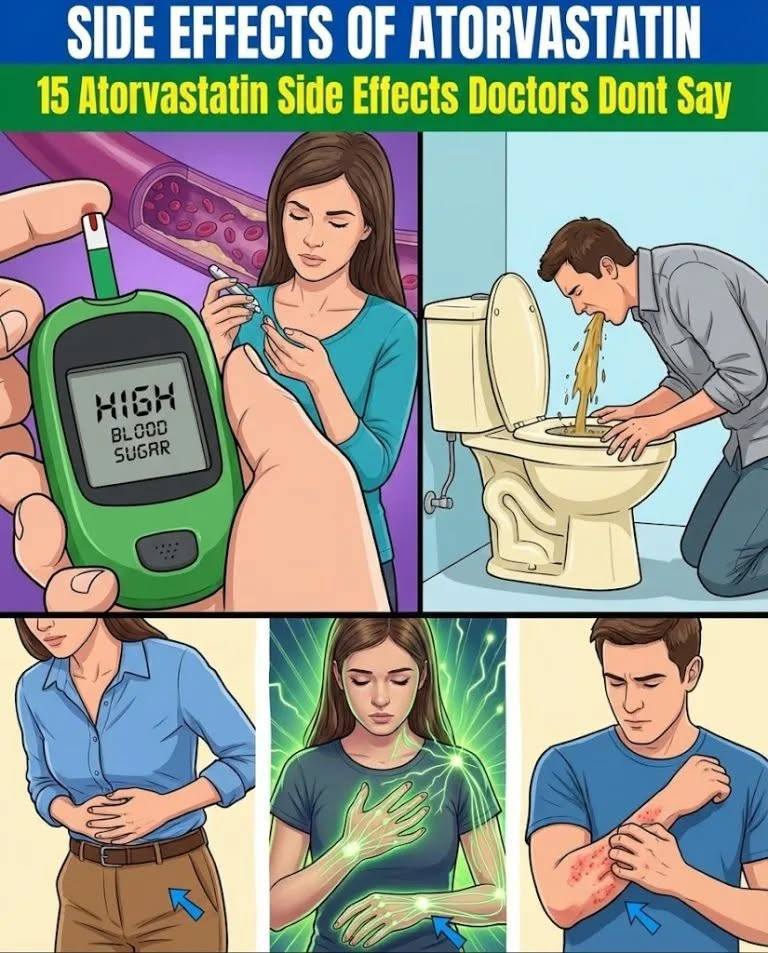
Atorvastatin is widely used to lower cholesterol and reduce the risk of heart attacks and strokes. Most people tolerate it well, but it’s smart to know the possible side effects.
Common side effects (usually mild)
These often improve as your body adjusts:
- Muscle aches or mild pain
- Joint pain
- Headache
- Nausea or indigestion
- Diarrhea or constipation
Less common but important
- Muscle problems: soreness, weakness, or cramps that feel unusual
- Liver irritation: may show up as fatigue, loss of appetite, or dark urine
Doctors sometimes monitor liver enzymes with blood tests, especially early on.
Rare but serious (seek medical help)
- Severe muscle pain with weakness (possible muscle breakdown)
- Yellowing of skin or eyes (possible liver issue)
- Severe allergic reaction (rash, swelling, difficulty breathing)
Who should be extra careful
- People with liver disease
- Heavy alcohol use
- Those taking interacting medications
- Older adults (higher risk of muscle side effects)
Practical tips
- Take it exactly as prescribed (often once daily)
- Report new or unusual muscle pain promptly
- Avoid large amounts of grapefruit juice—it can increase side effects
- Don’t stop suddenly without consulting your doctor
Bottom line
For most people, the benefits of atorvastatin in preventing serious heart problems far outweigh the risks. The key is to stay alert to symptoms and keep regular follow-ups.
If you want, tell me your dose or any symptoms you’re noticing—I can help you figure out whether they’re likely related.
