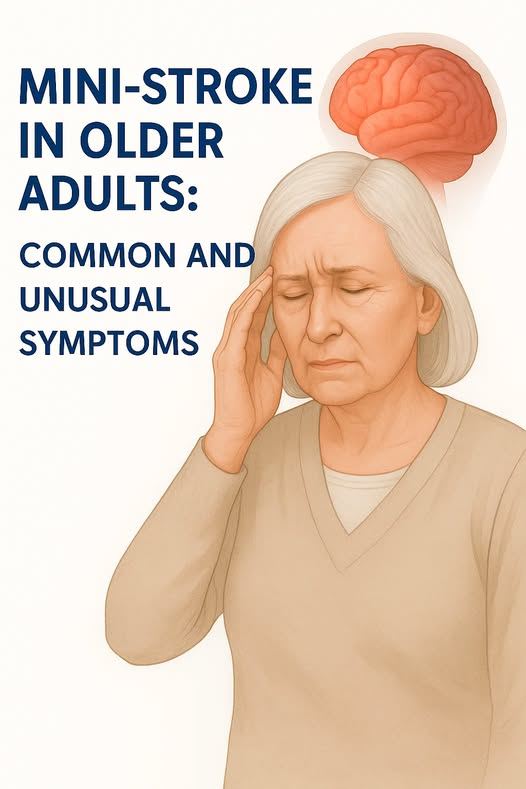
A “mini-stroke” is the common name for a Transient ischemic attack. It happens when blood flow to part of the brain is briefly blocked. Symptoms often go away within minutes to hours—but it’s a serious warning sign for a future stroke.
Common symptoms (the FAST signs)
These are the most important to recognize quickly:
- Face drooping on one side
- Arm weakness or numbness (especially one-sided)
- Speech difficulty (slurred or hard to understand)
- Time to act → seek medical help immediately
You may also see:
- Sudden vision problems (one or both eyes)
- Dizziness or loss of balance
- Sudden severe headache
Unusual or less obvious symptoms (more common in older adults)
These can be easy to miss:
- Sudden confusion or memory problems
- Brief loss of coordination without obvious weakness
- Numbness in the face or body without pain
- Trouble swallowing
- Sudden fatigue or feeling “off”
- Short episodes of blurred vision or double vision
Why it matters
Even though symptoms pass, a TIA means:
- There’s a high risk of a full stroke in the near future
- Urgent evaluation can prevent serious damage
Conditions like Hypertension, Diabetes, and high cholesterol increase the risk.
What to do
- Don’t ignore symptoms—even if they go away
- Seek emergency care immediately
- Early treatment can prevent a major stroke
Bottom line
A mini-stroke isn’t “minor.” It’s a warning signal. Recognizing both the obvious and subtle signs can make a life-saving difference.
If you want, I can walk you through how to quickly tell the difference between a TIA and something less serious.
