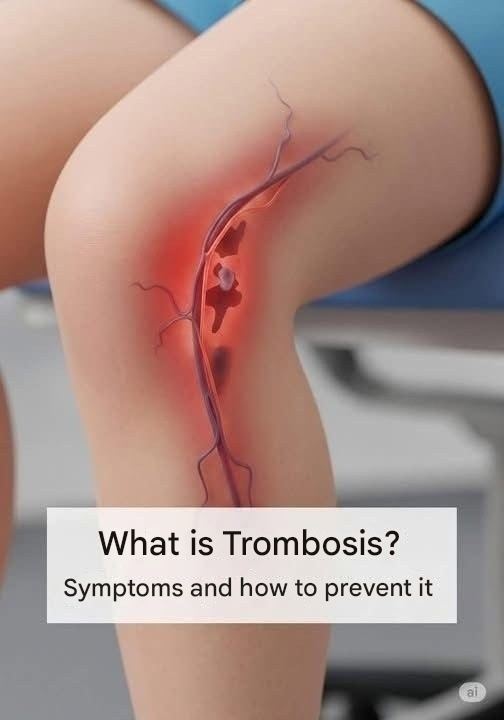
“Trombosis” (more correctly spelled thrombosis) is a condition where a blood clot forms inside a blood vessel and blocks or slows blood flow. It can happen in veins or arteries and can become dangerous if the clot travels or fully blocks circulation.
What is thrombosis?
Thrombosis occurs when blood thickens and clumps together abnormally, forming a clot (thrombus).
Common types include:
- Deep vein thrombosis (DVT): clot in deep veins (usually legs)
- Arterial thrombosis: clot in arteries (can lead to heart attack or stroke)
Symptoms
Deep vein thrombosis (DVT)
- Swelling in one leg (rarely both)
- Pain or tenderness (often in calf)
- Warm, red or discolored skin
Dangerous complication: pulmonary embolism
If a clot travels to the lungs → Pulmonary embolism
- Sudden shortness of breath
- Chest pain (worse when breathing)
- Rapid heartbeat
- Can be life-threatening
Arterial thrombosis symptoms
- Sudden severe pain
- Cold or pale limb
- Weak pulse
- In the brain → stroke symptoms (speech problems, weakness)
Risk factors
- Long periods of sitting (travel, bed rest)
- Surgery or injury
- Smoking
- Obesity
- Pregnancy
- Conditions like Diabetes and Hypertension
How to prevent it
Daily habits
- Stay active (walk, move regularly)
- Avoid sitting too long—especially during travel
- Maintain a healthy weight
- Drink enough water
Medical prevention (if at risk)
- Compression stockings
- Blood-thinning medications (if prescribed)
- Managing chronic conditions
When to seek help
Get medical help immediately if you notice:
- Sudden leg swelling with pain
- Chest pain or breathing difficulty
- Signs of stroke
Bottom line
Thrombosis is serious but often preventable. Early recognition and simple lifestyle habits can greatly reduce the risk.
If you want, tell me your lifestyle (sitting job, travel, etc.), and I can give you personalized prevention tips.
