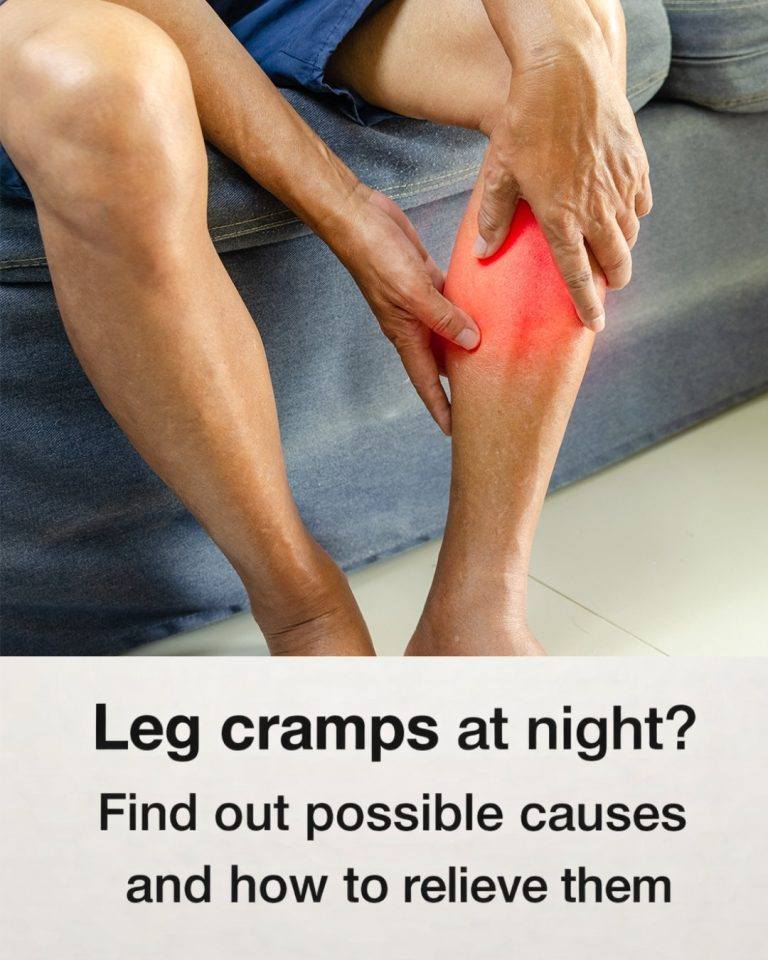
Night-time leg cramps (often called nocturnal leg cramps) are sudden, painful muscle contractions—usually in the calf or foot—that happen while you’re resting or asleep.
They’re common and usually not dangerous, but they can be very uncomfortable.
🔍 Possible causes
No single cause fits everyone, but common triggers include:
1) Muscle fatigue or overuse
Long standing, walking, or exercise during the day can make calf muscles cramp at night.
2) Dehydration
Not drinking enough water can make muscles more “irritable” and prone to spasms.
3) Low minerals (electrolyte imbalance)
Low levels of:
- potassium
- calcium
- magnesium
can contribute to cramps.
Magnesium is especially linked with muscle relaxation.
4) Poor circulation or prolonged sitting
Sitting with legs in one position for long periods can reduce blood flow.
5) Nerve issues or spine problems
Sometimes irritation of nerves from the lower back can trigger cramps.
6) Medications or medical conditions
Certain medicines (like diuretics) or conditions such as diabetes or thyroid disorders can be linked.
🧊 How to relieve a cramp (right away)
When a cramp hits:
- Gently stretch the muscle
- For calf cramps: straighten the leg and pull toes upward toward your shin
- Massage the affected area
- Stand and walk slowly if possible
- Apply warmth (heating pad) or a warm towel
- Or use ice if the muscle feels sore afterward
🌙 How to reduce night cramps
✔️ Before bed
- Light stretching of calves and hamstrings
- Avoid intense exercise late at night
✔️ Hydration
- Drink enough water during the day (not just at night)
✔️ Nutrition
- Eat foods rich in potassium (bananas, dates)
- Include magnesium sources (nuts, seeds, leafy greens)
✔️ Sleep position
- Avoid pointing toes downward while sleeping
- Some people benefit from slightly elevated legs
✔️ Activity habits
- Avoid sitting still for long periods—move legs every hour
- Gentle walking helps circulation
⚠️ When to see a doctor
Get checked if:
- cramps are frequent and severe
- they disturb sleep regularly
- you also have swelling, weakness, or numbness
- or you have conditions like diabetes or back pain
If you want, tell me your age, activity level, or when the cramps started—I can narrow down the most likely cause for your situation.
