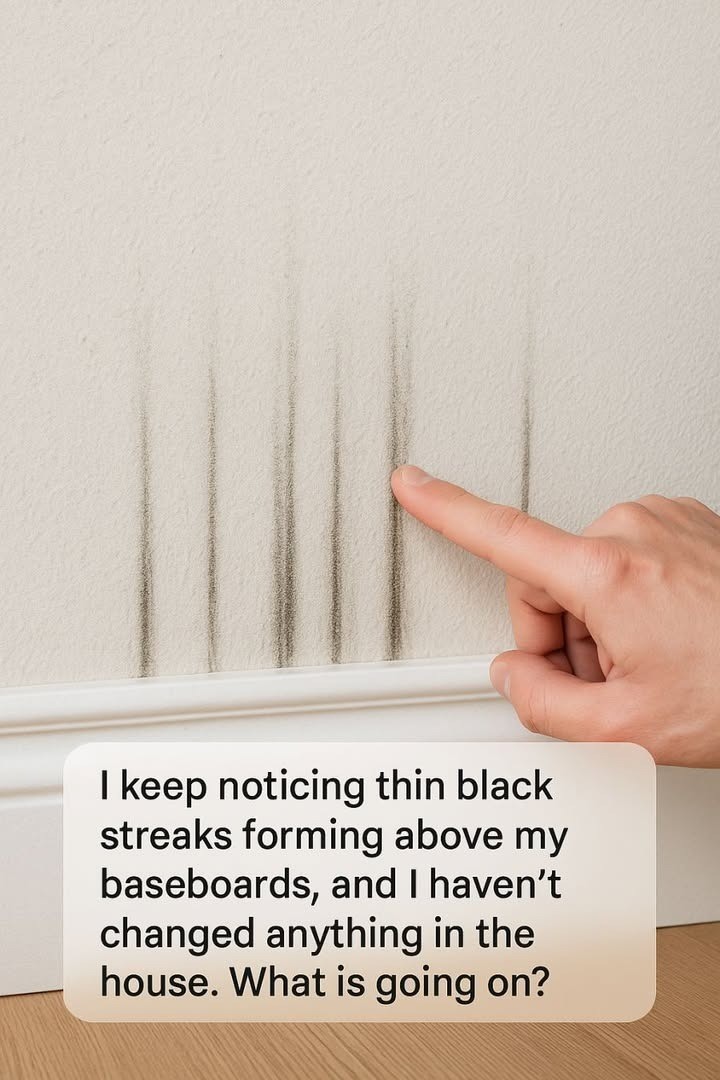
Those thin black streaks above baseboards are almost never random—they’re usually a sign of something called “ghosting” or thermal tracking.
Here’s what’s likely happening:
1. Airflow + dust buildup
- Warm air rises and cool air sinks, so air tends to move along walls—especially near baseboards.
- That moving air carries dust, soot, or tiny particles that stick to the wall over time.
2. Temperature differences in the wall
- Areas above studs or insulation gaps can be slightly cooler.
- Moisture condenses more easily there, making dust cling in thin streaks or lines.
3. Indoor pollutants
- Things like candles, cooking oils, smoking, or even fireplaces release fine particles.
- These make the streaks darker and more noticeable.
4. HVAC patterns
- If you use heating or cooling regularly, airflow patterns can “trace” these lines along walls.
Why it suddenly appeared
Even if you didn’t “change anything,” subtle shifts can cause it:
- Seasonal heating/cooling use
- Slight increase in humidity
- New furniture altering airflow
- A clogged air filter spreading more particles
What to do
- Clean it first: Use mild soap or a wall cleaner—avoid harsh scrubbing.
- Check your HVAC filter: Replace if it’s dirty.
- Reduce particle sources: Limit candles or improve ventilation when cooking.
- Seal gaps: Around baseboards or insulation issues if the pattern keeps returning.
When to look closer
If the streaks:
- Feel greasy or sooty → likely indoor air particles
- Keep coming back quickly → airflow or insulation issue
- Look fuzzy or spread irregularly → could be mold (less common, but worth checking)
In short: your walls are basically acting like an air filter, revealing invisible airflow and dust patterns. It’s common, fixable, and more about air quality and circulation than anything structural.
