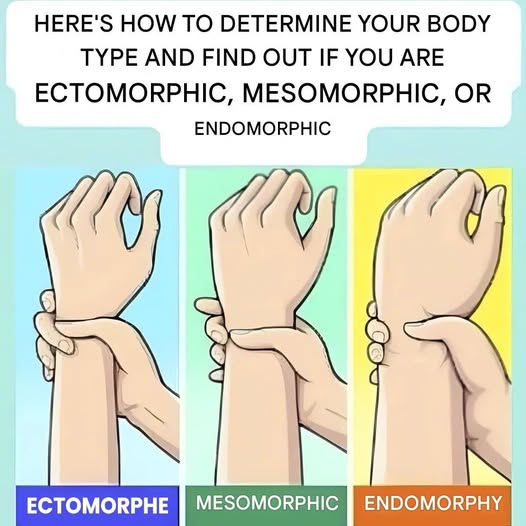
The idea of being an ectomorph, mesomorph, or endomorph comes from an old body-type theory called somatotypes. It’s popular in fitness content, but in real science, most people are actually a mix of all three rather than just one fixed type.
Still, here’s a clear way to understand it 👇
🧬 How to determine your body type
1. Ectomorph (lean & slim)
Typical signs:
- Naturally thin frame
- Narrow shoulders and hips
- Hard to gain weight or muscle
- Fast metabolism
- Long limbs
👉 Example: People who stay slim even when eating more
2. Mesomorph (athletic & muscular)
Typical signs:
- Naturally muscular body
- Broad shoulders
- Gains muscle easily
- Loses fat relatively easily
- Strong, athletic appearance
👉 Example: “Naturally fit” or sporty build
3. Endomorph (soft & rounder)
Typical signs:
- Gains weight easily
- Stores fat more easily
- Slower metabolism
- Wider waist/hips
- Strong but less defined muscles
👉 Example: Body tends to stay fuller even with diet control
🧪 Simple self-check test
Ask yourself:
- Do I gain weight easily? → Endomorph tendency
- Do I stay lean no matter what? → Ectomorph tendency
- Do I build muscle easily? → Mesomorph tendency
Most people answer: a mix of all three
⚠️ Important reality (science-based)
Modern sports science says:
- Body types are not fixed categories
- Metabolism, diet, activity, and hormones matter more
- You can change your body composition over time
👉 Example: An “endomorph” can become lean with training and diet
🏋️ What matters more than body type
Instead of focusing on labels, focus on:
- Strength training
- Protein intake
- Calorie balance
- Sleep and recovery
🧠 Bottom line
Somatotypes are a simplified guide, not a strict biological classification. They can help you understand tendencies, but they don’t define your fitness limits.
If you want, I can help you find your body type more accurately using your height, weight, and habits 👍
