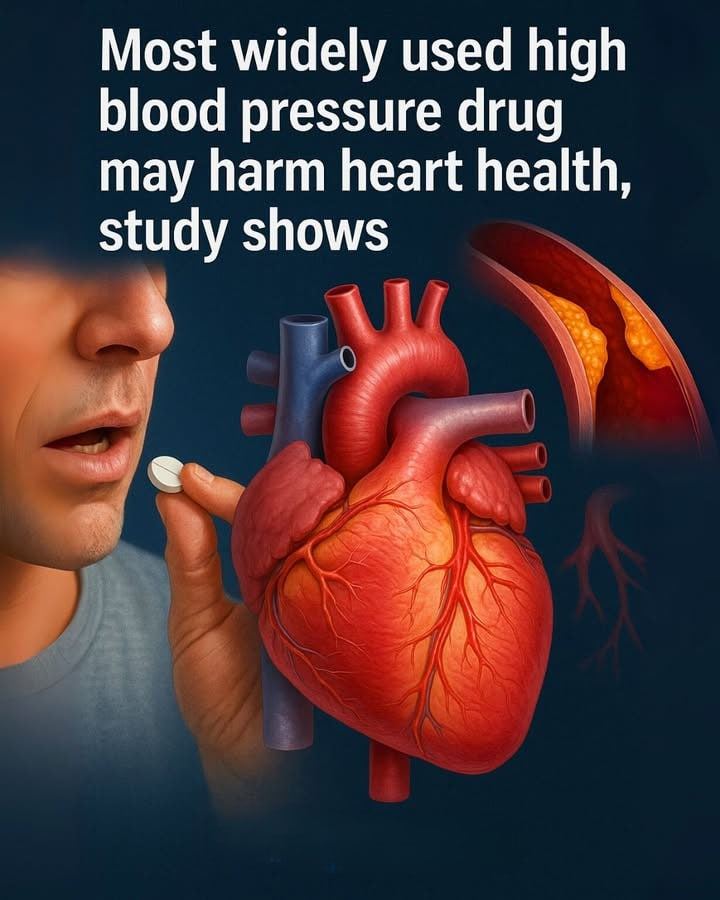
Here’s a balanced, evidence‑based summary of what research says about a widely used high blood pressure medication and its potential effects on heart health — and what it really means for patients:
🧠 1. Some older hypertension drugs may not benefit all patients
Recent large studies have found that certain drugs, especially older beta blockers, may not provide clear heart benefits in some groups — particularly people who have normal heart function after a heart attack. They may be less effective or even unnecessary compared with other treatments for preventing future heart events.
Beta blockers are often used to slow heart rate and lower blood pressure, but in patients whose heart pumping ability is preserved, they didn’t clearly reduce serious outcomes like heart attack or death.
💥 2. Some drugs may have side effects that affect heart health
Researchers in lab studies noticed that L‑type calcium channel blockers (LCCBs) — a very common class of blood pressure medicines (including amlodipine, nifedipine, etc.) — might influence blood vessel cells in ways that could potentially impair blood flow or promote remodeling of vessel walls. In controlled experiments on cells and animals, this was linked to changes that aren’t always beneficial.
However:
- These findings don’t prove that these drugs will harm all patients.
- Most LCCBs are still widely prescribed because they effectively lower blood pressure and reduce cardiovascular risk when used properly.
- Clinical treatment decisions should be individualized by a doctor.
📉 3. Side effects, especially in older adults, matter
In older people — especially those over ~80 — studies suggest that the risks of side effects from blood pressure medicines (like falls, dizziness, low blood pressure) can sometimes be as frequent as the benefits (such as preventing stroke or heart attack). This doesn’t mean medicines are “dangerous,” but rather that treatment strategies should be carefully personalized.
🧠 Important Context
✅ Untreated high blood pressure itself is a major driver of heart attacks, strokes, heart failure, and kidney damage.
✅ Most antihypertensive drugs (ACE inhibitors, ARBs, thiazide diuretics, calcium channel blockers) have decades of evidence showing they reduce serious cardiovascular events when chosen appropriately and monitored.
✅ The exact best drug or combination depends on your age, health conditions, and other medications. Doctors often tailor therapy based on side-effect profiles and individual risk.
💊 So what should patients know?
✔️ Blood pressure medicines save lives — but:
- Some older classes may be less effective or have more side effects in certain people.
- Side effects like dizziness or low blood pressure can impact heart health, especially in the elderly.
- Newer treatment options are continually being studied and may offer alternatives.
✔️ Do not stop or change medication without consulting your doctor.
Your doctor can evaluate:
- Your specific risk factors
- Which medication is right for you
- Whether long‑term use could pose side effects
- If newer treatments could be considered
🩺 Takeaway
Studies suggest that some widely used high blood pressure drugs aren’t perfect for everyone, and in certain populations they may offer limited benefit or unique side effects. That doesn’t mean they’re inherently harmful, but it does reinforce the importance of ongoing medical review and personalized treatment, especially as new evidence emerges.
If you’d like, I can summarize which blood pressure drugs are safest and most effective based on current guidelines, and which ones doctors are often reevaluating today. Just ask!
