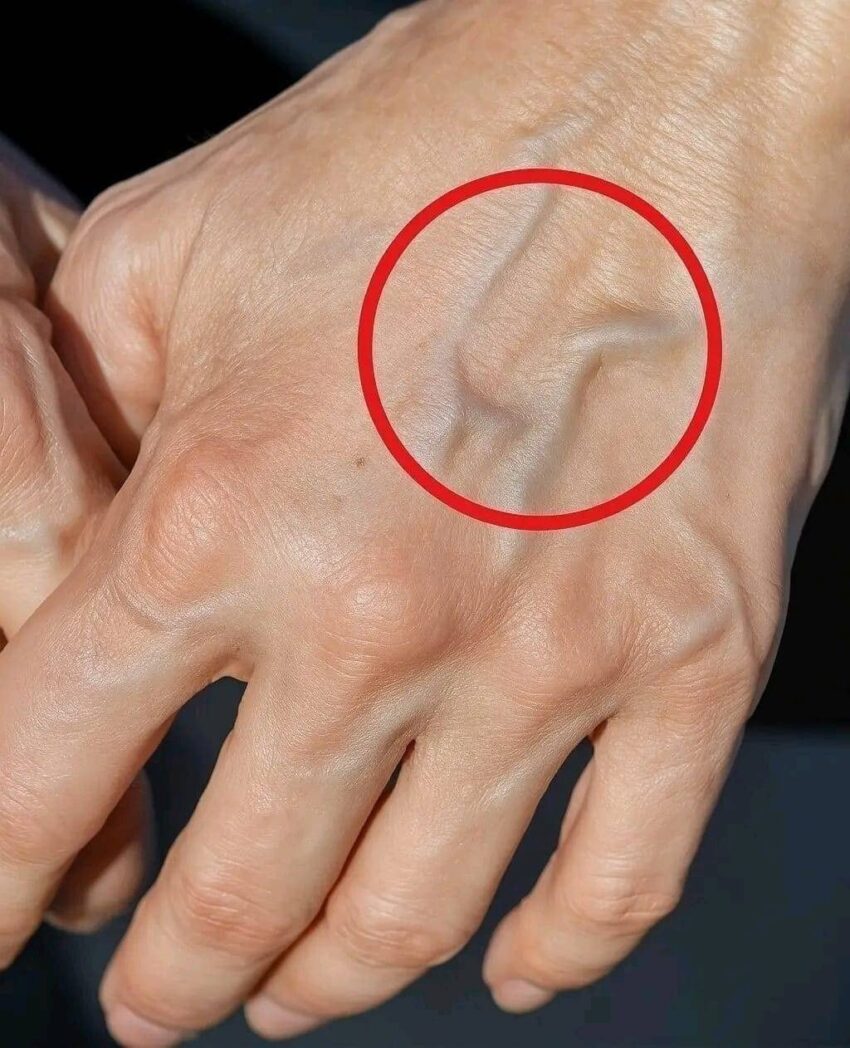
Visible veins (especially on the hands, arms, legs, or chest) are often normal — particularly in people who are lean, active, or aging. But sometimes prominent or suddenly visible veins can signal an underlying health condition.
Here are 5 health conditions that can cause visible veins:
1️⃣ Varicose Veins
- Enlarged, twisted veins — most common in the legs.
- Caused by weakened vein valves that allow blood to pool.
- May cause aching, heaviness, swelling, or itching.
⚠️ More common with aging, pregnancy, prolonged standing, or obesity.
2️⃣ Chronic Venous Insufficiency (CVI)
- Happens when leg veins can’t efficiently return blood to the heart.
- Causes visible veins, leg swelling, skin discoloration, and sometimes ulcers.
- Symptoms often worsen after long periods of standing.
3️⃣ Blood Clots (Deep Vein Thrombosis – DVT)
- A clot in a deep vein can cause surrounding veins to become more visible.
- Warning signs: swelling in one leg, warmth, redness, and pain.
🚨 DVT is a medical emergency if accompanied by shortness of breath (possible pulmonary embolism).
4️⃣ Hyperthyroidism
- An overactive thyroid increases metabolism and blood flow.
- Can make veins more prominent due to increased circulation.
- Other signs: weight loss, rapid heartbeat, anxiety, heat intolerance.
5️⃣ Significant Weight Loss or Low Body Fat
- Not a disease, but rapid or extreme weight loss reduces fat under the skin.
- Veins become more visible because there’s less tissue covering them.
- Can also occur in dehydration.
Other Possible Causes
- Aging (skin becomes thinner)
- Intense exercise
- Dehydration
- Pregnancy
- High blood pressure
🚩 When to See a Doctor
Seek medical attention if visible veins are accompanied by:
- Pain or tenderness
- Swelling in one limb
- Skin color changes
- Warmth or redness
- Sudden onset
Bottom Line
Visible veins are often harmless — especially in fit or older individuals — but sudden, painful, or asymmetrical vein prominence should be evaluated to rule out circulation problems.
If you’d like, I can also explain how to tell the difference between normal visible veins and dangerous ones.
