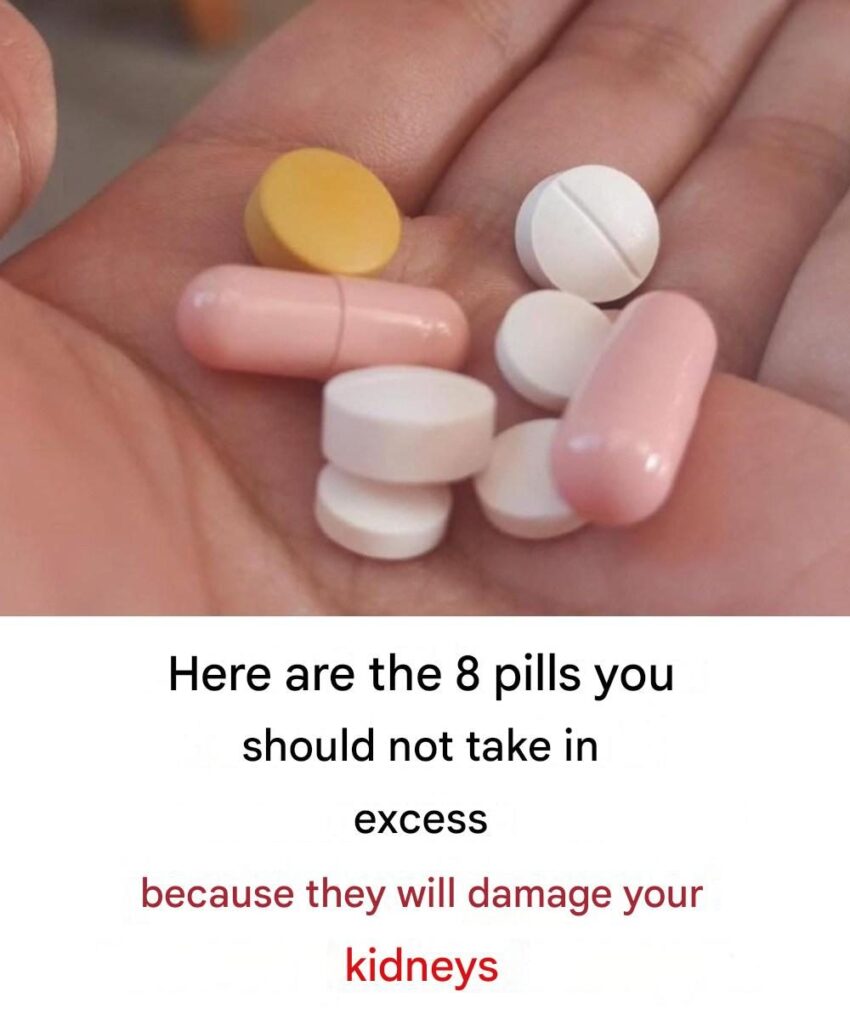
Here’s a clear, evidence-based version of what viral posts mean when they say “8 pills you shouldn’t take because they damage your kidneys.”
First, important truth:
👉 It’s not 8 random “bad pills”—it’s common medication categories that can harm kidneys in certain situations (high dose, long-term use, dehydration, or existing kidney disease).
⚠️ 8 types of medications that can affect kidney health
1. 💊 NSAIDs (painkillers)
Examples: ibuprofen, diclofenac, naproxen, aspirin
- Can reduce blood flow to kidneys
- Risk increases with long-term or frequent use
- One of the most common causes of drug-related kidney injury (Healthline)
2. 💉 Certain antibiotics
Examples: gentamicin, vancomycin, sulfonamides
- Can directly stress kidney tubules
- Usually safe when monitored, but risky in high doses or dehydration (National Kidney Foundation)
3. 💊 Proton Pump Inhibitors (PPIs)
Examples: omeprazole, esomeprazole
- Long-term daily use linked to kidney inflammation and chronic kidney disease risk (Verywell Health)
4. 💧 Diuretics (“water pills”)
Examples: furosemide, hydrochlorothiazide
- Can reduce kidney blood flow if overused
- Risk higher in dehydration or heart disease (Verywell Health)
5. 🫀 Blood pressure meds (ACE inhibitors / ARBs)
Examples: enalapril, lisinopril, losartan
- Usually kidney-protective long-term
- But can temporarily reduce kidney function in some conditions (Verywell Health)
6. 🧠 Lithium (psychiatric medication)
- Used for bipolar disorder
- Long-term use may cause chronic kidney damage (Verywell Health)
7. 💪 Some HIV / antiviral drugs
Example: tenofovir (older forms)
- Can affect kidney filtration in some patients (Verywell Health)
8. 🌿 Herbal supplements & high-dose vitamins
Examples:
- high-dose vitamin C
- vitamin A
- unregulated herbal mixtures
- protein/fitness stacks in excess
Risks:
- kidney stone formation
- toxic buildup
- contamination (heavy metals) (Health)
🧠 The important reality doctors emphasize
✔ These are NOT “avoid forever” drugs
Most are:
- essential for pain, infections, blood pressure, or mental health
✔ Kidney damage usually happens when:
- doses are too high
- used for long periods without supervision
- combined with dehydration or other risky drugs
✔ The biggest common culprit is actually:
👉 frequent NSAID (painkiller) use without medical guidance
🚨 Warning signs of kidney stress
- swelling in feet/face
- fatigue
- reduced or foamy urine
- nausea
- high blood pressure
🧾 Bottom line
There are not “8 dangerous pills” in isolation.
Instead, there are 8 drug groups that require caution, especially with long-term or unsupervised use.
If you want, I can also give you:
👉 kidney-safe pain relief options
👉 or a list of medications that actually protect kidneys (surprisingly common ones)
