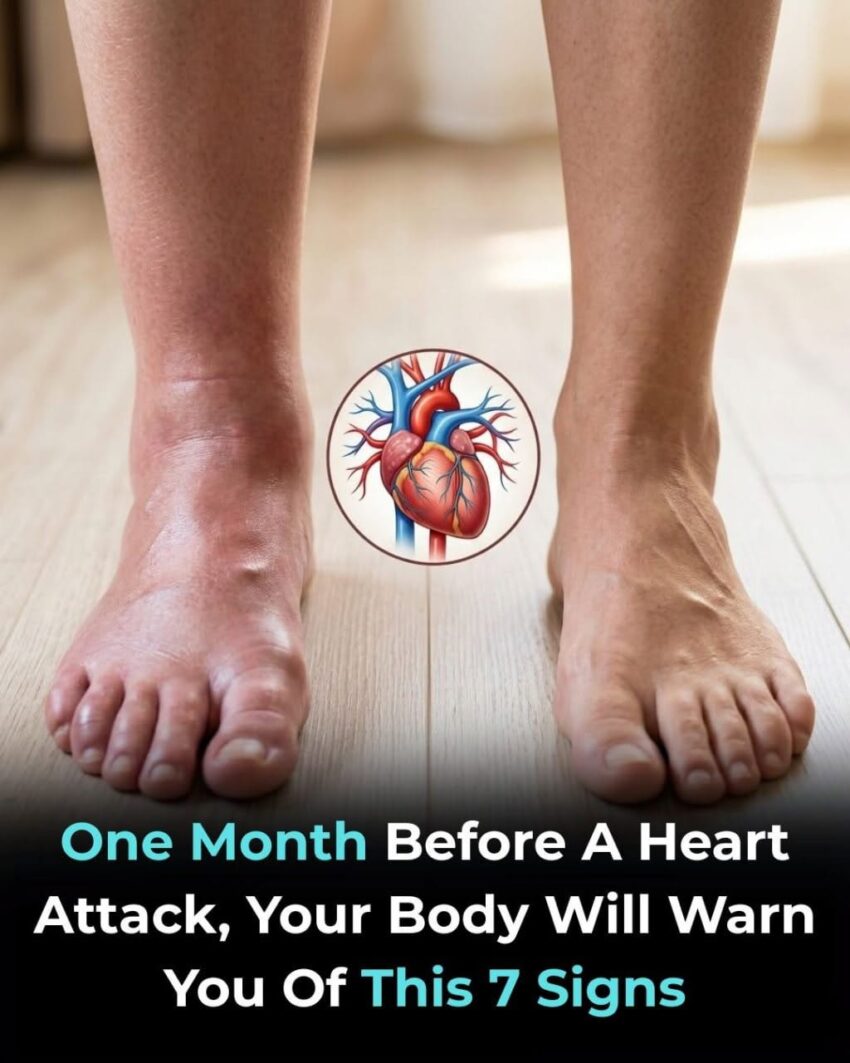
Can Your Body Warn You a Month Before a Heart Attack? Understanding the Evidence
You may have seen claims such as “One month before a heart attack, your body gives 7 warning signs.” While there is some truth to the idea that certain people experience warning symptoms days or weeks before a heart attack, there is no specific list of seven signs, and there is no guarantee that symptoms will appear exactly one month beforehand.
Some heart attacks occur suddenly with little or no warning, while others are preceded by symptoms that gradually become more frequent or severe. Recognizing these symptoms and seeking prompt medical care can save lives.
What Is a Heart Attack?
A heart attack, medically known as Myocardial infarction, occurs when blood flow through one or more of the coronary arteries is severely reduced or completely blocked. Without adequate blood supply, part of the heart muscle begins to die.
The most common cause is the rupture of an atherosclerotic plaque followed by the formation of a blood clot that blocks the artery.
1. Chest Pain or Pressure (Most Common Warning Sign)
Chest discomfort is the classic symptom.
People often describe it as:
- Pressure
- Tightness
- Heaviness
- Squeezing
- Burning
- Fullness
The discomfort is usually located in the center or left side of the chest.
Warning pattern
Before a heart attack, some people develop new or worsening chest discomfort, especially during:
- Walking
- Climbing stairs
- Physical activity
- Emotional stress
The pain often improves with rest but gradually becomes more frequent. This pattern may represent Angina pectoris and warrants prompt medical evaluation.
2. Shortness of Breath
Difficulty breathing may occur:
- During exercise
- While climbing stairs
- At rest
- When lying flat
Some people notice that activities they previously performed easily suddenly leave them unusually breathless.
Shortness of breath may occur with or without chest pain.
3. Unusual Fatigue
Persistent, unexplained fatigue can precede a heart attack in some people, particularly women.
People may notice:
- Feeling exhausted after routine activities
- Reduced exercise tolerance
- Needing more rest than usual
- Difficulty completing daily tasks
Fatigue is a nonspecific symptom and can have many causes, but if it is new, severe, or accompanied by other symptoms, it should not be ignored.
4. Pain That Spreads Beyond the Chest
Heart-related pain doesn’t always stay in the chest.
It may radiate to the:
- Left arm
- Right arm
- Shoulders
- Neck
- Jaw
- Upper back
This pain is often described as aching, pressure, or heaviness rather than a sharp stabbing sensation.
5. Nausea, Indigestion, or Stomach Discomfort
Some people mistake a heart attack for heartburn or an upset stomach.
Symptoms may include:
- Nausea
- Vomiting
- Indigestion-like discomfort
- Upper abdominal pain
- A feeling of fullness
These symptoms are more commonly reported by women, older adults, and people with diabetes.
6. Cold Sweats (A Particularly Important Warning Sign)
Breaking out in a cold sweat without an obvious reason—especially when combined with chest discomfort, shortness of breath, or nausea—can be a sign of reduced blood flow to the heart.
People often describe:
- Sudden clammy skin
- Profuse sweating despite a cool environment
- Feeling pale and unwell
Although cold sweats can occur with anxiety, infection, or low blood sugar, cold sweats accompanied by possible heart symptoms require immediate medical attention.
This is likely why many social media posts emphasize the “6th sign.”
7. Dizziness or Lightheadedness
A reduced blood supply to the heart can affect circulation and blood pressure, leading to:
- Feeling faint
- Dizziness
- Lightheadedness
- Occasionally, loss of consciousness
These symptoms are especially concerning when they occur alongside chest pain, shortness of breath, or sweating.
Other Possible Symptoms
Some people experience:
- A racing or irregular heartbeat (palpitations)
- Unexplained anxiety or a feeling that “something isn’t right”
- Difficulty sleeping due to discomfort
- Reduced ability to exercise
These symptoms are not specific to heart attacks but may warrant evaluation depending on the overall clinical picture.
Symptoms Can Differ Between Men and Women
While both men and women often experience chest pain, women are somewhat more likely to report:
- Shortness of breath
- Unusual fatigue
- Nausea or vomiting
- Upper back or jaw pain
- Lightheadedness
Because symptoms can be less “classic,” heart attacks in women may sometimes be recognized later.
Who Is at Higher Risk?
Several factors increase the risk of a heart attack:
- High blood pressure
- High cholesterol
- Diabetes
- Smoking
- Obesity
- Physical inactivity
- Older age
- A family history of early heart disease
- Chronic kidney disease
Having one or more risk factors does not mean a heart attack is inevitable, but it does increase the importance of preventive care.
What Should You Do if You Notice These Symptoms?
If you develop:
- Chest pain or pressure lasting more than a few minutes,
- Pain spreading to the arm, jaw, neck, shoulder, or back,
- Shortness of breath,
- Cold sweats,
- Nausea,
- Dizziness,
seek emergency medical care immediately. Do not try to drive yourself if you are having severe symptoms; call your local emergency medical services.
Early treatment can restore blood flow to the heart and significantly improve outcomes.
Can Heart Attacks Be Prevented?
Many heart attacks can be prevented by reducing risk factors:
- Do not smoke.
- Eat a balanced diet rich in fruits, vegetables, whole grains, and lean proteins.
- Exercise regularly, as advised by your healthcare provider.
- Maintain a healthy weight.
- Manage blood pressure, cholesterol, and blood sugar.
- Take prescribed medications consistently.
- Attend regular medical check-ups, especially if you have cardiovascular risk factors.
Key Takeaway
There is no medically accepted rule that a heart attack always gives “7 warning signs one month before.” However, many people do experience warning symptoms in the days or weeks leading up to a heart attack. The most important potential warning signs include:
- Chest pain or pressure.
- Shortness of breath.
- Unusual fatigue.
- Pain spreading to the arm, jaw, neck, shoulder, or back.
- Nausea or indigestion-like discomfort.
- Cold sweats.
- Dizziness or lightheadedness.
If these symptoms are new, worsening, or occur together, they should be treated as potentially serious. Prompt medical evaluation can make a critical difference in preventing or limiting heart damage.
