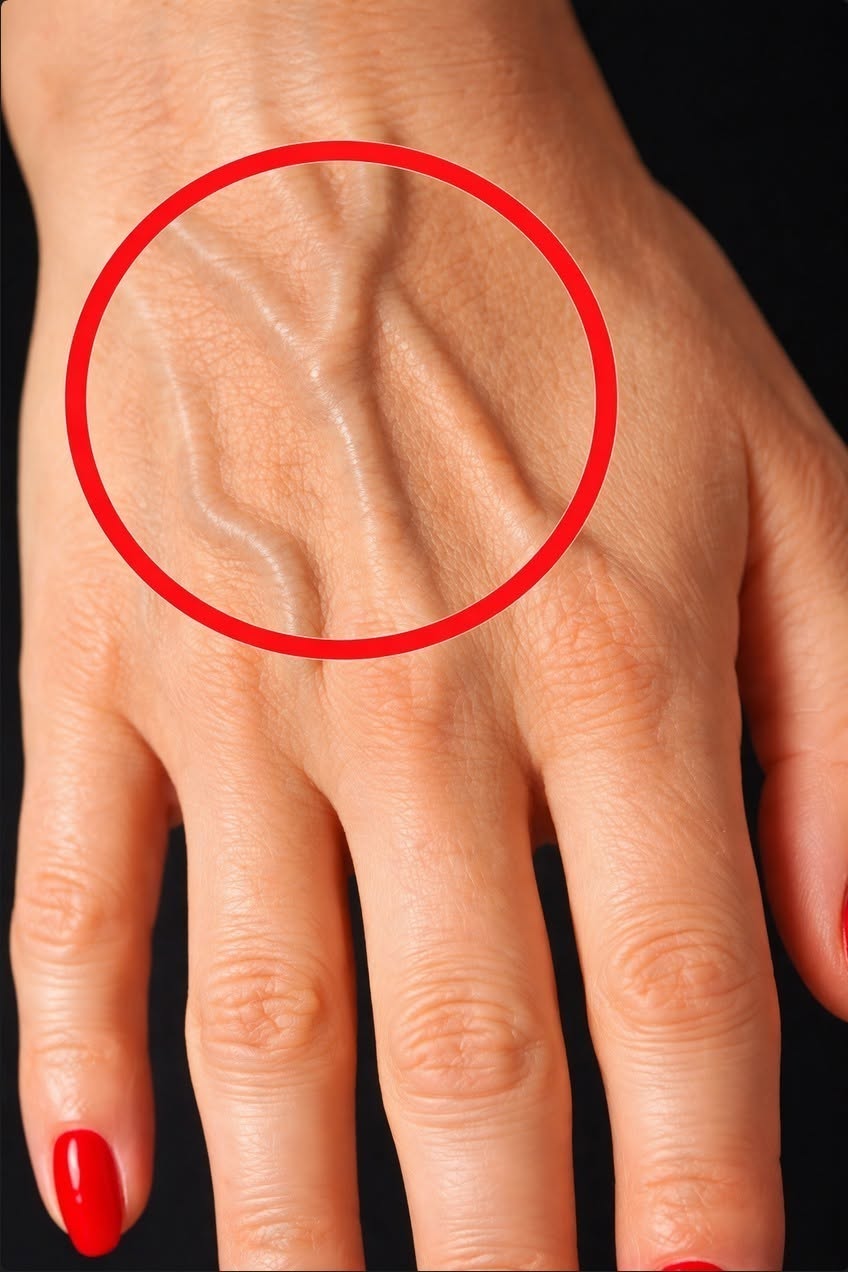
That line is another clickbait-style health claim, and it usually leads to exaggerated or misleading conclusions like “you are very fit,” “you are unhealthy,” or “you have low body fat.” The truth is more simple and less dramatic.
What visible veins actually mean
Visible veins (often called “vascularity”) happen when blood vessels under your skin become easier to see. This is influenced by several normal, physical factors—not a single hidden condition.
1. Low body fat (sometimes)
One of the most common reasons is lower subcutaneous fat (fat under the skin).
- Less fat = veins are more visible
- This is common in athletes, bodybuilders, and lean individuals
But it does not automatically mean you are extremely fit or healthy.
2. Genetics (very important)
Some people naturally have more visible veins because of:
- Thinner skin
- Naturally superficial veins
- Genetic body structure
So two people with the same body fat can look completely different.
3. Temperature
Heat causes veins to expand (dilate), making them more visible:
- Hot weather
- After a hot shower
- During exercise
Cold weather does the opposite.
4. Exercise and muscle pump
During or after exercise:
- Blood flow increases
- Muscles swell slightly (“pump”)
- Veins become more visible temporarily
This is very common in gyms.
5. Hydration levels
Dehydration can sometimes make veins appear more prominent because:
- Blood volume decreases slightly
- Skin may look tighter
But this is not a “healthy sign”—dehydration is not good for your body.
6. Age and skin changes
As people age:
- Skin becomes thinner
- Fat distribution changes
This can make veins more noticeable.
What visible veins DO NOT mean
This is where viral posts often mislead people.
Visible veins do NOT automatically mean:
- You are very healthy
- You are very strong
- You have low blood pressure
- You have “clean blood” (this is a myth)
- You are fit or athletic
When visible veins might need attention
Usually, visible veins are harmless. But sometimes you should pay attention if you notice:
- Sudden swelling in one limb
- Pain, redness, or warmth in a vein
- Hard or cord-like vein under the skin
- One-sided leg swelling
These could indicate a condition like a blood clot or vein inflammation and should be medically checked.
Common misconception: “More veins = better health”
This is not true.
- A very lean athlete and a dehydrated person can both have visible veins
- Someone with higher body fat may still be very healthy
- Vein visibility is not a medical health indicator on its own
Real medical context of veins
Veins are part of the circulatory system that carries blood back to the heart. Conditions related to veins include:
- Varicose veins
- Venous insufficiency
- Blood clots (deep vein thrombosis)
But normal visible surface veins are usually just anatomy + physiology.
Key takeaway
If your veins are visible, it usually means:
- You may have lower body fat, or
- You are warm, active, or genetically prone to visible veins
It does not automatically mean anything extreme about your health, strength, or condition.
If you want, I can explain:
- Why bodybuilders get very “veiny”
- How to safely reduce or increase vascularity
- Or what your veins can actually tell doctors in real medical exams
