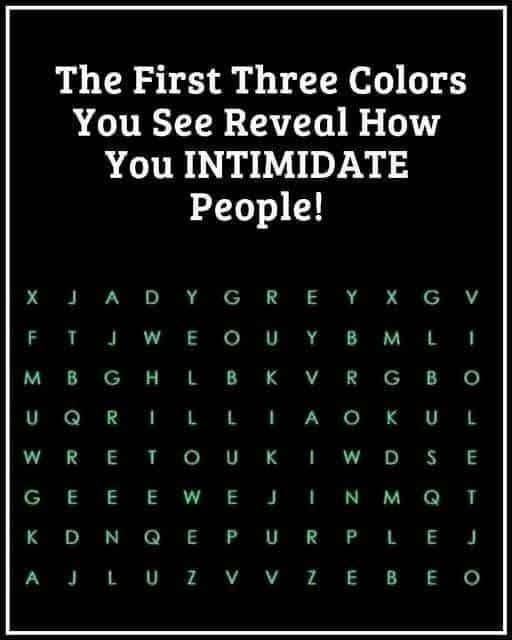
This is one of those viral “personality test” claims that sounds fun, but it’s not scientifically valid.
There is no psychological research showing that the first three colors you see can reveal how you intimidate people. What you’re seeing is a form of social media color illusion + cold reading style psychology, not a real diagnostic method.
Where this idea comes from
These posts usually combine:
- Optical illusion images (random colors placed together)
- Suggestive captions like “what you see reveals your personality”
- Vague interpretations that can apply to almost anyone
They are designed for:
- Engagement (likes, shares, comments)
- Self-reflection entertainment
- Not scientific accuracy
Why people believe it (psychology behind it)
1. The Barnum effect
People tend to believe vague statements are personally accurate.
Example:
“You may seem strong, but people sometimes feel intimidated by your presence.”
Almost anyone can relate to that.
2. Pattern searching (brain habit)
The brain naturally tries to:
- Find meaning in colors
- Connect random visuals to emotions or identity
This is called apophenia.
3. Confirmation bias
If a result says:
- “You intimidate people because you are confident”
You may remember moments that match it and ignore others.
Do colors actually influence how people perceive you?
Yes—but not in a “personality test” way.
Colors can influence perception in real psychology and branding:
Red
- Seen as strong, dominant, attention-grabbing
Black
- Associated with authority, power, seriousness
Blue
- Calm, trustworthy, stable
White
- Clean, neutral, simple
But this is about visual perception, not hidden personality traits.
What actually determines if people feel “intimidated” by someone
Real factors include:
- Body language (posture, eye contact)
- Facial expression
- Tone of voice
- Social confidence
- Status or authority
- Context (workplace, school, etc.)
Not colors in an image.
Why “first 3 colors you see” tests are unreliable
They fail basic scientific standards:
- No controlled conditions
- No consistent interpretation system
- No measurable outcomes
- No peer-reviewed research support
Two people can see the same image differently based on:
- Screen brightness
- Eye focus
- Lighting
- Attention direction
- Random scanning order
So results are essentially randomized interpretations.
The truth in one line
👉 The first three colors you see do not reveal how you intimidate people—they only show how your eyes and brain scan an image.
If you want something real instead
If you’re interested, I can give you:
- A real psychological personality assessment (Big Five traits)
- How people actually perceive intimidation in social behavior
- Or how to improve confidence and presence in a scientifically supported way
Just tell me 👍
