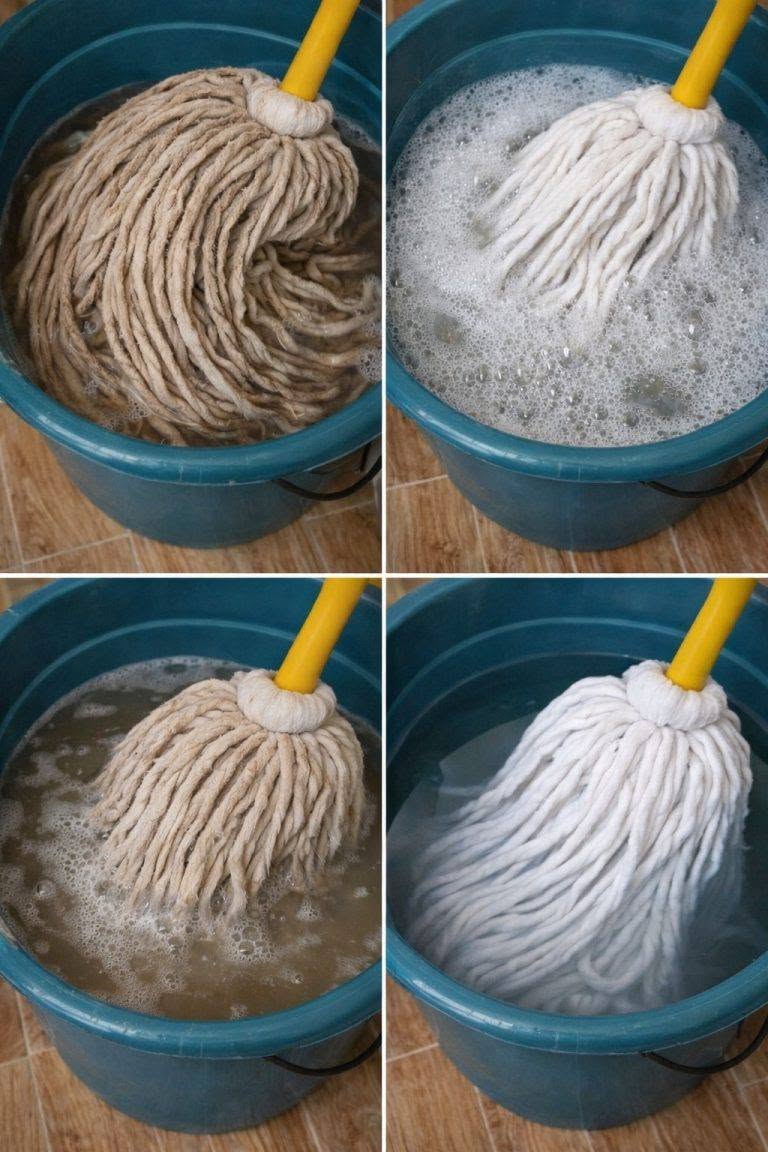
If your mop is very dirty, smells bad, or has stubborn grime, you don’t necessarily need to throw it away. One common household ingredient that can help restore it is white vinegar. Vinegar is inexpensive, helps dissolve mineral buildup, cuts through grease, and can reduce odors. While it won’t make a worn-out mop “as good as new” if the fibers are damaged, it can significantly improve cleanliness and freshness.
Why white vinegar works
White vinegar contains acetic acid, which can:
- Break down soap scum and hard water deposits.
- Loosen grease and dirt trapped in mop fibers.
- Neutralize unpleasant odors.
- Help reduce some bacteria and mold, although it is not a substitute for a registered disinfectant when true disinfection is required.
How to clean a very dirty mop
What you’ll need
- 1 cup white vinegar
- A bucket or sink
- Hot (not boiling) water
- A small amount of dish soap or laundry detergent
- A brush (optional)
Step 1: Remove loose dirt
Shake the mop outdoors or rinse it thoroughly under running water to remove loose debris, hair, and dust.
Step 2: Prepare the cleaning solution
Fill a bucket with about 1 gallon (4 liters) of hot water.
Add:
- 1 cup white vinegar
- 1 tablespoon of dish soap or laundry detergent
Mix well.
Step 3: Soak the mop
Place the mop head in the solution and let it soak for 30–60 minutes.
For extremely dirty mops, soaking for up to 2 hours may help.
Step 4: Scrub if needed
If dirt remains trapped in the fibers, gently scrub the mop head with a brush.
Step 5: Rinse thoroughly
Rinse under clean running water until all soap and vinegar are removed.
Step 6: Dry completely
Hang the mop upside down or in a well-ventilated area until it is completely dry. Proper drying helps prevent mildew and unpleasant odors.
For machine-washable mop heads
Many microfiber and cotton mop heads can be washed in a washing machine. Check the manufacturer’s care instructions first. If machine washing is allowed:
- Wash with warm water.
- Use regular detergent.
- Add ½ to 1 cup of white vinegar to the rinse cycle to help remove odors and detergent residue.
- Avoid fabric softener, as it can reduce the absorbency of microfiber.
When it’s time to replace the mop
Cleaning can extend a mop’s life, but replacement is the better option if:
- The fibers are frayed or falling apart.
- It continues to smell after thorough cleaning.
- Mold has deeply penetrated the material.
- The mop no longer absorbs water effectively.
In those cases, a new mop will generally clean floors more effectively than trying to revive one that is physically worn out.
The phrase “a drop of this ingredient and it will be as good as new again” is a common attention-grabbing headline. In practice, restoring a dirty mop usually requires a proper soak and rinse rather than just a single drop of any ingredient. White vinegar is one of the most effective and widely used household options for cleaning and deodorizing mop heads.
