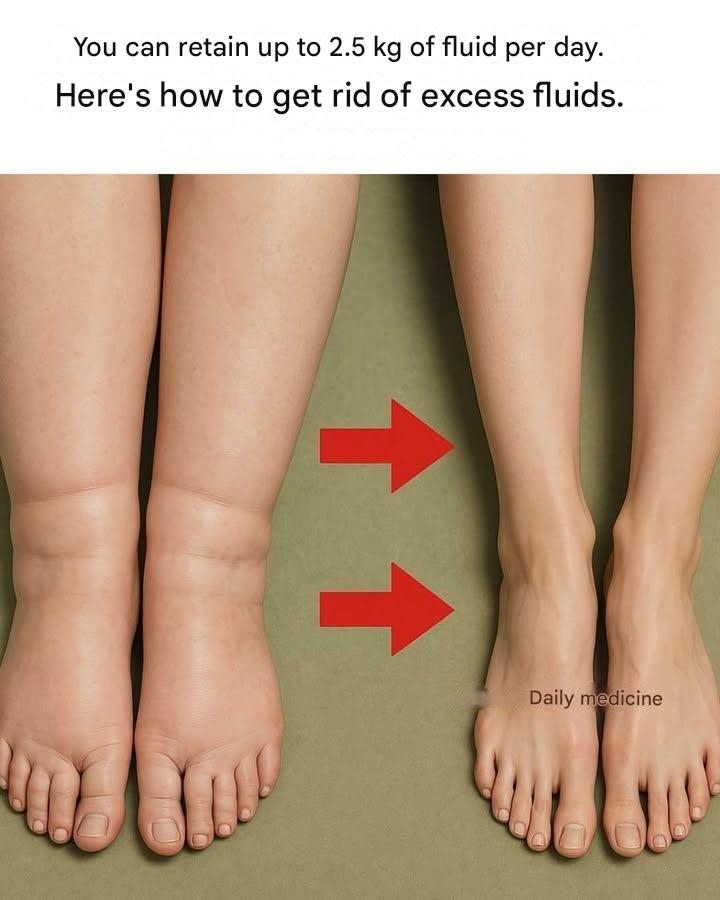
The claim “you can retain up to 2.5 kg of fluid per day and here’s how to get rid of it” is a mix of fact and exaggeration. Yes—your body can temporarily hold or lose noticeable amounts of water weight, but it is not a fixed daily limit, and it is not something you should aggressively “flush out.”
Let’s break it down clearly.
💧 Can You Really Retain 2.5 kg of Fluid?
✔ Partly true
Your body weight can fluctuate by 0.5 to 2.5 kg (or more) in a single day due to:
- Water intake and loss
- Salt (sodium) consumption
- Carbohydrate storage (glycogen holds water)
- Hormonal changes
- Heat and sweating
- Physical activity
👉 So the number is possible—but it is not a “toxin buildup” or dangerous condition in most cases.
🧠 What “Fluid Retention” Actually Means
Fluid retention (edema) happens when extra water stays in tissues instead of being properly balanced.
It may cause:
- Swollen ankles or feet
- Puffy hands or face
- Tight rings or shoes
- Temporary weight increase
⚠️ Common Causes of Temporary Water Retention
1. High salt intake
Salt makes your body hold onto water to maintain balance.
2. High carbohydrate meals
Carbs are stored as glycogen, and:
- 1 gram glycogen holds ~3–4 grams of water
3. Hormonal changes
Especially:
- Menstrual cycle
- Stress hormones (cortisol)
4. Sitting or standing too long
Gravity causes fluid to collect in lower legs.
5. Dehydration
Paradoxically, not drinking enough water can make the body retain more fluid.
🧴 How to Naturally Reduce Excess Water Retention
✔ 1. Reduce excess salt (sodium)
Avoid:
- Processed foods
- Instant noodles
- Chips and packaged snacks
👉 This is one of the fastest ways to reduce bloating.
✔ 2. Drink enough water
Helps kidneys regulate fluid balance properly.
👉 Cutting water is a common myth—it usually makes retention worse.
✔ 3. Move your body
Exercise helps:
- Improve circulation
- Push fluid out of tissues
- Reduce swelling in legs
Even walking helps significantly.
✔ 4. Eat potassium-rich foods
Potassium helps balance sodium levels.
Examples:
- Bananas
- Spinach
- Beans
- Yogurt
✔ 5. Elevate your legs
Useful if swelling is in feet or ankles:
- Lie down and raise legs above heart level for 15–20 minutes
✔ 6. Reduce alcohol and sugary drinks
Both can worsen dehydration and fluid imbalance.
🚨 When Fluid Retention May Be a Medical Concern
Mild daily fluctuations are normal, but you should seek medical advice if you notice:
- Persistent swelling in legs, ankles, or face
- Shortness of breath
- Rapid unexplained weight gain over several days
- Swelling on one side only
These may be linked to conditions such as:
- heart failure
- kidney disease
- Liver disorders
- Venous circulation problems
🧾 Important Truth About “Detox Water Loss” Claims
Many viral posts suggest you should “flush out 2.5 kg of toxins or water overnight.”
Reality:
- You cannot safely or specifically “target” fluid loss
- Rapid water loss is usually dehydration, not fat loss
- Healthy fluid balance is regulated by kidneys automatically
🧠 Bottom Line
Yes, your weight can fluctuate by up to 2.5 kg due to normal water balance changes, but:
✔ It is usually temporary
✔ It is influenced by diet, hormones, and activity
❌ It is not “toxins” that need aggressive flushing
The safest way to reduce excess fluid is:
less salt, enough water, regular movement, and balanced nutrition
If you want, I can also explain how to tell the difference between normal water retention and dangerous swelling (with a simple checklist doctors use).
