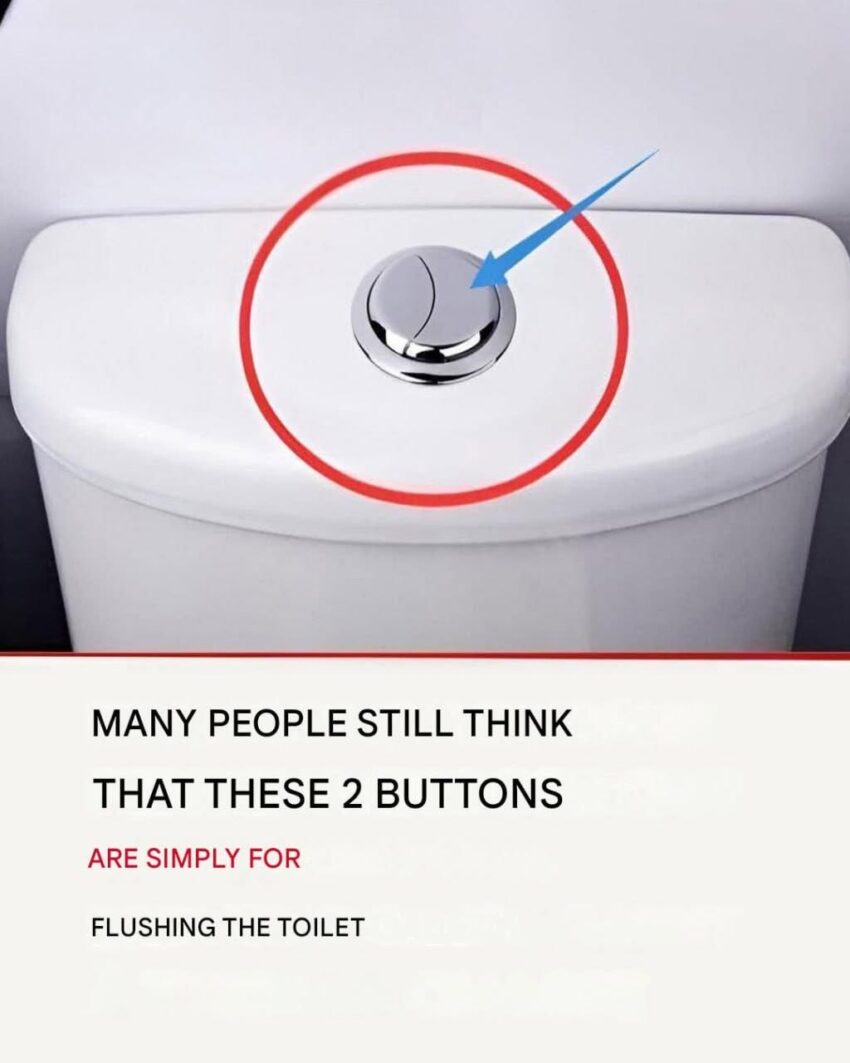
Many People Still Believe These Two Toilet Buttons Are Only for Flushing — Here’s What They Actually Do
Those two buttons on modern dual-flush toilets are not just decorative—they are designed to control how much water is used for each flush.
The purpose is to save water while still cleaning the bowl effectively.
The Small Button: Light Flush (Liquid Waste)
The smaller button is usually for:
- Urine
- Small amounts of liquid waste
How it works:
- Releases a smaller amount of water
- Uses less water per flush
- Helps reduce household water consumption
A typical light flush may use around 3 liters (0.8 gallons) of water, depending on the toilet model.
The Large Button: Full Flush (Solid Waste)
The larger button is usually for:
- Solid waste
- Larger amounts of waste
How it works:
- Releases more water
- Creates stronger flushing power
- Helps move heavier waste through the pipes
A full flush may use around 4.5–6 liters (1.2–1.6 gallons) depending on the design.
Why Dual-Flush Toilets Exist
Older toilets often used the same amount of water for every flush, sometimes using 12+ liters (3+ gallons).
Dual-flush systems were created to:
- Reduce water waste
- Lower water bills
- Make toilets more environmentally friendly
Common Mistakes People Make
❌ Using the large button every time
This wastes water unnecessarily.
❌ Pressing both buttons together
Some people think it creates a stronger flush, but most toilets are not designed for this.
❌ Holding buttons down too long
Modern dual-flush toilets usually work with a quick press.
What If the Buttons Don’t Work Properly?
Common causes:
- Low water level in the tank
- Loose button mechanism
- Broken flush valve
- Mineral buildup
Cleaning or adjusting the internal parts often fixes the problem.
Bottom Line
The two buttons have different jobs:
- Small button = less water for liquid waste
- Large button = more water for solid waste
Using the correct button helps your toilet work efficiently and can save thousands of liters of water over time.
