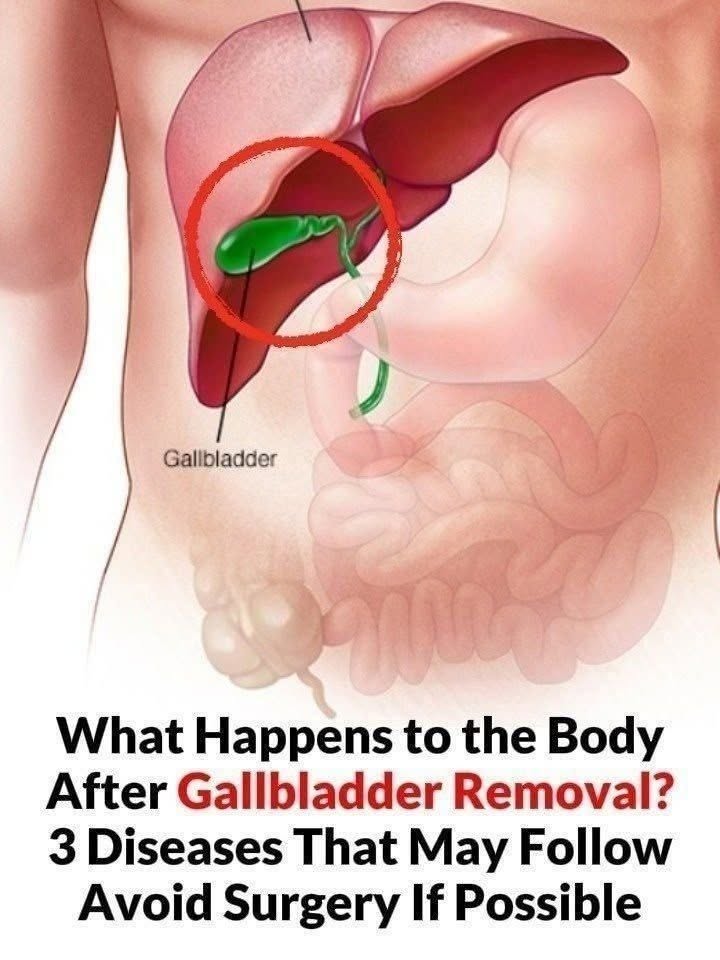
After Gallbladder Removal: 3 Conditions You Could Develop — And When Surgery Is the Right Choice
Gallbladder removal (called cholecystectomy) is one of the most common surgeries worldwide. While many people recover well and live normal, healthy lives afterward, some may experience digestive changes or other complications. It’s important to understand both the potential risks and the benefits of the procedure.
If your doctor recommends gallbladder removal because of recurrent gallstones, inflammation, infection, or complications, delaying surgery may be more dangerous than having it.
1. Digestive Changes (Post-Cholecystectomy Syndrome)
After the gallbladder is removed, bile flows directly from the liver into the small intestine instead of being stored and released during meals.
Possible symptoms:
- Bloating
- Gas
- Indigestion
- Mild abdominal discomfort
- Diarrhea, especially after fatty meals
Good news:
For most people, these symptoms improve over weeks to months as the body adapts.
What may help:
- Eat smaller, more frequent meals
- Limit very fatty or fried foods at first
- Gradually increase dietary fiber
2. Bile Acid Diarrhea
A small percentage of people develop ongoing diarrhea because extra bile reaches the colon.
Symptoms:
- Frequent loose stools
- Urgency after meals
- Symptoms that persist for several weeks or longer
Treatment:
This condition is often treatable with medications that bind bile acids, along with dietary adjustments.
3. Rare Bile Duct Problems
Although uncommon, some people may develop issues such as:
- Retained gallstones in the bile duct
- Narrowing (stricture) of the bile duct
- Bile leakage shortly after surgery
Warning signs:
- Severe abdominal pain
- Fever
- Yellowing of the skin or eyes (jaundice)
- Persistent nausea or vomiting
These symptoms require prompt medical evaluation.
Should You Avoid Gallbladder Surgery?
Not necessarily. The decision depends on your condition.
Gallbladder removal is often recommended when you have:
- Repeated painful gallstone attacks
- Acute gallbladder inflammation
- Gallstones blocking the bile ducts
- Gallstone-related pancreatitis
- A poorly functioning gallbladder causing significant symptoms
In these situations, surgery can prevent serious complications and improve quality of life.
If gallstones are found incidentally and aren’t causing symptoms, surgery is often not needed right away.
Tips for Recovery After Gallbladder Removal
Many people recover well by:
- Eating smaller meals during the first few weeks
- Limiting greasy, fried, and very high-fat foods initially
- Drinking plenty of water
- Gradually returning to a balanced diet as tolerated
- Following postoperative instructions from their healthcare team
Bottom Line
Most people do very well after gallbladder removal and experience relief from painful gallbladder attacks. While some develop digestive symptoms such as bloating, diarrhea, or (rarely) bile duct complications, these issues are often temporary or treatable. Rather than avoiding surgery whenever possible, the decision should be based on your symptoms, overall health, and your doctor’s recommendation, weighing the benefits against the potential risks.
