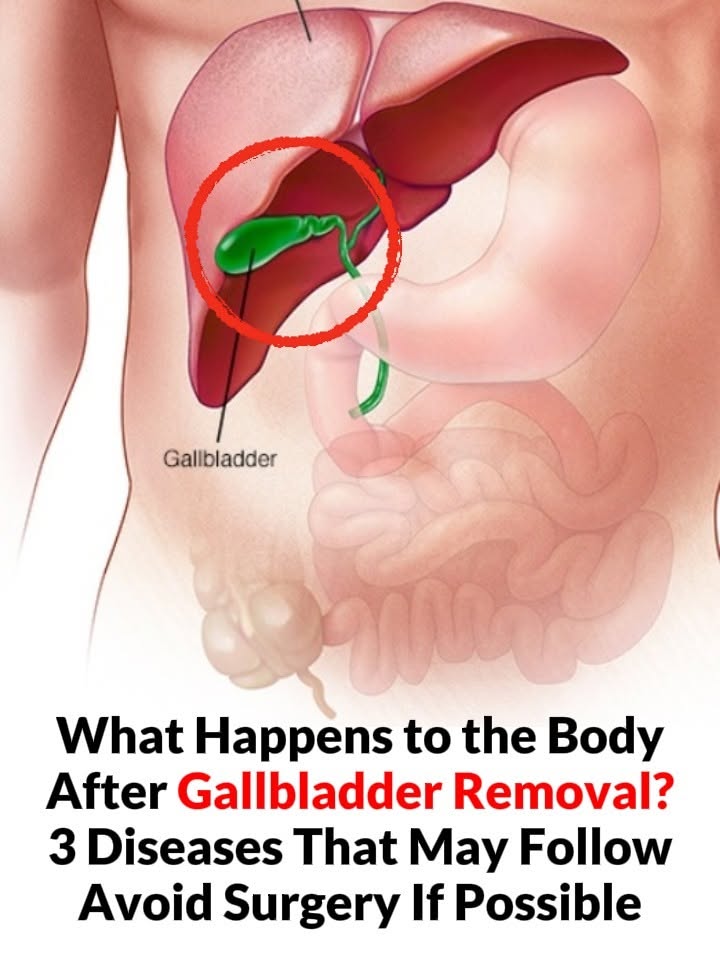
The claim “What Happens to the Body After Gallbladder Removal? 3 Diseases That May Follow – Avoid Surgery If Possible” is an attention-grabbing headline that mixes some real risks with an overly broad conclusion.
Here’s a balanced view:
What the gallbladder does
The gallbladder stores and concentrates bile produced by the liver. After it’s removed (a procedure called cholecystectomy), bile flows directly from the liver into the small intestine instead of being stored.
What usually happens after surgery?
Most people recover well and live normal lives without a gallbladder. Many notice little or no long-term change in digestion.
Some people do experience:
- Temporary diarrhea or loose stools.
- Difficulty digesting very fatty meals.
- Bloating or indigestion, especially in the first few weeks or months.
These symptoms often improve over time.
Conditions that may occur after gallbladder removal
Some studies have found associations with certain conditions, but these are not inevitable consequences of surgery.
- Postcholecystectomy syndrome
- Ongoing abdominal pain, indigestion, diarrhea, or bloating.
- Occurs in a minority of patients and can have several causes.
- Bile acid diarrhea
- Excess bile entering the colon can cause frequent loose stools.
- This is treatable with diet changes or medications that bind bile acids.
- Increased risk of some digestive or metabolic conditions
- Research has reported small increases in the risk of conditions such as Non-alcoholic fatty liver disease or certain intestinal disorders, but the evidence is mixed. An association does not prove that gallbladder removal causes these diseases, and the absolute risk for most people remains low.
Should surgery be avoided if possible?
Not necessarily.
Gallbladder removal is generally recommended when there are clear medical indications, such as:
- Recurrent painful gallstones.
- Acute cholecystitis.
- Gallstone-related Acute pancreatitis.
- Blockage of the bile ducts causing infection or jaundice.
Delaying surgery in these situations can lead to serious complications.
If gallstones are present but do not cause symptoms, surgery is often not recommended. Decisions are based on the severity and frequency of symptoms, overall health, and the risk of complications.
Bottom line
The headline overstates the case. Gallbladder removal does change how bile reaches the intestine, and some people develop digestive symptoms or other health issues afterward. However, most people recover well, and when surgery is medically indicated, its benefits usually outweigh the risks. The decision should be individualized rather than based on a general rule to “avoid surgery if possible.”
