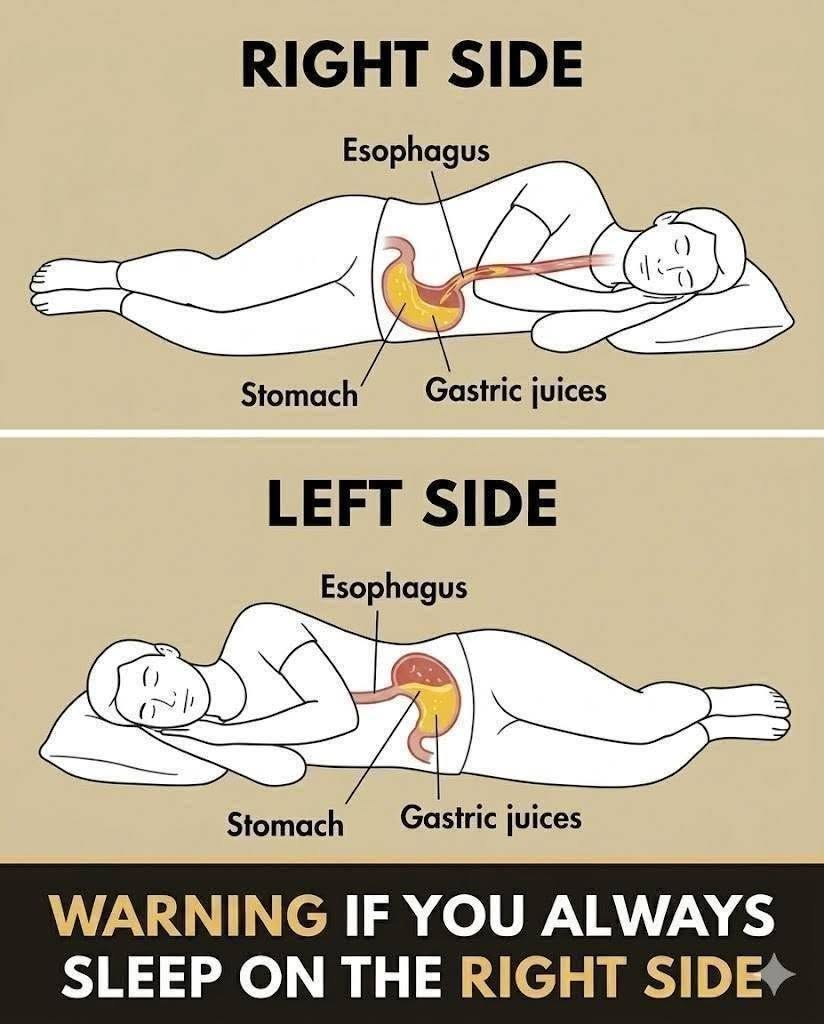
Note That If You Always Sleep on Your Right Side, You Should Know This
The claim “If you always sleep on your right side, you should have…” is often used in health headlines to suggest that sleeping on one side causes serious problems. The reality is more balanced: sleeping on your right side is not automatically harmful for most people, but it can affect certain conditions differently.
Your best sleeping position depends on your health, comfort, and any existing medical issues.
What Happens When You Sleep on Your Right Side?
Side sleeping is one of the most common sleeping positions. When you sleep on your right side:
- Your body weight is supported mainly by your right shoulder and hip.
- Your spine can remain aligned if your pillow and mattress provide proper support.
- Pressure is placed on the right side of your chest and abdomen.
For most healthy people, this position is completely acceptable.
Possible Effects of Sleeping on Your Right Side
1. It May Affect Acid Reflux Symptoms
For some people with Gastroesophageal reflux disease (GERD), sleeping on the right side may make symptoms worse.
Possible symptoms:
- Heartburn
- Burning sensation in the chest
- Sour taste in the mouth
- Nighttime coughing
Why?
The position of the stomach and esophagus can make it easier for stomach acid to move upward when lying on the right side.
A commonly recommended position:
Many people with reflux find that sleeping on the left side reduces nighttime reflux symptoms.
2. It May Affect Heart Function in Some People
Some research has explored how body position influences heart function.
For many healthy individuals:
- Right-side sleeping is not dangerous.
- The heart continues to function normally.
People with certain heart conditions may notice differences in comfort depending on their sleeping position. Those with heart failure or significant heart disease should follow their doctor’s advice regarding sleep position.
3. It May Influence Pregnancy Comfort
During pregnancy, especially later pregnancy:
- The growing uterus can affect blood vessels and circulation.
- Many healthcare providers recommend side sleeping, particularly the left side, for comfort and circulation.
However, occasional right-side sleeping is generally not considered dangerous. The most important goal is getting adequate, comfortable sleep.
4. It Can Cause Shoulder or Neck Discomfort
Sleeping on one side every night can contribute to:
- Shoulder pressure
- Neck stiffness
- Arm numbness
- Hip discomfort
This is usually related to:
- Poor pillow height
- Mattress support
- Sleeping in the same position for long periods
Tips:
- Use a pillow that keeps your neck straight.
- Place a pillow between your knees to support your hips.
- Change positions if you wake up uncomfortable.
5. It May Affect Wrinkles and Skin Pressure
Long-term side sleeping places pressure on one side of the face.
Possible effects:
- Temporary facial creases after waking.
- Increased pressure on facial skin.
However, aging is influenced much more by:
- Sun exposure
- Genetics
- Smoking
- Skin care
- Overall health
Does Sleeping on Your Right Side Damage Your Organs?
No.
A common internet claim is that sleeping on the right side “compresses organs” or causes serious disease. There is no strong evidence that normal right-side sleeping damages healthy organs.
Your body is designed to tolerate different positions during sleep.
Which Sleeping Position Is Best?
There is no single perfect position for everyone.
Left Side Sleeping May Help:
- People with acid reflux.
- Some pregnant individuals.
- Some people who feel more comfortable this way.
Back Sleeping May Help:
- Maintain spinal alignment.
- Reduce pressure on shoulders and hips.
However, back sleeping may worsen snoring or Obstructive sleep apnea in some people.
Side Sleeping May Help:
- Reduce snoring for some individuals.
- Provide comfort for many people.
When Should You Pay Attention to Sleep Position?
Talk to a healthcare professional if you experience:
- Severe nighttime chest pain.
- Difficulty breathing while lying down.
- Frequent waking due to choking or gasping.
- Persistent heartburn.
- Severe numbness or pain from your sleeping position.
Myths vs. Facts
Myth: Sleeping on your right side is dangerous.
Fact: For most healthy people, sleeping on the right side is safe.
Myth: Right-side sleeping causes organ damage.
Fact: There is no good evidence that normal sleep positions damage healthy organs.
Myth: Everyone should sleep on the left side.
Fact: The best position depends on your health conditions, comfort, and sleep quality.
Key Takeaway
Sleeping on your right side is generally safe for most people. However, it may worsen acid reflux in some individuals and may not be the most comfortable position for certain medical conditions. The most important factors are good sleep quality, proper support, and choosing a position that allows you to breathe comfortably and wake without pain.
