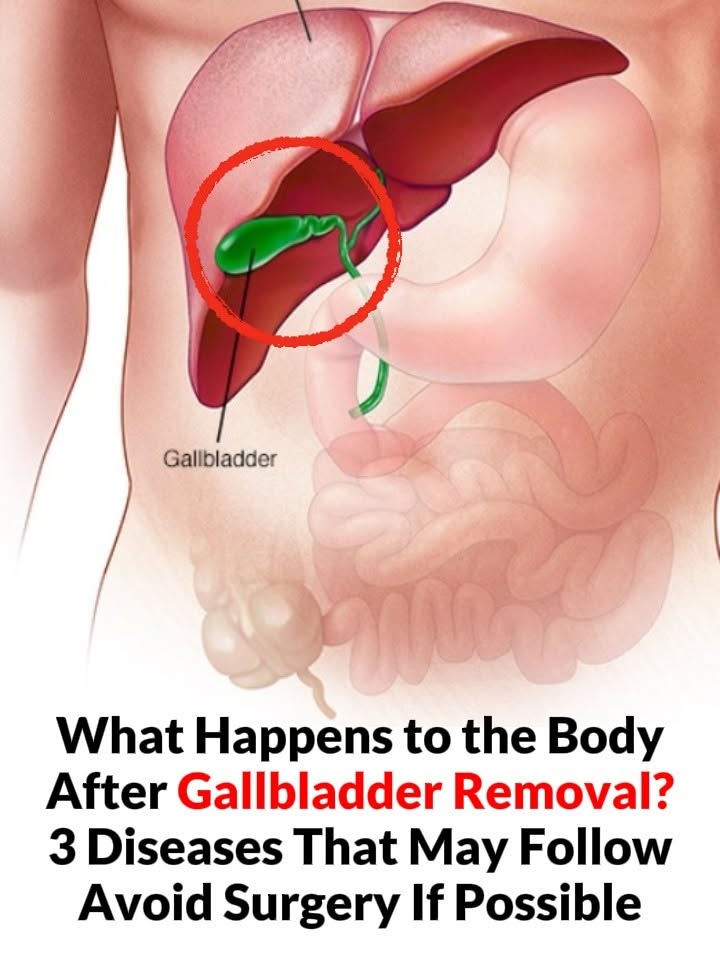
What Happens to the Body After Gallbladder Removal? Separating Facts From Myths
The headline “3 diseases that may follow—avoid surgery if possible” can be misleading. Gallbladder removal (cholecystectomy) is a common and generally safe procedure that is recommended when the gallbladder causes serious problems, such as repeated gallstones, inflammation, or infection. For many people, surgery prevents future complications rather than causing them.
What changes after gallbladder removal?
The gallbladder stores bile made by the liver and releases it when needed to help digest fats. After removal:
- The liver continues producing bile.
- Bile flows directly into the small intestine instead of being stored.
- Most people can digest food normally after recovery.
Possible changes or side effects
Some people may experience:
- Digestive changes
- Loose stools, bloating, gas, or difficulty with very fatty meals can occur, especially in the weeks after surgery.
- Many people improve over time.
- Bile-related diarrhea
- A small number of people have ongoing diarrhea caused by bile acids reaching the colon. This can often be treated.
- Changes in food tolerance
- Some people find they need to reduce very fatty or greasy foods, though many return to a normal diet.
Does gallbladder removal cause other diseases?
Research has explored possible associations between gallbladder removal and certain health conditions, but an association does not prove that surgery caused the disease. Many people who need gallbladder removal already have risk factors related to diet, weight, metabolism, or inflammation.
When surgery is usually recommended
Doctors often recommend removal when there is:
- Recurrent painful gallstone attacks
- Gallbladder inflammation (cholecystitis)
- Blocked bile ducts
- Certain gallbladder complications
After surgery: helpful habits
✅ Eat smaller meals at first
✅ Gradually reintroduce higher-fat foods
✅ Choose a balanced diet with fiber
✅ Stay physically active as advised during recovery
If you have been told you need gallbladder surgery, the decision depends on your symptoms, test results, and risks of leaving the gallbladder problem untreated—not just the possibility of side effects after surgery.
