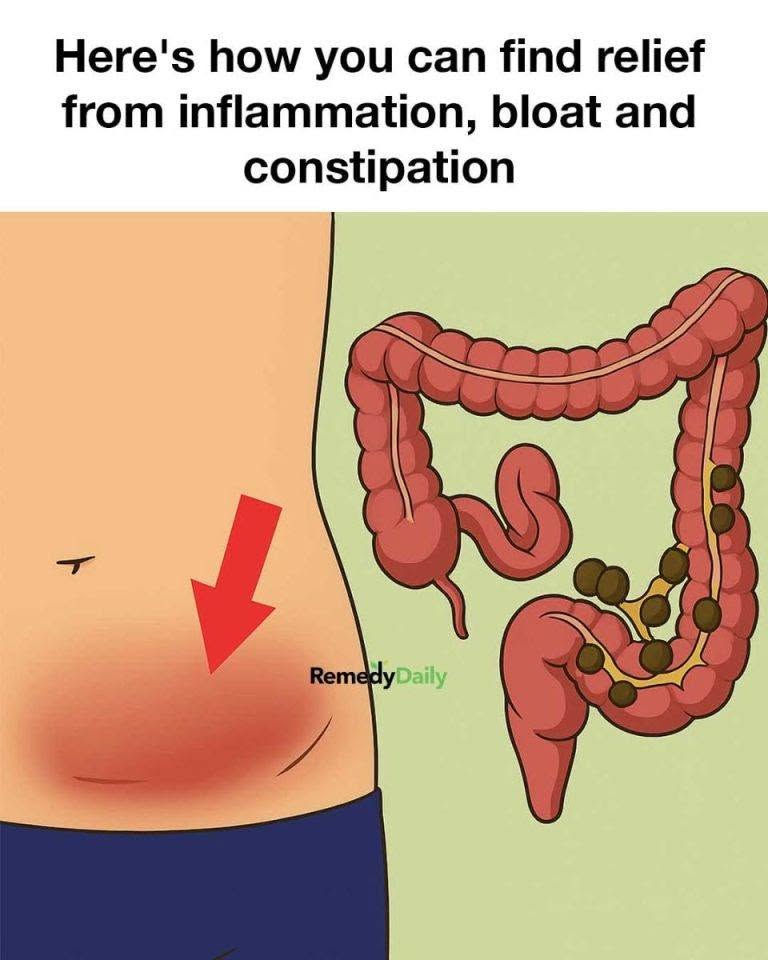
How to Find Relief From Inflammation, Bloating, and Constipation
Bloating, constipation, and feelings of inflammation can have many causes, including diet, stress, hydration, activity level, gut sensitivity, and certain medical conditions. There is no single “detox” or miracle remedy, but several evidence-based habits can help many people.
1. Increase fiber gradually
Fiber helps soften stool and supports regular bowel movements.
Good sources include:
- Fruits (berries, apples, pears)
- Vegetables
- Beans and lentils
- Whole grains
- Nuts and seeds
Tip: Increase fiber slowly and drink enough water, because adding a lot of fiber suddenly can make bloating worse.
2. Stay hydrated
- Water helps keep stool softer and easier to pass.
- Dehydration is a common contributor to constipation.
3. Add movement to your day
- Walking and regular exercise can stimulate bowel activity and support digestion.
4. Consider gut-friendly foods
Some people benefit from:
- Yogurt or kefir with live cultures
- Fermented foods (if tolerated)
- A variety of plant foods that support healthy gut bacteria
5. Identify personal triggers
Common bloating triggers can include:
- Carbonated drinks
- Large meals
- Eating too quickly
- Certain carbohydrates (for some people)
- Excessive artificial sweeteners
6. Support healthy inflammation levels
A generally anti-inflammatory eating pattern includes:
- Vegetables and fruits
- Fish or other sources of omega-3 fats
- Nuts and seeds
- Olive oil
- Minimally processed foods
When to get medical advice
Talk with a healthcare professional if constipation or bloating is:
- New and persistent
- Associated with blood in stool
- Accompanied by unexplained weight loss, fever, vomiting, or severe pain
- A major change from your usual bowel habits
If you share your main issue—bloating, constipation, abdominal discomfort, or “inflammation” feeling—and how long it has been happening, I can suggest more targeted steps.
