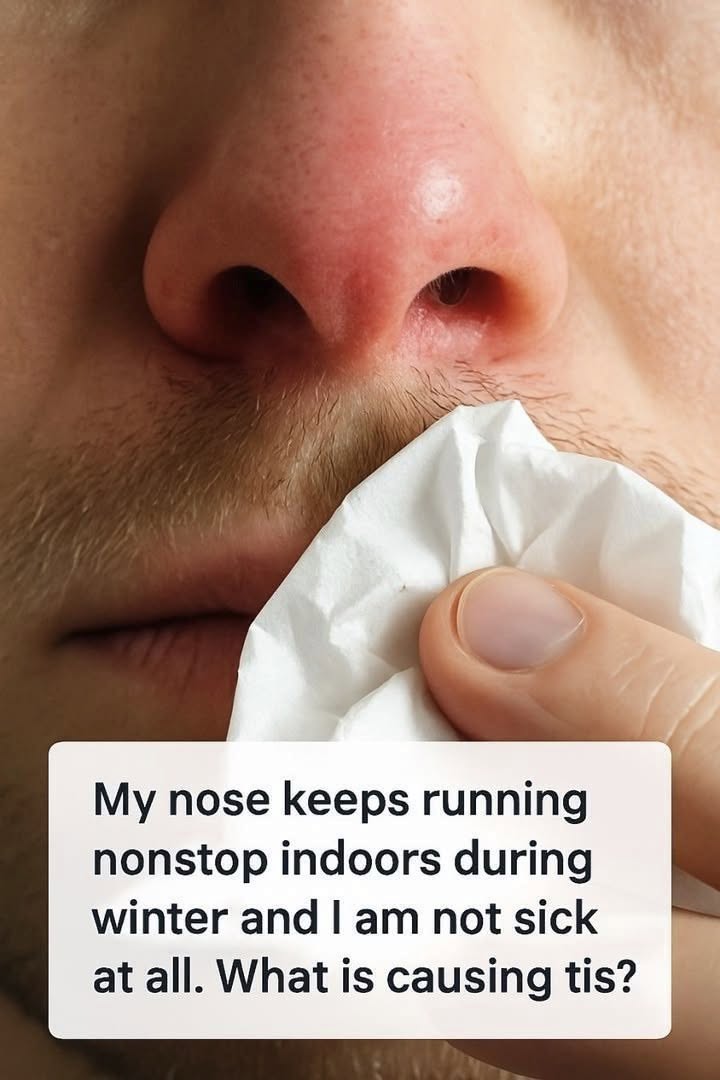
A nose that keeps running indoors during winter without feeling sick is actually quite common. It is often caused by non-infectious irritation or sensitivity, not a cold.
Common causes include:
1. Cold air–triggered runny nose (cold-induced rhinitis)
- Cold temperatures can stimulate nerves inside the nose to produce extra watery mucus.
- Going from cold outdoor air into a warm room can trigger it too.
2. Dry indoor air
- Winter heating systems reduce humidity.
- The nose may respond by producing more fluid to protect and moisturize the nasal lining.
3. Indoor allergies
Even in winter, indoor triggers can cause a runny nose, such as:
- Dust mites
- Pet dander
- Mold
- Dust from heating systems or air vents
Allergies often also cause:
- Sneezing
- Itchy nose or eyes
- Stuffy nose
- Clear, watery discharge
4. Irritants
Things like:
- Perfumes and fragrances
- Smoke
- Cleaning products
- Strong scents
- Air fresheners
can trigger a runny nose without an infection.
5. Nonallergic rhinitis
Some people have an over-sensitive nasal response to changes in:
- Temperature
- Humidity
- Smells
- Airflow
Things that may help:
- Use a humidifier if indoor air is very dry.
- Try a saline nasal spray or rinse to moisturize the nose.
- Keep dust levels lower (wash bedding regularly, clean filters).
- Avoid strong fragrances and smoke.
- Notice whether symptoms improve when you leave home or enter a different environment.
See a healthcare professional if:
- The discharge is one-sided and persistent
- There is blood, severe facial pain, or fever
- Symptoms last for months and interfere with daily life
- You develop wheezing, breathing problems, or significant allergy symptoms
A few details can help narrow it down: Is the mucus clear and watery, and do you also sneeze or have itchy eyes? Does it happen only at home or in any indoor place?
