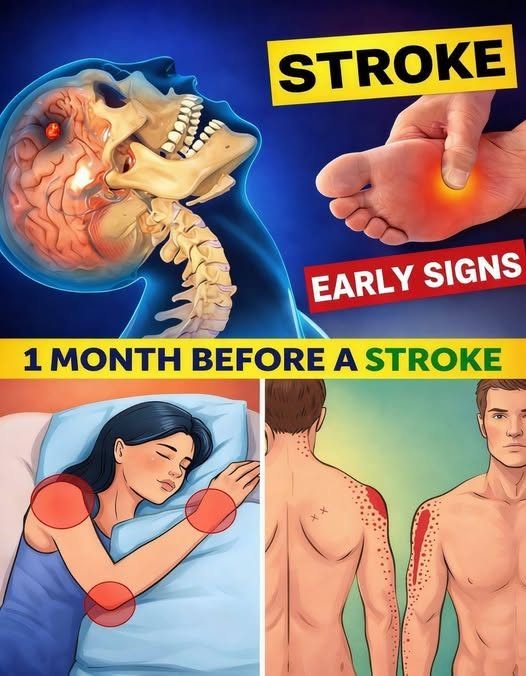
A stroke often happens without much warning, but some people experience symptoms beforehand—especially transient ischemic attacks (TIAs, or “mini-strokes”), which are medical emergencies because they can signal a high risk of a future stroke.
Possible warning signs that can occur before a stroke
These symptoms may happen suddenly and last only a few minutes, or they may persist:
- Sudden weakness or numbness
- Especially on one side of the face, arm, or leg.
- Trouble speaking or understanding speech
- Slurred speech or difficulty finding words.
- Sudden vision changes
- Blurred vision, double vision, or loss of vision in one or both eyes.
- Dizziness or loss of balance
- Difficulty walking or unexplained falls.
- Severe headache
- A sudden, intense headache with no obvious cause, particularly if accompanied by other neurological symptoms.
- Confusion
- Sudden difficulty thinking clearly or understanding others.
- Facial drooping
- One side of the face may droop or feel numb.
- Brief episodes of these symptoms
- Even if symptoms resolve completely, they could be a TIA and require urgent medical evaluation.
Important: There is no reliable set of symptoms that consistently appears a month before every stroke. Many strokes occur without any warning. Any sudden stroke-like symptoms should be treated as an emergency.
9 ways to reduce your risk of stroke
- Keep blood pressure under control.
- Manage diabetes if you have it.
- Lower high cholesterol if needed.
- Don’t smoke and avoid secondhand smoke.
- Exercise regularly, aiming for at least 150 minutes of moderate activity per week if appropriate for you.
- Eat a heart-healthy diet, emphasizing fruits, vegetables, whole grains, legumes, and limiting excess salt and saturated fat.
- Maintain a healthy weight.
- Limit alcohol and avoid recreational drugs that increase stroke risk.
- Take prescribed medications consistently, especially those for blood pressure, cholesterol, diabetes, or atrial fibrillation.
Remember FAST
A quick way to recognize a stroke is FAST:
- Face: Is one side drooping?
- Arm: Can the person raise both arms?
- Speech: Is speech slurred or strange?
- Time: Call emergency medical services immediately if any of these are present.
Rapid treatment can greatly improve outcomes, so don’t wait to see if symptoms go away.
