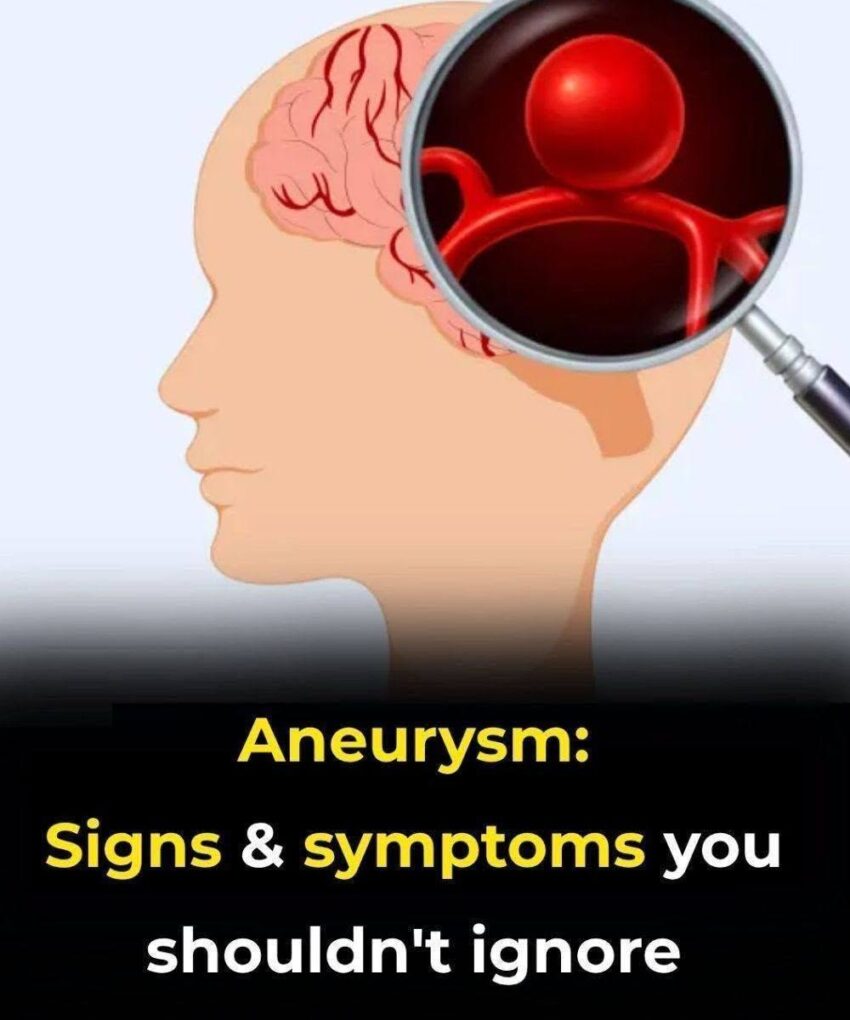
Aneurysm: Signs You Shouldn’t Ignore
An aneurysm is a weakened area in the wall of a blood vessel that can bulge or enlarge. Many aneurysms cause no symptoms until they become large or rupture, which is why recognizing warning signs can be important.
Possible warning signs depend on where the aneurysm is located:
Brain aneurysm (cerebral aneurysm)
A small, unruptured brain aneurysm may cause no symptoms. Possible signs include:
- A new or unusual headache
- Pain above or behind the eye
- Blurred or double vision
- A drooping eyelid
- Trouble speaking
- Numbness or weakness on one side of the body
- Seizures
Emergency warning sign:
- A sudden, extremely severe headache often described as the “worst headache of your life”
- Neck stiffness, nausea/vomiting, confusion, fainting, or loss of consciousness
This may indicate a ruptured aneurysm and requires emergency care.
Aortic aneurysm (large artery near the heart)
Possible symptoms include:
- Deep, persistent pain in the chest or upper back
- A feeling of pressure or fullness in the chest
- Shortness of breath
- Hoarseness or trouble swallowing (from pressure on nearby structures)
Emergency warning signs:
- Sudden severe chest, back, or abdominal pain
- Fainting
- Rapid heartbeat
- Signs of shock (pale, sweaty skin, weakness, confusion)
Abdominal aortic aneurysm
Possible signs:
- Deep abdominal or back pain
- A pulsing feeling in the abdomen
- A tender or noticeable abdominal mass (sometimes)
A sudden increase in severe abdominal or back pain can be an emergency.
People at higher risk include:
- Older adults
- People who smoke or previously smoked
- Those with high blood pressure
- People with a family history of aneurysms
- People with certain inherited connective tissue disorders
When to seek urgent help
Call emergency services for:
- Sudden severe headache unlike any previous headache
- Sudden severe chest, back, or abdominal pain
- Fainting, confusion, weakness, or difficulty speaking
Many aneurysms can be monitored or treated before they become dangerous, so discussing risk factors and symptoms with a healthcare professional is important.
