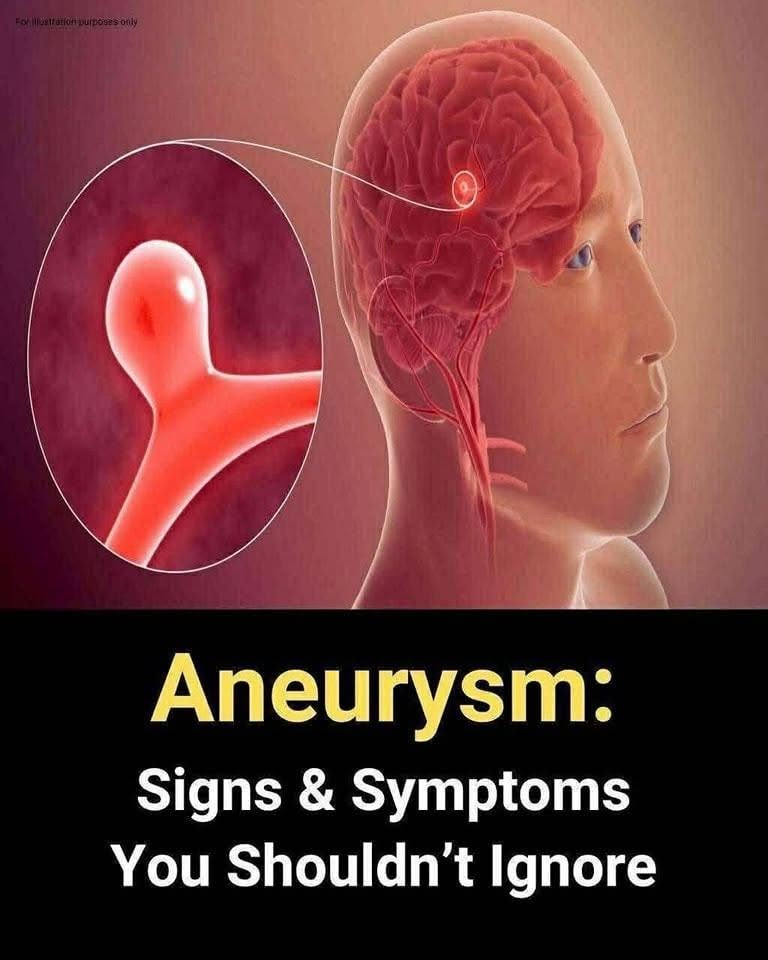
Aneurysm: Signs You Shouldn’t Ignore
An aneurysm is a weakened area in the wall of a blood vessel that can bulge or enlarge. Some aneurysms cause no symptoms and are found during tests for other reasons, but certain warning signs require urgent medical attention.
Possible warning signs of an aneurysm
1. Sudden, severe headache
A sudden “worst headache of your life,” especially with nausea, vomiting, stiff neck, confusion, or loss of consciousness, can be a sign of a brain aneurysm rupture and requires emergency care.
2. Sudden vision changes
Possible symptoms include:
- Blurred or double vision
- Loss of vision
- Drooping eyelid
- Pain around the eye
3. Weakness, numbness, or trouble speaking
These may occur if an aneurysm affects blood flow in the brain.
4. Chest, back, or abdominal pain
Depending on where an aneurysm occurs, symptoms may include:
- Deep, persistent pain in the chest or back
- Severe abdominal or side pain
- A feeling of pressure or a pulsating mass in the abdomen
5. Difficulty breathing or swallowing
A large aneurysm can sometimes press on nearby structures.
Emergency signs: seek help immediately
Call emergency services if there is:
- A sudden severe headache
- Loss of consciousness
- New weakness on one side of the body
- Trouble speaking
- Sudden severe chest, back, or abdominal pain
Who may have a higher risk?
Risk can be higher with:
- High blood pressure
- Smoking history
- Older age
- Family history of aneurysms
- Certain inherited conditions affecting blood vessels
Regular medical care and controlling blood pressure and smoking risks can help reduce complications.
If you’re asking about a specific type—brain aneurysm, aortic aneurysm, or abdominal aneurysm—the warning signs and risks can differ.
