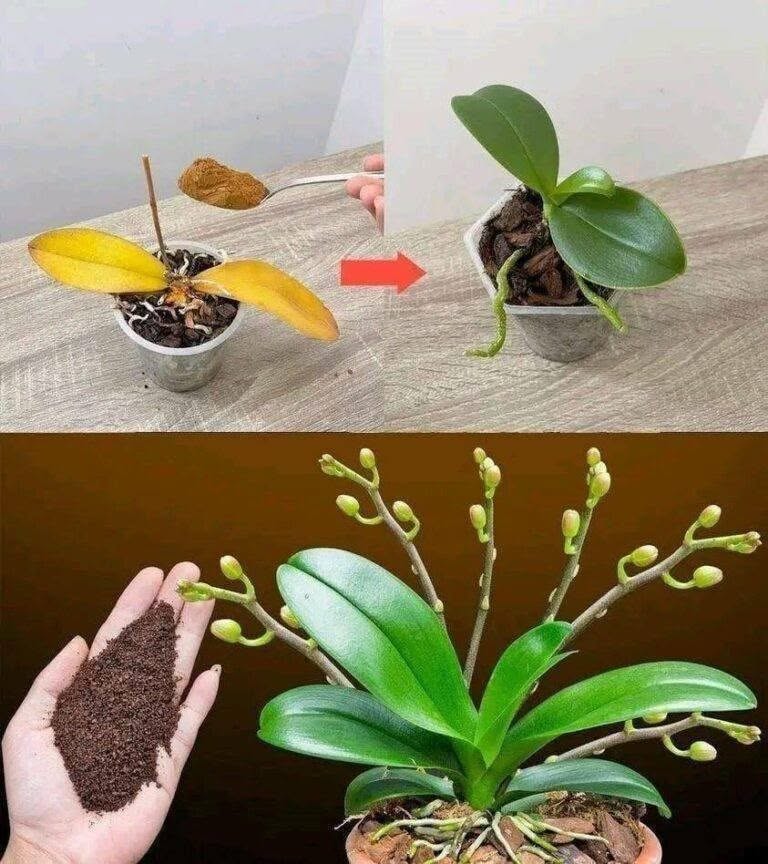
“Just a Teaspoon and Orchids Bloom With Lots of Flowers” — What Really Helps?
Many gardening posts claim that a single household ingredient can make an orchid suddenly explode with flowers, but there is no magic teaspoon remedy that guarantees blooming. Orchids bloom mainly when their natural needs are met: the right light, temperature, nutrients, watering, and growing conditions.
What actually helps orchids flower:
1. Give the right amount of light
- Most common orchids (such as Phalaenopsis) prefer bright, indirect light.
- Too little light can prevent blooming.
- Too much direct sun can burn leaves.
2. Use appropriate fertilizer
- Orchids benefit from a balanced orchid fertilizer during active growth.
- Too much fertilizer can damage roots and reduce flowering.
3. Water correctly
- Avoid keeping orchid roots constantly wet.
- Let excess water drain away.
- Watering too often can lead to root rot.
4. Provide a temperature difference
Many orchids are encouraged to produce flower spikes by slightly cooler nighttime temperatures for a period of time.
5. Repot when needed
Old, compacted growing medium can reduce root health and flowering.
Avoid risky “miracle” mixtures
Adding things like salt, undiluted household chemicals, or strong kitchen ingredients to orchid pots can damage roots.
A healthy orchid with good light and care can rebloom repeatedly, but the timing depends on the plant and its growing conditions. If you share the orchid type and a photo of the leaves/roots, I can suggest care steps to encourage more flowers.
