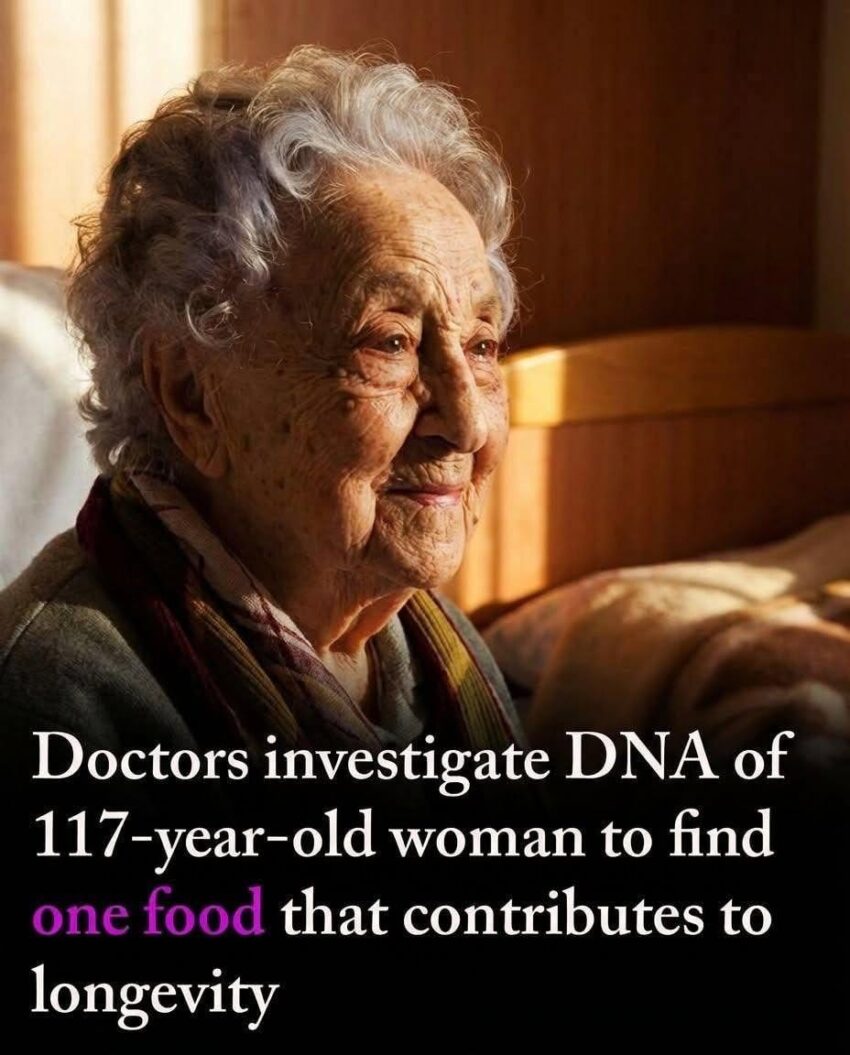
“Doctors Investigate DNA of a 117-Year-Old Woman to Find One Food That Contributes to Longevity” — What the Evidence Says
This headline is misleading. Scientists do study the DNA of exceptionally long-lived people (centenarians and supercentenarians) to understand healthy aging, but no research has identified a single food responsible for living to 117.
Longevity is influenced by a combination of:
- Genetics
- Physical activity
- Diet
- Sleep
- Social connections
- Access to healthcare
- Environmental factors
- Chance
Researchers study DNA because inherited genetic differences can affect how the body responds to disease and aging.
What has research found?
Studies of people who live beyond 100 suggest they often share habits such as:
- Eating a diet rich in vegetables, fruits, legumes, whole grains, and nuts.
- Staying physically active throughout life.
- Not smoking.
- Maintaining a healthy body weight.
- Having strong social relationships.
- Managing blood pressure, cholesterol, and diabetes.
There is no single “longevity food” that guarantees an exceptionally long life.
Foods commonly associated with healthy aging
Rather than one miracle food, evidence supports dietary patterns that include:
- Vegetables and leafy greens
- Fruits and berries
- Beans and lentils
- Whole grains
- Nuts and seeds
- Fish (especially oily fish)
- Olive oil as a primary fat source
These foods are associated with better heart health and may reduce the risk of chronic diseases.
What about genetics?
Some people inherit gene variants that may help protect against certain age-related diseases or improve how their bodies repair damage over time. However, genes are only one part of the picture. Lifestyle remains important, even for people with favorable genetics.
Bottom line
There is no scientific evidence that one specific food was discovered to explain why a 117-year-old lived so long. The best-supported approach to healthy aging is a combination of:
- A balanced, mostly plant-based diet
- Regular physical activity
- Not smoking
- Adequate sleep
- Maintaining social connections
- Managing chronic health conditions
These habits are consistently associated with a longer healthspan—the years spent living in good health—even though no strategy can guarantee reaching 100 or beyond.
