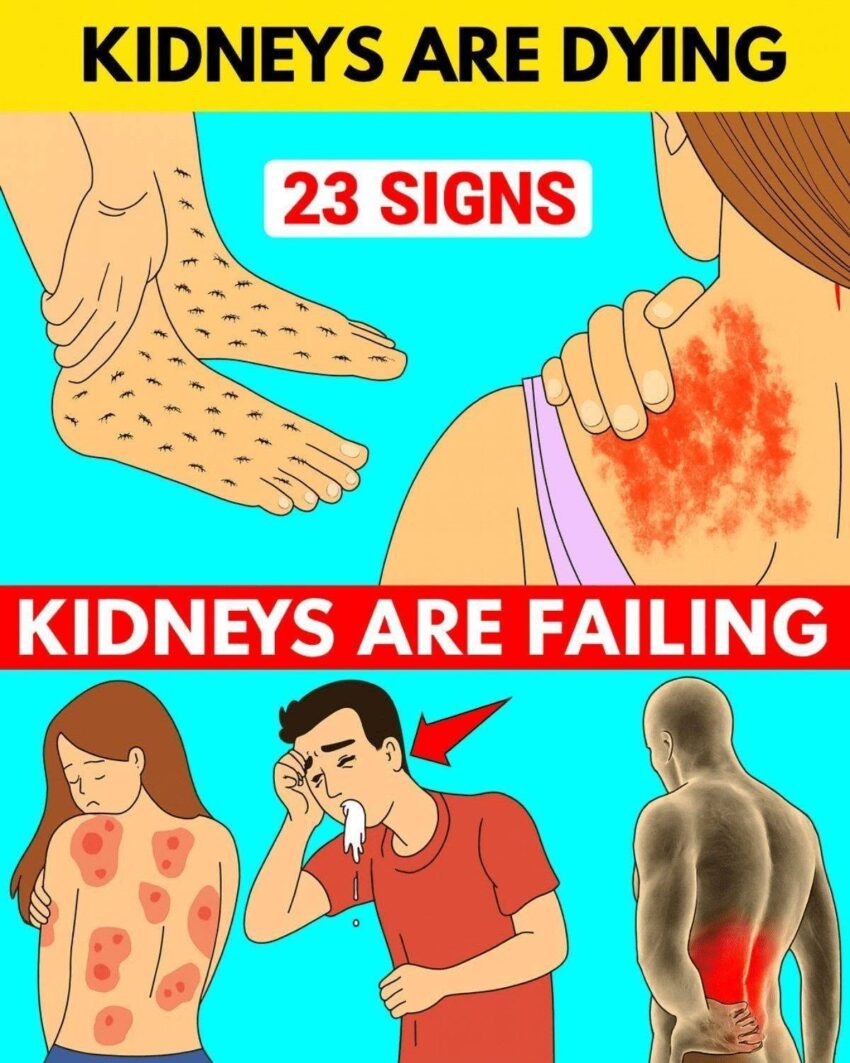
The headline “23 Strange Signs Your Kidneys Might Be in Trouble” is partly true but somewhat misleading.
Kidney disease can cause a variety of symptoms, but:
- Many people with early kidney disease have no symptoms at all.
- Most symptoms are not specific to kidney disease and can be caused by many other conditions.
- A long list of “23 strange signs” is often used as a clickbait format.
Some symptoms that can occur with kidney disease include:
- Swelling of the feet, ankles, hands, or around the eyes
- Changes in urination (more or less frequent, foamy urine, blood in the urine)
- Persistent fatigue or weakness
- Loss of appetite, nausea, or vomiting
- Itchy skin
- Muscle cramps
- Difficulty concentrating
- High blood pressure that is difficult to control
- Shortness of breath (especially in advanced disease)
However, these symptoms do not necessarily mean someone has kidney disease.
The most reliable ways to assess kidney health are:
- Blood tests (such as serum creatinine to estimate kidney function)
- Urine tests (to look for protein or blood)
- Blood pressure measurement
- Additional imaging or other tests if recommended by a healthcare professional
If someone has persistent symptoms, diabetes, high blood pressure, a family history of kidney disease, or notices blood in their urine or significant swelling, it’s a good idea to seek medical evaluation rather than relying on symptom lists alone.
Overall, the headline contains a kernel of truth—kidney disease can produce a wide range of symptoms—but it overstates how useful symptom lists are for diagnosing kidney problems. Regular screening is often more effective than waiting for symptoms to appear.
