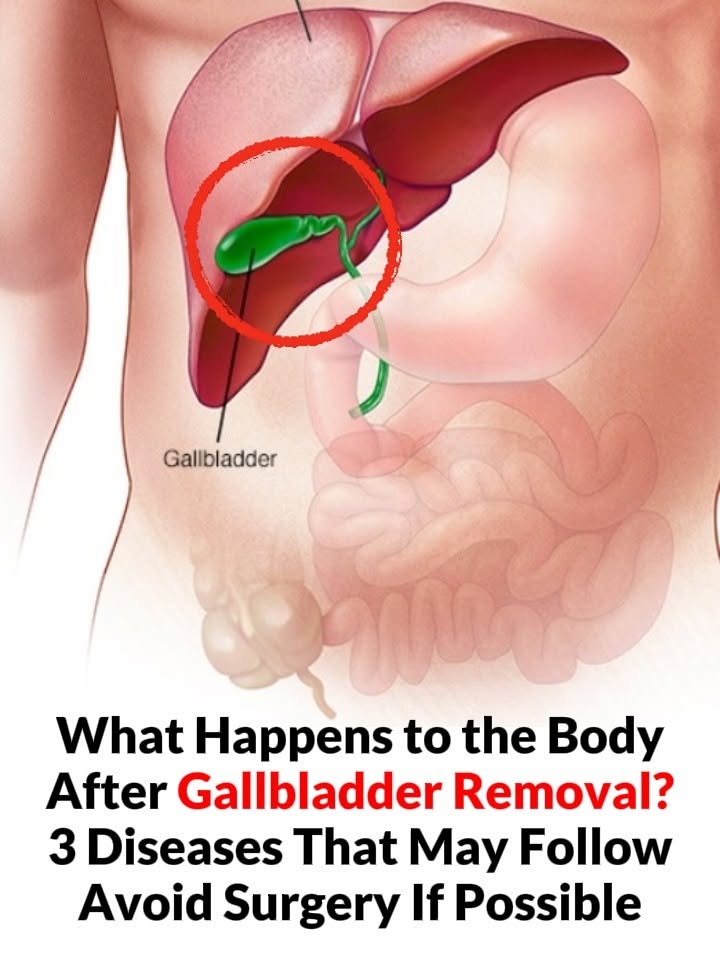
The headline “What Happens to the Body After Gallbladder Removal? 3 Diseases That May Follow – Avoid Surgery If Possible” is misleading.
It combines a kernel of truth with an unsupported recommendation. While gallbladder removal can have side effects and potential long-term consequences, it is not true that people should avoid surgery whenever possible. For some conditions, surgery is the safest and most effective treatment.
What happens after gallbladder removal?
The gallbladder stores bile produced by the liver. After it is removed (a procedure called cholecystectomy), bile flows directly from the liver into the small intestine instead of being stored.
Most people:
- Recover well.
- Digest food normally.
- Do not need a special diet long term, although some find that fatty meals cause temporary digestive symptoms.
Possible issues after surgery
Some people experience:
- Diarrhea or loose stools, especially in the first weeks or months.
- Bloating or indigestion.
- Persistent abdominal pain (“post-cholecystectomy syndrome”), which has several possible causes and should be evaluated.
Some studies have found associations between gallbladder removal and a slightly increased risk of certain digestive or metabolic conditions, but these associations do not mean surgery directly causes “three diseases” in everyone.
Should surgery be avoided?
Not necessarily.
Gallbladder removal is commonly recommended when someone has:
- Recurrent painful gallstones.
- Gallbladder inflammation (cholecystitis).
- Gallstone-related pancreatitis.
- Other serious gallbladder complications.
In these situations, delaying or avoiding surgery can increase the risk of severe infection, pancreatitis, or other complications.
Bottom line
- ❌ Misleading: “Avoid surgery if possible.”
- ✅ Accurate: Some people have digestive changes after gallbladder removal, but most recover well.
- ✅ The decision to have surgery should be based on the severity of symptoms, the underlying condition, and a discussion of the risks and benefits with a surgeon—not on a generic internet headline.
