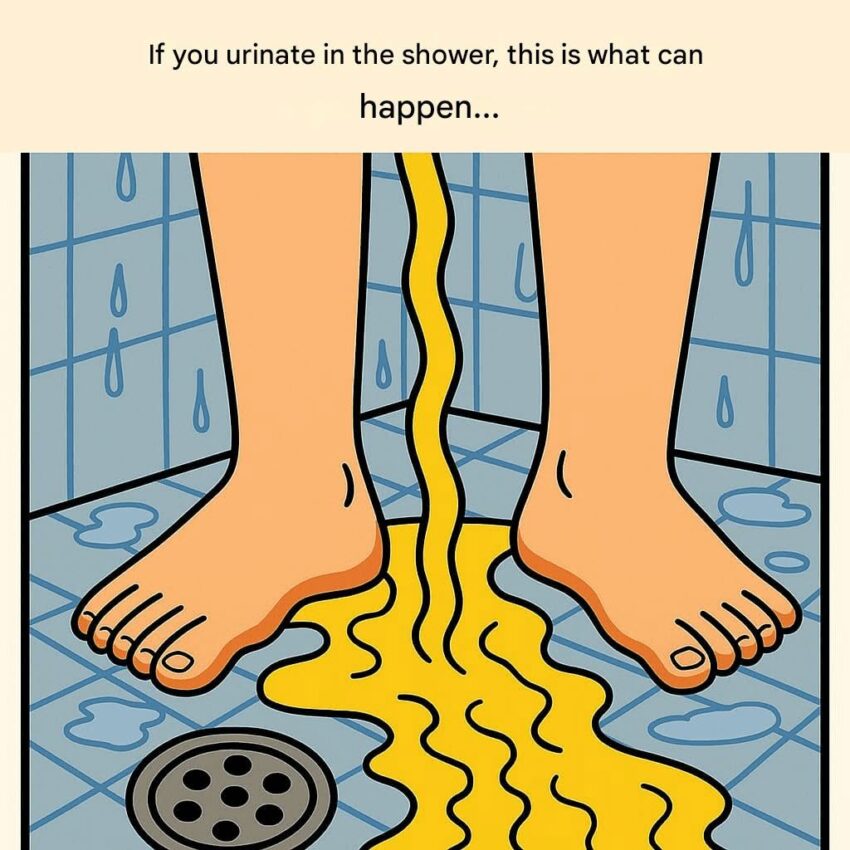
The headline “You’ll be surprised what happens if you pee in the shower” is usually clickbait.
For most healthy people, urinating in the shower is not harmful. Urine is mostly water with dissolved waste products, and it is generally not dangerous on intact skin. In a normal shower with running water and regular cleaning, it is unlikely to cause health problems.
Common claims about shower urination:
- “It causes infections” — There is no strong evidence that peeing in the shower causes urinary tract infections in healthy people.
- “It is bad for your skin” — Urine exposure during a shower is not known to damage normal skin.
- “It saves water” — Some people argue it can save a small amount of water by avoiding an extra toilet flush, though the environmental impact is likely modest.
A few cautions:
- If you have a skin wound, irritation, or certain medical concerns, avoid exposing affected areas to bodily fluids unnecessarily.
- Good bathroom hygiene still matters: clean the shower regularly and rinse away any residue.
- People who have difficulty controlling urination may want to discuss bladder habits with a healthcare professional, especially if leaking urine is new.
Bottom line: Peeing in the shower is generally not a health hazard for most people. The biggest issues are usually about personal preference, cleanliness, and shared bathroom etiquette, not medical danger.
